Stephanie Langel’s immunology research aims to protect moms and babies from viral infections
Assistant Professor, Department of Pathology, School of Medicine
Member, Center for Global Health and Diseases, School of Medicine
Area of Focus: infectious diseases; immune system response to viruses—particularly in moms and babies
Stephanie Langel, PhD, never expected her high school job milking dairy cows would lead to a research career.
"I learned on the farm that if the mom was sick and not doing well, she would not make milk that had sufficient immune components to protect her baby," said Langel, now an assistant professor in the Department of Pathology at Case Western Reserve University School of Medicine.
Fascinated by this relationship between mothers' and babies' immune systems, it became a throughline of her career.
Experience in academic labs—especially her postdoc role working with an infectious disease pediatrician—shifted her career goals from veterinarian to researcher in human medicine.
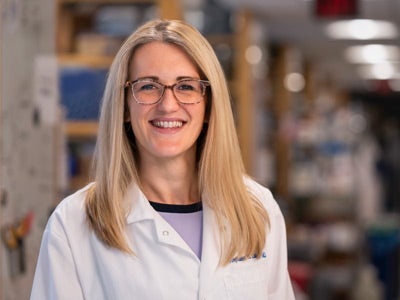
Today, her lab is exploring how to best protect moms and babies from viral infections, with a focus in the niche area of breast milk immunology to influenza. Moms passively transfer immune molecules called antibodies to babies during gestations and post-birth, particularly in breast milk, Langel explained.
"There's a lot of factors in breast milk that can protect against flu," she said.
Langel's research into mothers' and babies' immune connection primarily aims to protect both from severe disease and death. In addition, the findings can be applied toward improving vaccines.
"Whatever we're understanding in those populations definitely can be applied to the broader population, and how we develop better vaccines, have better therapies, and understand what happens when you have a new strain pop up and then [transmitted] across society," said Langel, also a member of the Center for Global Health and Diseases.
Langel is part of a larger network of researchers aiming to create a more universal vaccine that can provide broader protection and avoid chasing the new strains of influenza that mutate each year.
Her background studying animal immunology has helped her throughout her research and prepared her well for emerging research questions.
In spring of 2024, an outbreak of avian influenza H5N1 affected lactating dairy cattle. Because influenza is a virus of concern for pandemic potential, it's important to understand what the instance of avian flu in dairy cows means for the virus's ability to jump to humans, Langel said. She secured funding from the USDA to support research to study dairy cows’ vulnerability to H5N1.
"Really that to me was [an] 'aha moment' that we could rapidly respond to an emerging outbreak," Langel said.
Langel loves the work that she does, and getting to work with "really bright young minds" is one of the most rewarding parts of her work.
"Beyond that, knowing that there are women and children dying from infectious diseases that are preventable is something that keeps me very highly motivated to come up with solutions," she said, "because nowhere in the world, in my opinion, should women and children be dying of a viral infection."