

biology

April 07, 2017
Why do humans get bunions? Or carpal tunnel syndrome? Separate research led by two Case Western Reserve University students recently published in the journal Evolution, Medicine, and Public Health, have proposed that these uniquely human maladies are understandable in the context of human’s…
March 20, 2017
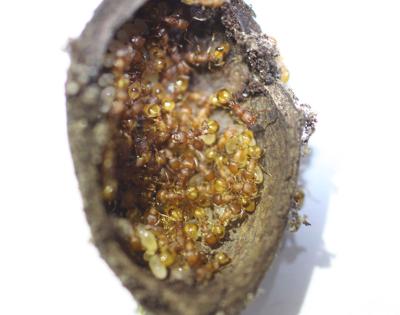
Study shows acorn ants quickly adjust, suggesting the insects may be able to cope with other sources of warming, including climate change CLEVELAND—The speed at which a tiny ant evolves to cope to its warming city environment suggests that some species may evolve quickly enough to survive, or…
February 13, 2017
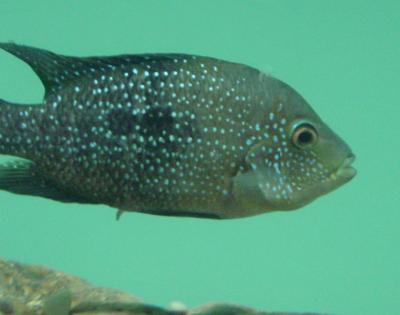
Humans aren’t the only species that resort to a little subterfuge While a dominant male fish from northern Mexico mates with a female, a small fella bides his time in the offing. Suddenly, the little guy darts in ahead of Mr. Big and plants his seeds on freshly laid eggs. The behavior, which…

December 16, 2016
Chinweoke Osigwe, an undergraduate student studying biochemistry, was selected as a recipient of the American Society for Microbiology (ASM) Undergraduate Research Fellowship. The fellowship is for students planning to pursue graduate careers in microbiology. Fellows have the opportunity to…
November 02, 2016
Adding warmth predicted in climate-change models destabilized forest ant communities east of the Appalachian Mountains, a possible harbinger of disruption to the broader ecosystem, researchers, led by a Case Western Reserve University biologist, have found. The five-year study in the Harvard…
September 21, 2016
A record of shifts in the environment and animal diversity and distribution may help scientists predict effects of current climate change Darin Croft, associate professor of anatomy at the Case Western Reserve University School of Medicine, will try to start filling a gap in the fossil record of…
August 19, 2016
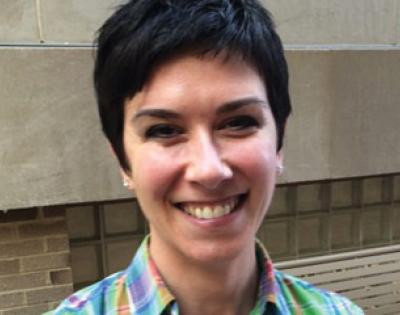
Valerie Haywood, senior instructor of biology, presented her ongoing work in undergraduate biology education at Plant Biology 2016, the annual meeting of the American Society of Plant Biologists, in Austin, Texas, in July. More than 1,300 scientists from nearly 40 countries participate in the…
July 27, 2016
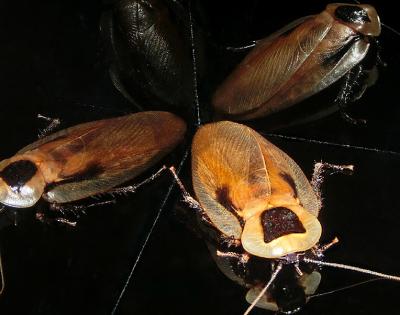
Rats, men and cockroaches appear to have a similar GPS in their heads that allows them to navigate new surroundings, researchers at Case Western Reserve University report. The finding, published in the journal Current Biology, is likely an example of convergent evolution—that is, distinct animals…
July 25, 2016
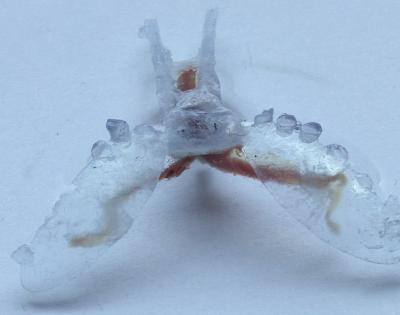
Swarms could one day search the depths of fresh and saltwater Researchers at Case Western Reserve University have combined tissues from a sea slug with flexible 3-D printed components to build “biohybrid” robots that crawl like sea turtles on the beach. A muscle from the slug’s mouth provides the…
July 15, 2016
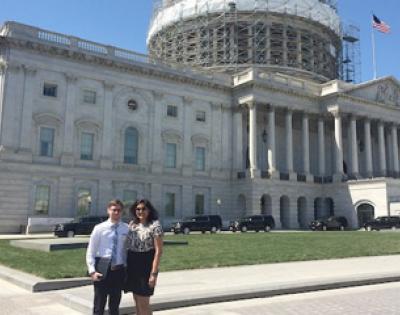
Garrett Dunlap and Neetu Gulati Earlier this year, Garrett Dunlap (CWR ‘16) and Neetu Gulati were selected to represent Case Western Reserve University at the American Association For the Advancement of Science Catalyzing Advocacy in Science and Engineering workshop. Dunlap majored in biology and…