

release
April 12, 2023
Second-year postdoctoral scholar Christian Mouchati, MD, presented an abstract poster at the Conferences of Retroviruses and Opportunistic Infections in February. “The work highlights the increase in inflammatory markers and gut integrity in post-acute sequelae of SARS-CoV-2 (PASC),” said…

April 12, 2023
With Moderna Inc. global fellowship award, CWRU School of Medicine researchers hope to develop process that overcomes challenge of targeting diseased cells Beyond vaccines, mRNA offers immense potential to fight disease, but targeting the genetic material to specific diseased cells is…
April 11, 2023
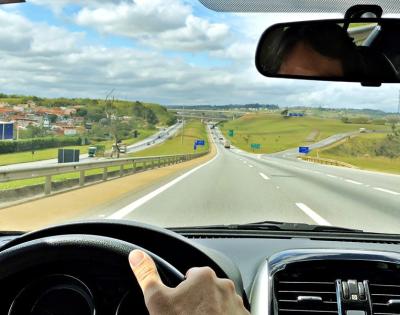
Case Western Reserve University law professor examines legal gray area when semi-autonomous vehicles are involved in accidents Police officers can often identify which driver is responsible for a traffic accident. But what about when a self-driving vehicle is involved? Which driver should be…
April 04, 2023
From a young age, Razaq Durodoye dreamed of becoming a doctor. And today, he’s well on his way—the Texas native is an MD/PhD student in the Medical Scientist Training Program at Case Western Reserve University School of Medicine, and also serves as the university’s Graduate Student Council…
April 03, 2023
Study published in JAMA Internal Medicine News Release from University Hospitals The number of prostate cancer patients in the U.S. choosing active surveillance over surgery or radiation has rapidly increased since 2010, rising from 16% to 60% for low-risk patients and from 8% to 22% for patients…
March 30, 2023
One of the most important days in a medical student's career—Match Day—was held Friday, March 17. This annual event marks the time when medical students across the country find out—at the same time, noon eastern time—where they will “match” for post-graduation residency programs, among the last…
March 28, 2023
When Tamia Potter opened her envelope at Match Day—the day medical students nationwide learn what residency programs they will join following graduation—she discovered she was one step closer to achieving her goal of becoming a neurosurgeon. She also was among the first to realize she had just made…
March 28, 2023
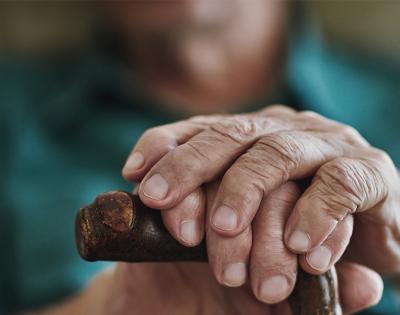
Since late 2018, researchers at Case Western Reserve University’s Frances Payne Bolton School of Nursing and MinuteClinic at CVS locations have jointly shaped a program to enhance care for older adults at the retailer’s pharmacies nationally. Now, with a new three-year, $2.56 million grant from…
March 27, 2023
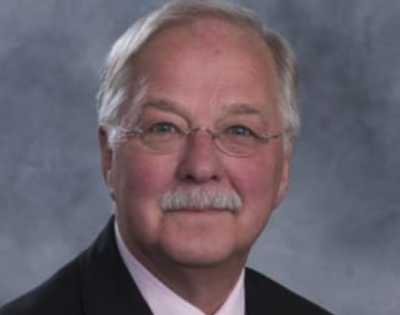
Dear colleagues, In honor of a remarkable career, I share the news about the death of faculty emeritus Dr. Randall D. Cebul whose medical career focused on improving the quality of care for populations most in need. We have lost a true champion for those whose voices often go unheard. Joining…
March 14, 2023
Christine Duval investigating novel methods for separating elements for wind turbines, electric vehicles, smart phones, nuclear power Case Western Reserve University scientist Christine Duval will investigate novel and more environmentally safe methods to separate so-called “rare-earth elements”…