Three from Case Western Reserve University earn Fulbright awards
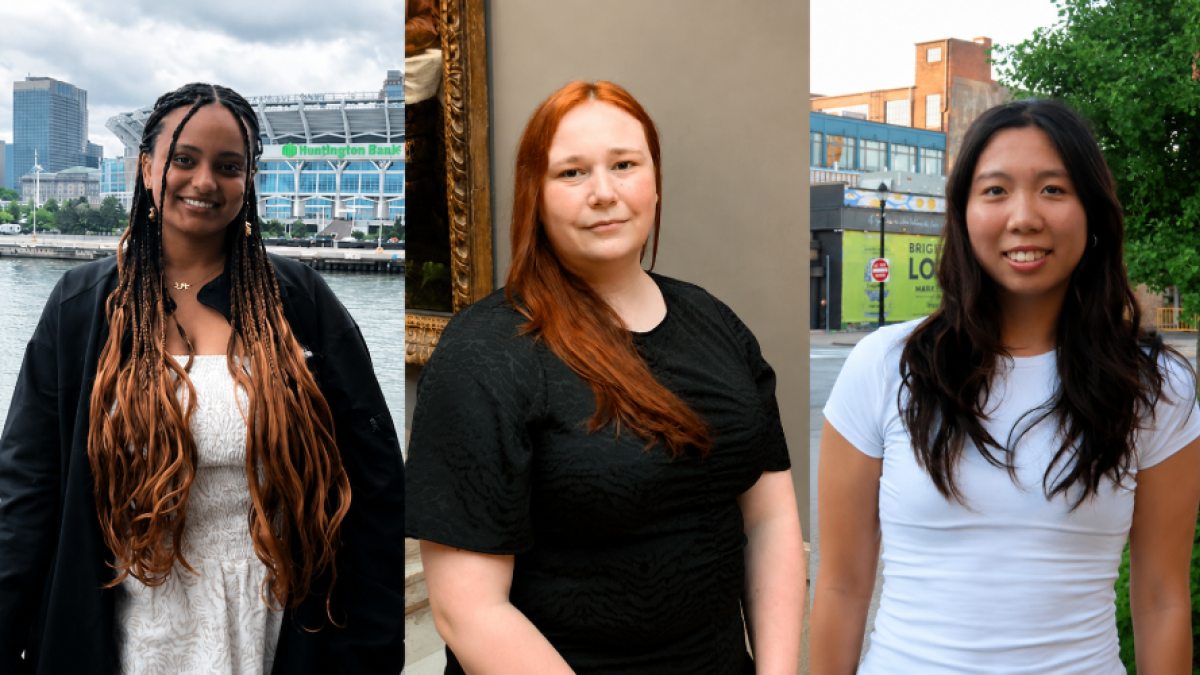
Three members of the Case Western Reserve University community are headed abroad. Nyat Isack, Annie Zhao and Claire Sumner each received a grant from the Fulbright U.S. Student Program—the U.S. government's flagship international educational exchange program, which pairs scholars with opportunities to research, teach and study in about 140 countries.
They'll travel to South Korea, Taiwan and Italy, carrying with them a shared commitment to cross-cultural connection. Isack and Zhao will spend their time in the classroom as English teaching assistants; and Sumner will dig into centuries-old archives in pursuit of answers that could reshape our understanding of Renaissance art.
Learn more about them as they prepare to represent the university abroad.
Nyat Isack
Case School of Engineering
Nyat Isack (CWR '25) already knew what South Korea could ask of her. A Silver Spring, Maryland, native who studied abroad there during her undergraduate years, she experienced firsthand the disorientation—and the growth—of navigating a culture not her own.
That experience didn't just expand her worldview. It sent her back.
Isack, who earned her Bachelor of Engineering in civil engineering in 2025, was awarded a Fulbright English teaching assistant grant and will spend a year in South Korea working in a classroom. But teaching English, she said, is as much about building confidence as it is about language. Drawing from her own experience learning Korean—a practice she kept up after returning to the U.S.—she understands how vulnerable it can feel to speak up in a language that isn't yours.
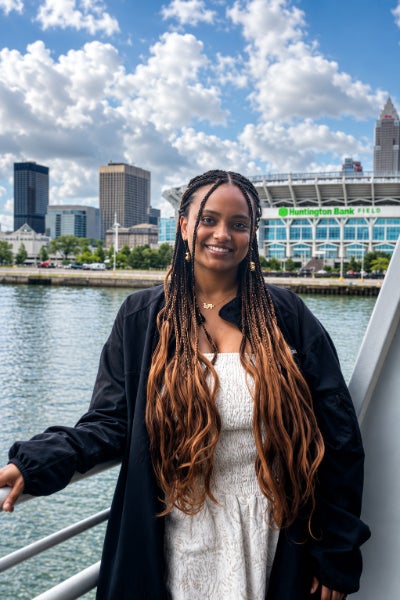
"One of my main goals is to create a classroom environment where students feel comfortable and confident using English," Isack said. "I understand how intimidating it can be to speak up, so I want to make my classroom as engaging and supportive as possible."
Her CWRU experience gave her more than technical training. Through coursework and collaborative projects, she developed the ability to communicate complex ideas clearly—a skill that translates directly to the classroom. Mentorship along the way built the interpersonal confidence she'll need to step into unfamiliar settings and make them feel less so.
Beyond the classroom, Isack is looking forward to the texture of daily life in Korea—the community interactions, the relationships that form outside of formal settings, the kind of connection that doesn't show up in a lesson plan. It's the same draw that pulled her toward Fulbright in the first place: the belief that cultural exchange, done well, changes both people in the room.
She plans to carry that global mindset into a career that doesn't stop at borders. For CWRU students considering a similar path, she has simple advice: don't wait until you feel fully ready.
"Fulbright is as much about your willingness to engage, learn, and adapt as it is about your accomplishments," she said. "The application process itself is tough, but it pushes you to think more deeply about your goals and how you want to engage with the world."
Claire Sumner
College of Arts and Sciences
Claire Sumner has spent years asking a question that sounds simple but isn't: Why would a wealthy Renaissance patron commission a monumental sculpture in clay?
Sumner, a fifth-year PhD candidate in art history advised by Erin Benay, PhD, in the Department of Art History and Art, is researching large-scale terracotta religious sculpture from 15th- and 16th-century Northern Italy—works created by master artists in inexpensive clay at a time when marble and bronze were the prestige materials of choice.
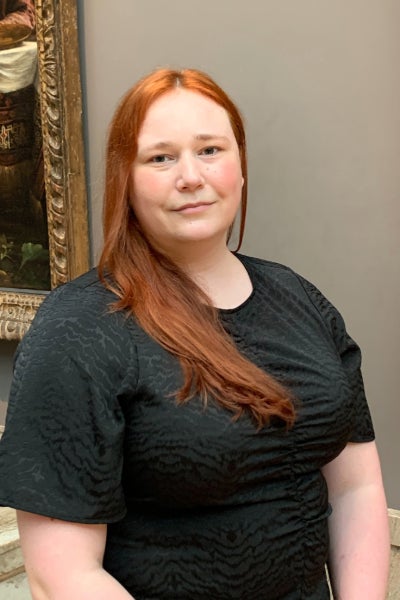
She was awarded a Fulbright open study/research grant and will spend nine months in Italy, from October 2026 through June 2027, conducting archival research to help answer that question.
What makes the project especially compelling is what these sculptures still are, not just what they once were.
"One of the things that makes the sculptures I study special is that almost all of them continue to function as religious artwork in the communities for which they were created almost 600 years ago," she said. "Fulbright's emphasis on embedding within the local community allows me to bring this aspect of my research to the fore."
It's not her first time in Italian archives. Sumner previously conducted research in Bologna, Ferrara, and Modena with support from an Eva L. Pancoast Memorial Fellowship. She credits her advisor and a grant writing course taught by Stephanie Redekop, PhD, with preparing her to pursue a grant of this scale.
Before heading to Italy, she'll sharpen her language skills at the Middlebury Language School's Italian program as a Kress Fellow—because some of the most exciting discoveries, she noted, may still be waiting in the archives.
For students considering a similar path, Sumner's advice is practical: "Spend time distilling your project down to its most basic 'why' before trying to write a proposal, and always keep in mind how your research connects to the larger issues and conversations in your field.”
Annie Zhao
College of Arts and Sciences
Annie Zhao (CWR '26) had always hoped to study abroad during her undergraduate years. Graduating a year early made that difficult to fit in—so she found another way.
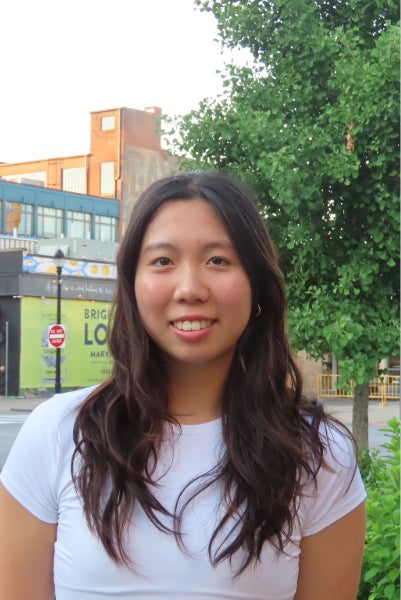
Zhao, a Princeton, New Jersey, native who completed her Bachelor of Arts in cognitive science, was awarded a Fulbright English teaching assistant grant and will spend nearly a year in Taiwan, from August 2026 through June 2027, teaching English to elementary and junior high students. For Zhao, the opportunity is personal. As an immigrant, Fulbright's mission of fostering mutual understanding between countries resonates deeply.
"Cross-cultural exchange and building connections across different backgrounds means a lot to me," she said.
Her path to the classroom didn't start in Taiwan—it started during the pandemic, when she began tutoring Chinese students in English courses virtually. The work sparked an interest in teaching, but left her wanting more.
"That experience started my interest in teaching and showed me how rewarding it is to see students learn and grow," Zhao said. "Because that work was virtual, I always wanted the chance to connect with my students in person and use more interactive activities."
At CWRU, she found opportunities to do exactly that. As a teaching assistant for Chinese 101 under Yawei Li, PhD, she developed skills in small-group and individual language instruction. As a Gelfand STEM Fellow with James Bader, she worked with underserved Cleveland school districts, adapting lesson plans and leading hands-on activities such as engineering challenges—experience she plans to bring directly into her Taiwanese classroom.
Though teaching might seem like a detour from her long-term goal of becoming a physician, Zhao sees the connection clearly.
"Learning is continuous in medicine," she said, "and becoming a better teacher over the years has also made me a better learner."
Related Stories