Veale Institute for Entrepreneurship announces winners of 2026 Morgenthaler-Pavey Startup Competition
Fifteen student-led teams competed for more than $45,000 in prizes across three tracks
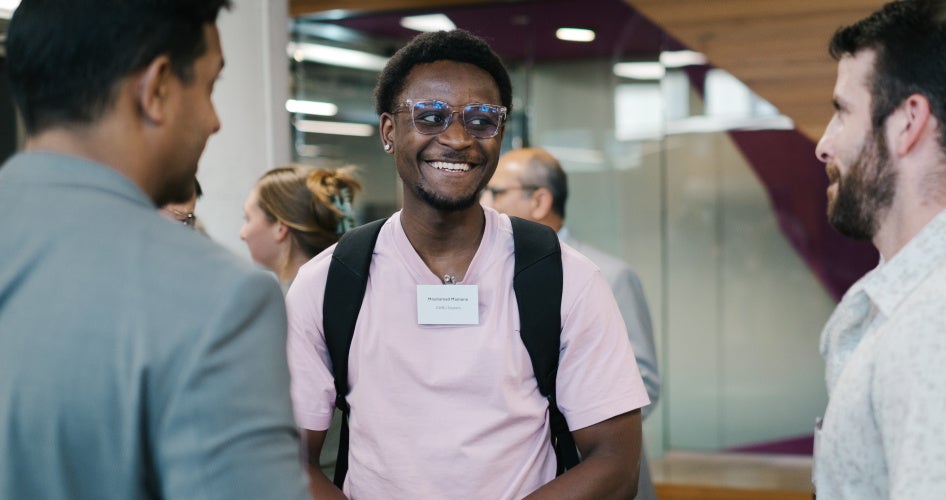
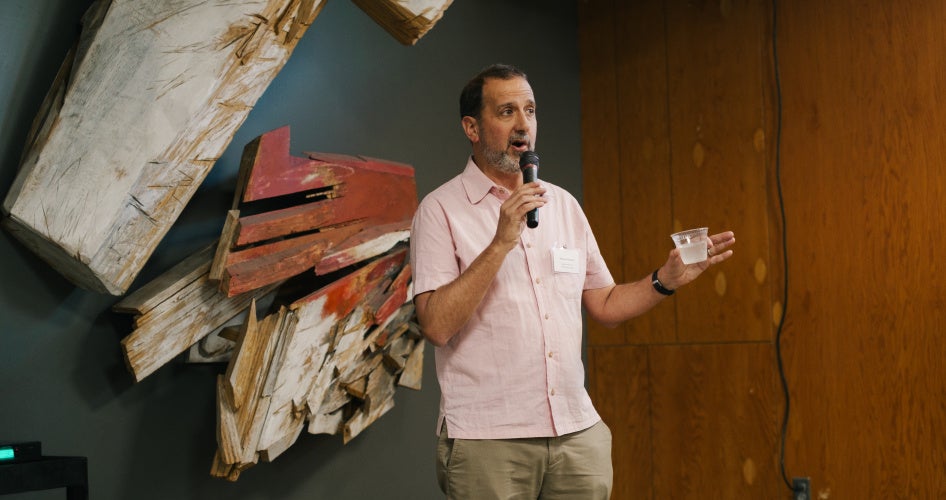
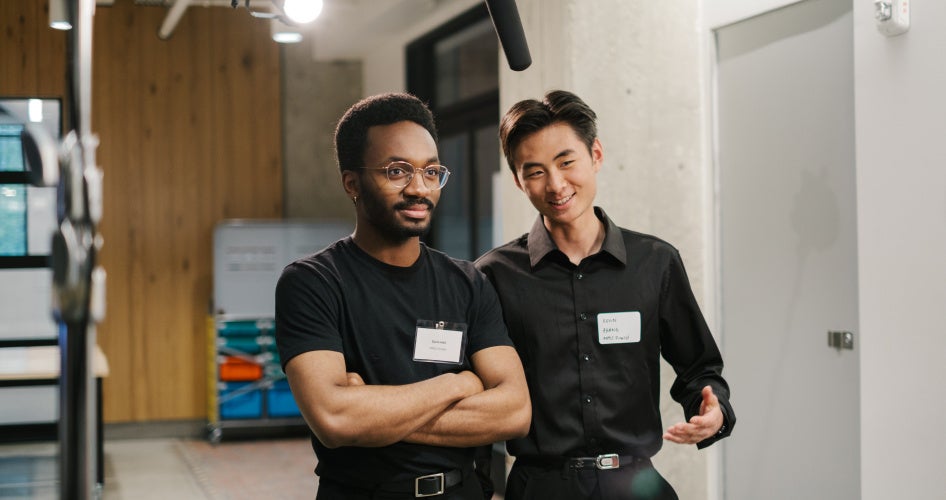
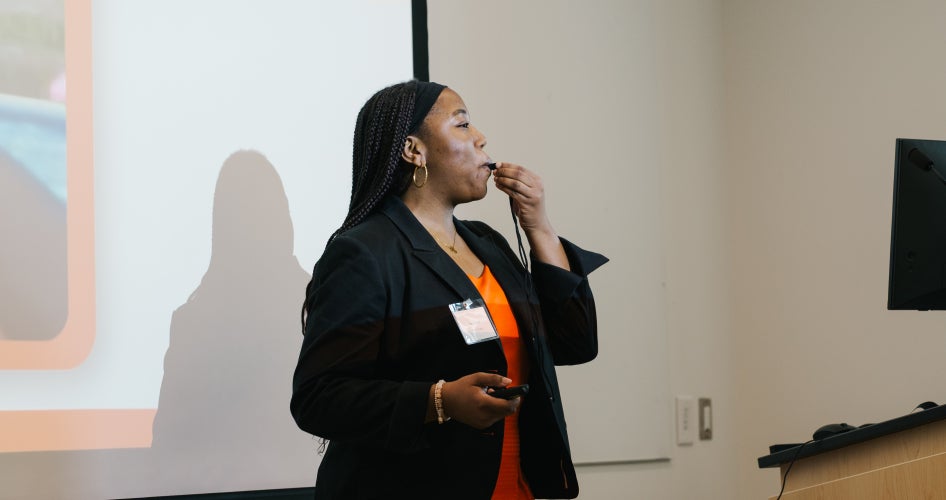
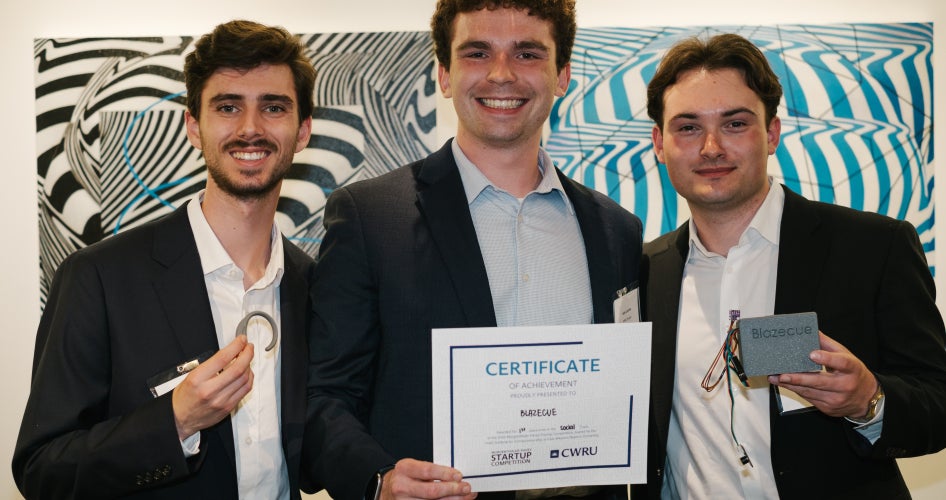
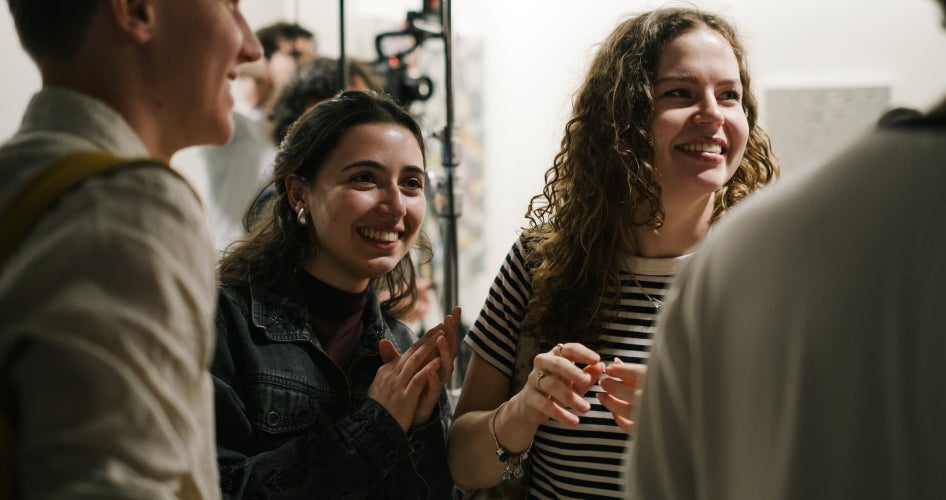
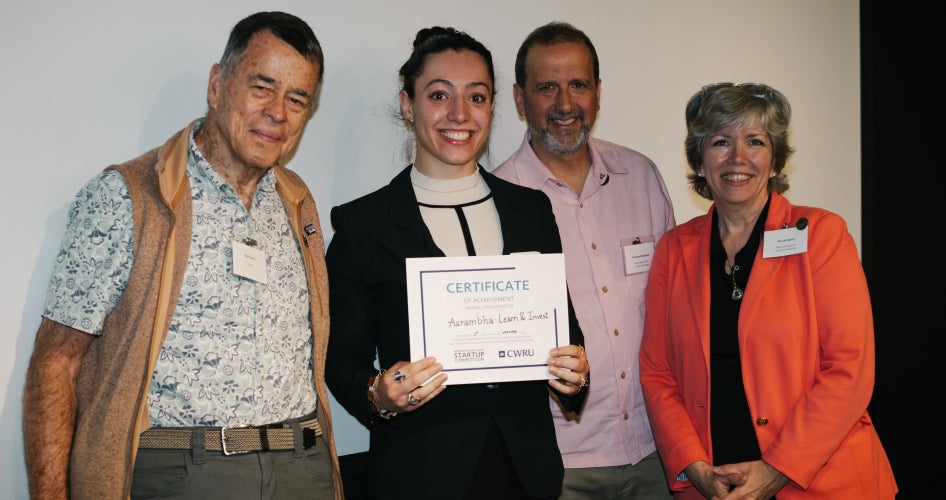
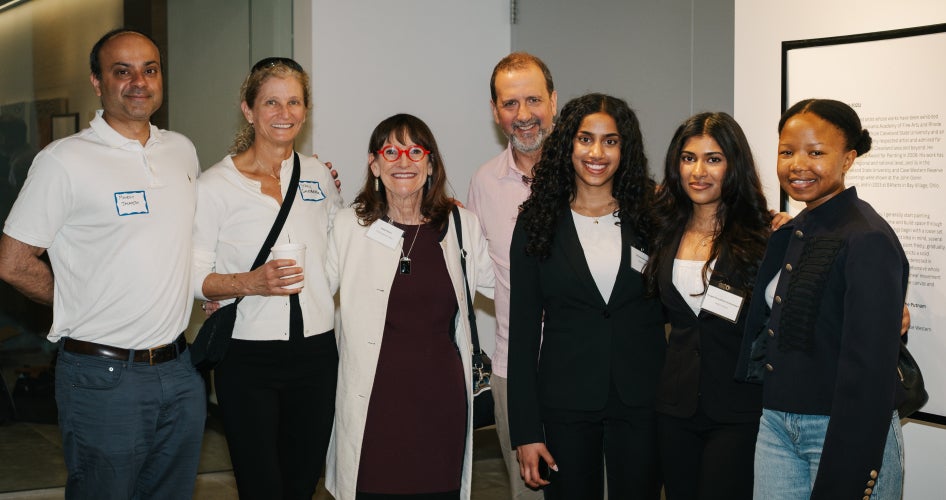
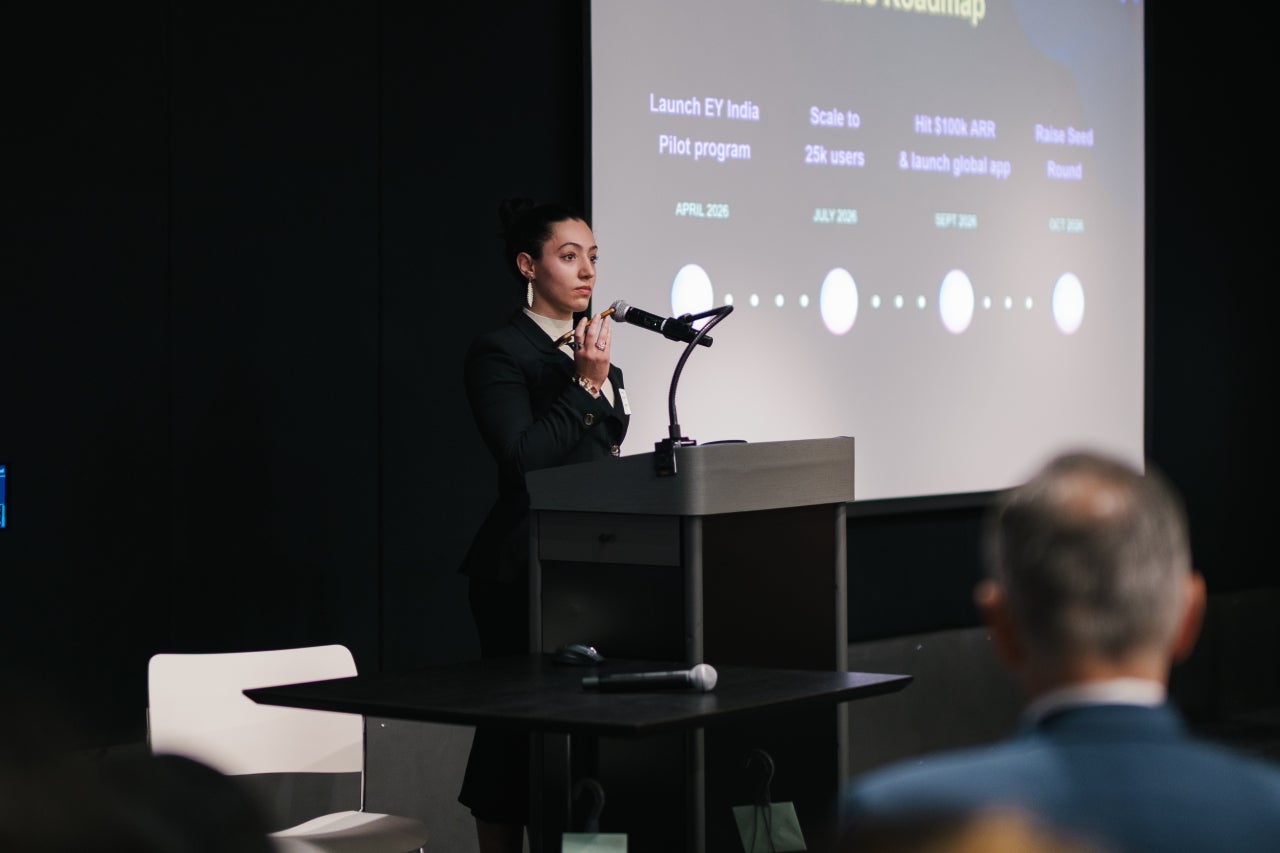
Student entrepreneurs pitched ventures focused on agriculture, education, public safety and other real-world problems at the 2026 Morgenthaler-Pavey Startup Competition, held earlier this month at Sears think[box] at Case Western Reserve University.
Hosted by the Veale Institute for Entrepreneurship, the annual competition drew a record crowd of more than 150 attendees. Fifteen finalist teams—selected from more than 70 applications—competed across three tracks: Venture, Idea and Social Impact, with more than $45,000 awarded in prizes.
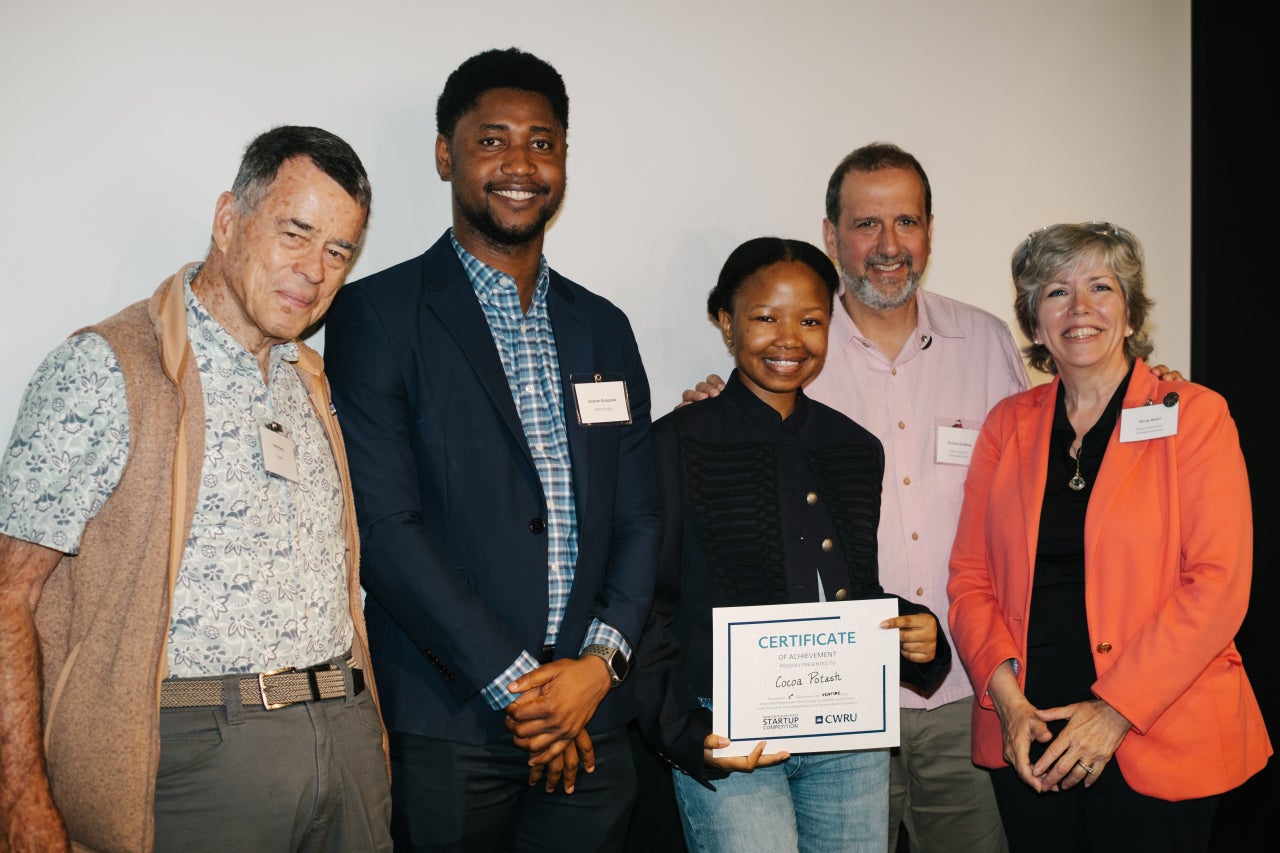
Cocoa Potash took first place in the Venture Track, earning $13,000 for technology that converts agricultural byproducts into regenerative fertilizers and low-carbon potassium carbonate.
Lineage won the Idea Track, receiving $4,000 for a platform that helps older adults turn their life stories into short films. In the Social Impact Track, Blazecue, DOT and Izma Technologies tied for first place, with each team receiving $3,000.
The competition also reflected the breadth of entrepreneurship across CWRU. Finalists represented a range of disciplines and schools—including the Weatherhead School of Management, the Case School of Engineering and the College of Arts and Sciences.
“Year after year, our students raise the bar,” said Michael Goldberg, executive director and associate vice president of the Veale Institute and a professor of design and innovation at the Weatherhead School. “This competition gives us a chance to see how far these founders have come and how much momentum they’ve built around their ideas.”
Now in its 13th year, the competition is named for David Morgenthaler, a mechanical engineer and early investor in companies including Apple Computer, and his business partner Bob Pavey, a member of the CWRU Board of Trustees.
This year’s finalists included ventures aimed at special education, braille literacy, notary services, clothing reuse and emergency response.
One returning team, eLEXir, won first place in the Social Impact Track in 2025 and came back this year to place in the Venture Track with a learning platform designed to help families supplement special education at home.
The competition also reflected the longer arc of student entrepreneurship at CWRU. Among this year’s attendees was Franco Kraiselburd (CWR ’25), who also reviewed applications. His startup Asclepii won the Venture Track last year.
His own Morgenthaler-Pavey path began with a third-place finish—followed by more pitching, more refinement and continued fundraising before he eventually took first place.
“If you didn’t win tonight, just remember it’s a ‘not yet’ more than a ‘not ever,’” said Kraiselburd. “You only lose when you give up.”
Venture Track
First Place
Cocoa Potash – $13,000
Ibrahim Quagraine, a PhD student in biomedical engineering and Ithabeleng Makhetha (CWR ’25), who earned a degree in accounting from the Weatherhead School
Turns agricultural byproducts into regenerative fertilizers and low-carbon potassium carbonate.
Second Place (tie)
Aarambha: Learn & Invest – $6,000
Akansh Devendra (CWR ’24), who graduated with degrees in data science and economics
Combines interactive financial lessons with personalized portfolios for first-time investors.
eLEXir – $6,000
Krupa Venkatesan, a third-year biomedical engineering and computer science student, and Menaka Wijeratne, a third-year biomedical engineering student
Supports families supplementing special education with a tailored learning platform.
Idea Track
First Place
Lineage – $4,000
Krishin Parikh, a senior computer science and finance major and Kaleb Kim, a senior computer science major
Helps older adults turn their life stories into short films.
Second Place (tie)
Our Signing Service – $2,000
Adam Hamdan, a senior computer science student
Uses AI to streamline workflows for notaries and title companies.
AquaLock – $2,000
Stacy Guech, a first-year student
Reimagines the swim cap for all hair types with a focus on protection, inclusivity and safety.
Third Place (tie)
Altoscope – $1,000
Darin Hall, a senior data science and analytics student and Kevin Zhang, a first-year neurosciences student in the School of Medicine
Simplifies equipment rental and sourcing for video producers and production teams.
Locus – $1,000
Vinlaw Mudehwe, a senior mathematics student in the College of Arts and Sciences and a computer science major, and Kudzai Dhewa, a senior economics and data science student at Macalester College in Minnesota.
Connects people with relevant contacts nearby at events and other physical spaces.
Social Impact Track
First Place (tie)
Blazecue – $3,000
Jack Loomis, a senior management, finance and international business management student, James McDonald, a third-year electrical engineering student, and Jordi Malaret, a third-year biomedical engineering student
Monitors firefighters’ vital signs through an ear-mounted wearable designed to flag overexertion risk.
DOT (Diversifying Optical Technology) – $3,000
Samhitha Bodangi, a first-year biomedical engineering, biomedical computing and data science student and Abigail Figueroa, a first-year bioengineering and biomedical engineering student
Supports braille learning by translating phrases and reinforcing literacy skills.
Izma Technologies – $3,000
Johary Rahajason, first-year biomedical engineering student, and Tiekoura Ouattara, a second-year electrical engineering and computer engineering student.
Turns class materials into print-ready practice worksheets and targeted feedback cycles for low-income classrooms.
Second Place
Thrifty – $750
Ayati Lala, third-year neuroscience student, and Niousha Sima, a third-year chemical engineering student
Lets students buy, sell and borrow clothing locally to reduce costs and waste.
Third Place
HairChair – $750
Eva-Jessy Guech, a second-year computer science student
Combines robotics and hair-and-scalp analysis to automate hairstyling and inform product recommendations.