From Syria to Silicon Valley, a CWRU alum built a medical device empire
A conversation with serial entrepreneur Amr Salahieh (CSE ’89), founder and CEO of Shifamed
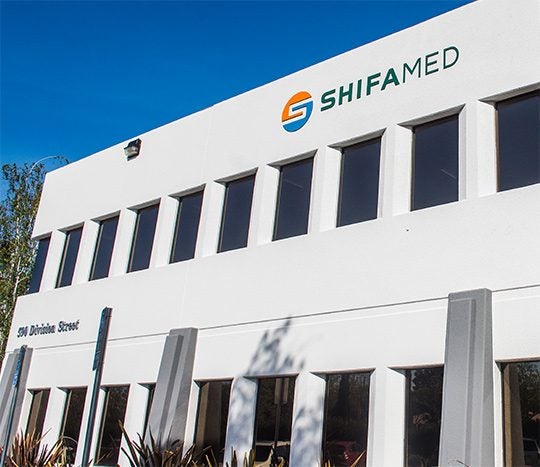
What’s in a name? For Shifamed, quite a bit.
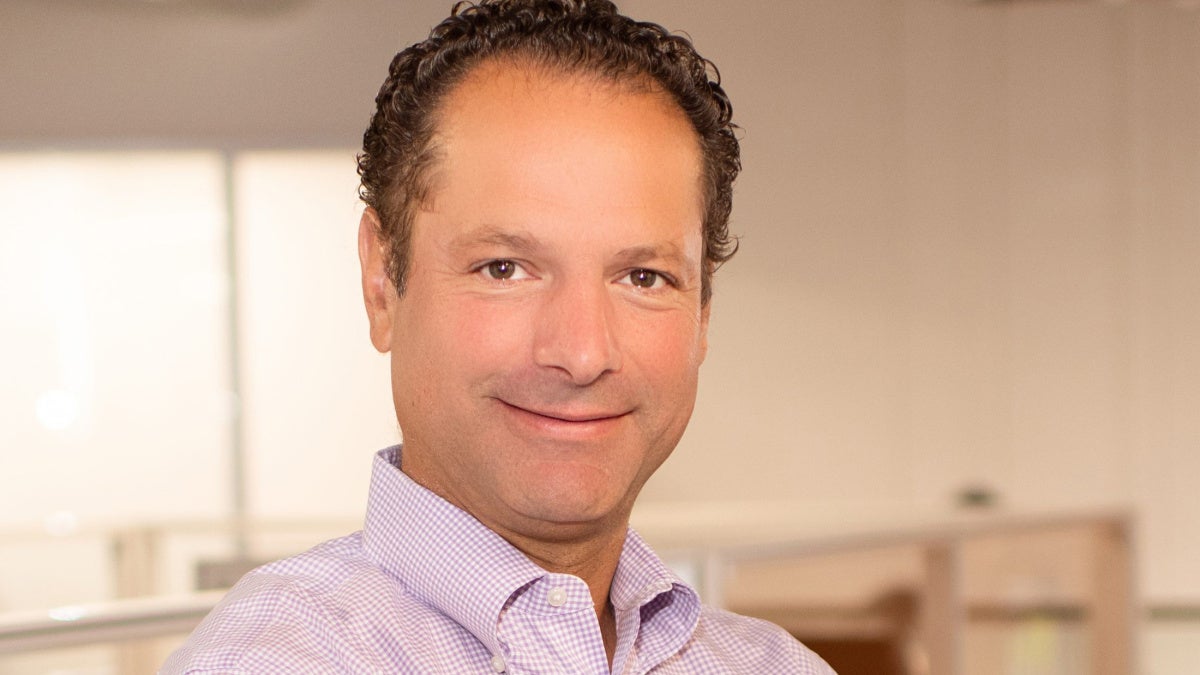
Founded and run by Amr Salahieh (CSE ’89), the company takes its name from “shifa,” the Arabic word for healing, and the Latin root medērī, meaning “to cure.” It’s a fitting name for an enterprise shaped by movement across cultures, disciplines and ambitions.
Salahieh grew up between Beirut and Damascus, dreaming of becoming a physician. But when war in Lebanon forced his family to send him to boarding school in the south of France, he began preparing for a different life.
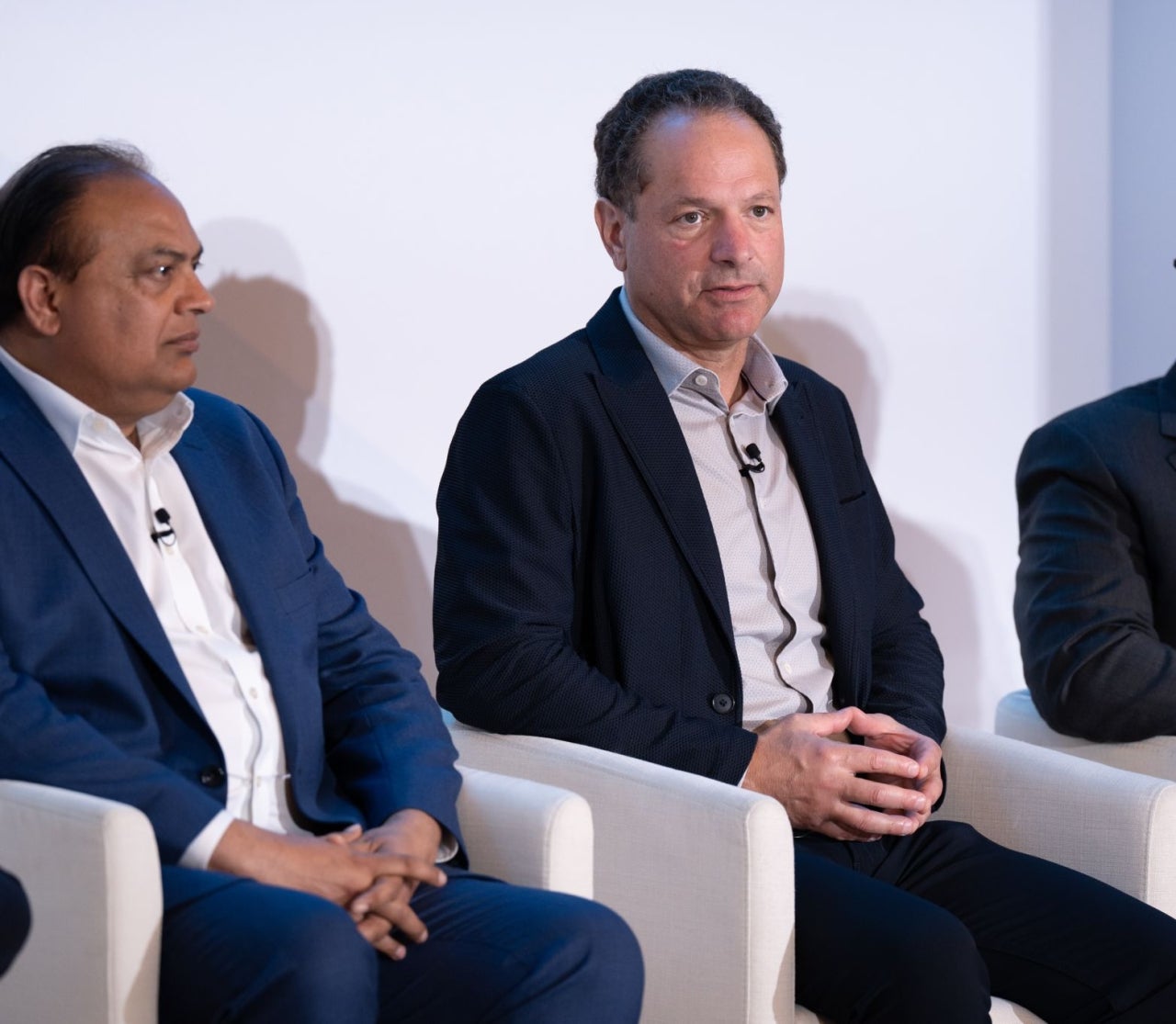
He arrived at Case Western Reserve University as a pre-med student speaking English as his third language, drawn by both the medical school and one of the few undergraduate programs in biomedical engineering in the country.
He quickly discovered that medicine wasn’t for him—but engineering was.
He earned a double major in biomedical engineering and electrical engineering at the Case School of Engineering, studied under Dominique Durand, PhD, in the applied neurocontrol lab, and completed a co-op internship with a California-based cardiovascular device company that launched him into the medical device industry.
That co-op set the course for everything that followed.
At Shifamed, Salahieh has built a Silicon Valley medical technology innovation hub that develops both devices and entire companies around them—moving ideas from concept through clinical testing before transferring them to larger partners for worldwide distribution.
Six of the startup companies cultivated at Shifamed’s campus have been acquired by some of the largest names in healthcare, including Boston Scientific, Abbott, Covidien, and Johnson & Johnson.
The current roster—spanning heart devices, eye care, AI-powered imaging and enterprise software—has raised more than $800 million in venture funding to date.
Among them, Supira Medical recently raised $120 million to advance clinical development of its heart pump, while Laza Medical completed the first-ever use of a real-time AI-generated heart model to guide cardiac procedures.
And Salahieh himself—the inventor or co-inventor on more than 400 patent applications worldwide—will chair the American Heart Association’s 2027 Research Roundtable.
In the conversation below, Salahieh reflects on how his heritage and his formative years at CWRU shaped the founder he became, the philosophy that drives Shifamed, and what he’d tell students who are interested in starting their own companies.
The name of your company instantly grabbed my attention. What parts of your heritage and life experiences have shaped your journey as a founder?
I’m originally from Syria and Lebanon. I had to finish high school in France because of the war, and later came to the U.S. to study biomedical engineering and electrical engineering at Case Western Reserve. I came to California and have been working in the medical device industry ever since.
Tell me more about Shifamed and the impact your work is having on patients.
We mostly work on cardiovascular products for interventional cardiologists—doctors who treat heart conditions using catheters and other minimally invasive tools rather than open surgery. We have a heart pump that supports the heart during high-risk procedures or helps stabilize patients in the emergency room who’ve gone into cardiogenic shock, a life-threatening condition where the heart can’t pump enough blood on its own.
More recently, one of our companies completed the first-ever use of a real-time AI heart model during cardiac procedures—the kind of technology that would have been unimaginable a few years ago.
What is the philosophy behind your problem-solving approach? How would you advise students to cultivate that same curiosity?
Number one, we’re trying to solve big problems that will ultimately have financial success and will improve the patient’s life significantly.
If we raise money from venture capitalists to move forward with commercializing the product, the investors will get compensated. Ideally, you’re aiming at an area with great societal benefit but with returns for them to make meaningful advancements in the healthcare system.
What were some of the biggest trials you faced when establishing your company? What advice would you give to students who have doubts?
Starting a company is hard—you need to know the space you’re dealing with, in that you can’t spontaneously start one. I recommend people work for another company in a field they love first, ideally with investors and technology being developed.
Typically, the biggest challenge is gaining the investors’ trust, and you must show them a lucrative, interesting solution.
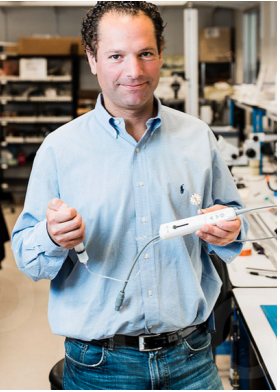
When I first went out on my own, I set up my garage as a lab and started consulting to earn money. It was lonely—I’m a social person, and I was so desperate for someone to talk to that I’d visit the dry cleaner just to have a conversation. That consulting eventually led to a collaboration that produced an embolic protection device—a tiny filter that catches dangerous blood clots during heart procedures. It sold to Boston Scientific.
But there was a long period of uncertainty before that success. My advice: when you’re ready, go headfirst. You can’t be an entrepreneur part-time.
What was the original driving motivation behind your company—and has that motivation changed as it’s grown?
I was always interested in helping people using my engineering skills. What has changed is that I have a history to look back on and an evolution in my thoughts and responsibilities, and the scale of solutions we can pursue.
What’s the most exciting part about investing in the biomedical innovation sphere right now—and what makes this an attractive business opportunity as well as a clinical one?
What’s interesting these days is that AI and robotics are entering the space and being scaled at an accelerated level. The medical device industry is highly regulated—agencies like the FDA in the United States and their counterparts around the world require extensive testing, documentation, and review before a device can be used in patients.
There’s a long pathway to ensure there is appropriate intention and design behind each device. This makes our industry burdensome, but it’s a necessary burden to not endanger the patient’s life.
How can engineering or biomedical students at CWRU apply what they’re learning to an entrepreneurial context—and what can’t be learned in the classroom?
In the classroom, you learn how to learn, work with others, and leverage certain tools, which is only the first step because learning never stops. But once you work for an organisation, you need to actually accomplish things and roll up to the next level each time.
You have a responsibility to the team and must perform so that the product succeeds.
How do you organize a team to maximize efficiency? What are the most important members to have in the early stages?
You should have someone who can talk to different people from varying fields of expertise. Somebody with experience who has seen what you want to execute and has done it is critical, as is someone who understands the market and investors. You as the leader should understand all these kinds of competencies and how they should be represented in your company.
A generalist who can fundraise and inspire others is essential too.
When you think about your time at CWRU now—what feels most lasting? Was there a mentor who helped set your path?
I loved what I studied in physiology and engineering. It was fun spending time in the applied neurocontrol lab, and a personally important internship I undertook as a co-op. That was helpful to expose me to the industry. I enjoyed expanding my worldview as a co-op student, and look back on those as cherished memories. My advisor and mentor was Dominique Durand.
The co-op was with Advanced Cardiovascular Systems (ACS), which was owned by Eli Lilly at the time. I had no clue what a catheter was and no clue where Santa Clara was—there was no internet. When people from ACS came to campus, I got so excited during the interview that the HR person said, “Are you okay? Do you want to slow down?”
That internship led to a full-time position and changed the entire direction of my career.
What’s next for you?
More of the same—taking what we’ve done to the next level when the environment is changing and there is financial pressure. The industry cycles between being easy and hard regarding fundraising. AI captivates people’s imagination and changes the flow of money. I’m trying to navigate through this period and show people the AI we’re creating brings exciting prospects.
But the most important measure of success, for me, is still products being used in patients. The student who dreamed of becoming a doctor is still driven by the same goal. I just found a different way to get there.
Karin Ong is an intern with the CWRU Veale Institute for Entrepreneurship.