Weatherhead students take their expertise abroad
MBA students in the International Institute course visited Tallinn, Estonia to provide support to a medical device company
Navigating a busy emergency room, chaotic battlefield or the scene of an accident requires a high degree of knowledge and composure—not to mention hands-on experience. But for medical professionals who regularly treat trauma patients, obtaining realistic training can be tricky.
PropsAid, an Estonian healthtech company, set out to fill that gap. After their start as a special effects team in the movie industry, the company pivoted to creating lifelike models of human body parts for use in Estonian medical schools. As they looked to further expand their business in Europe, PropsAid turned to students in the MBA program at Weatherhead School of Management for direction.
Backgrounds in action
For some students in Michael Goldberg’s International Institute course, which has taken students to Hungary, Argentina, Greece, Chile, Morocco and Ireland since its inception in 2013, this consulting experience was a continuation of their professional work.
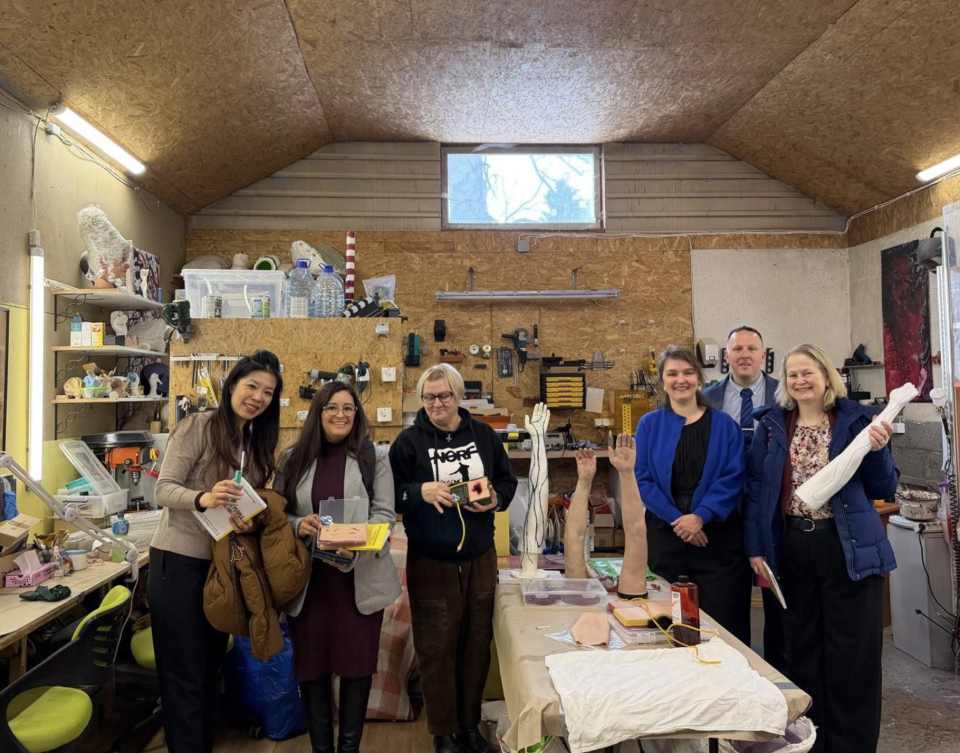
Over the course of a semester, students Chad Gepfrey (MGT ’26), Tamila Kindwall-Keller (MGT ’26), Lisa Marie Serrano-Eftychiou (MGT ’26) and Christina Qi (MGT ’26), functioned as an external consulting group for PropsAid’s CEO, Helen Maidre, as the company weighed the expansion of their business model.
“It was gratifying to know that our team had the opportunity to contribute to the company's journey during an important stage of its growth,” said Kindwall-Keller.
“I was initially drawn to the project because of my background in the Navy and personal experience with the operational training we received,” said Gepfrey. “Throughout my military career, we used medical training props and simulation devices to prepare for medical emergencies and traumatic situations. I understand firsthand how important realistic training tools are for building confidence and competence before facing real-world, life-and-death medical scenarios.”
Another student involved in the project, Kindwall-Keller, is a medical professor and physician who enrolled in the MBA program at Weatherhead to “broaden [my] understanding of leadership, strategy and innovation beyond traditional healthcare settings.
“Throughout my career as a hematologist-oncologist, educator and program builder, I have seen firsthand the importance of high-quality training tools in developing clinical skills and improving patient outcomes,” she said. “The project addressed a real need by exploring how realistic simulation models can enhance healthcare education through more immersive and accessible training experiences.”
Four interconnected focuses, one long-term goal
Building on the foundational knowledge they learned in the MBA program, the students separated their objectives to provide an expansion roadmap to the company.
“Although we came from different professions, geographic regions and stages of our careers, we quickly developed a strong sense of camaraderie and mutual respect,” said Kindwall-Keller. “Each team member brought a distinct perspective, which enriched our discussions and strengthened our recommendations.”
Gepfrey led market and competitive benchmarking, mapping the healthcare simulation landscape and documenting where PropsAid held the edge over its rivals. Kindwall-Keller drove operations and supply chain analysis to design a future-state operating model, while Serrano-Eftychiou built a full financial model comparing revenue scenarios. Qi focused on customer and marketing strategy to define an ideal customer profile, ultimately mapping a go-to-market sequence for the company’s expansion.
The culmination of the project was an in-person visit to the PropsAid office in Tallinn, Estonia.
“What made the work feel substantive, rather than purely academic, was the Estonia visit,” said Qi. “Spending time in Helen's workspace, handling the actual products and sitting across from her team changed how we thought about the recommendations. It is easy to write about scalability in the abstract; it is different when you have just watched someone administer an IV into a silicone training arm and you understand viscerally why the quality of these tools matters.”
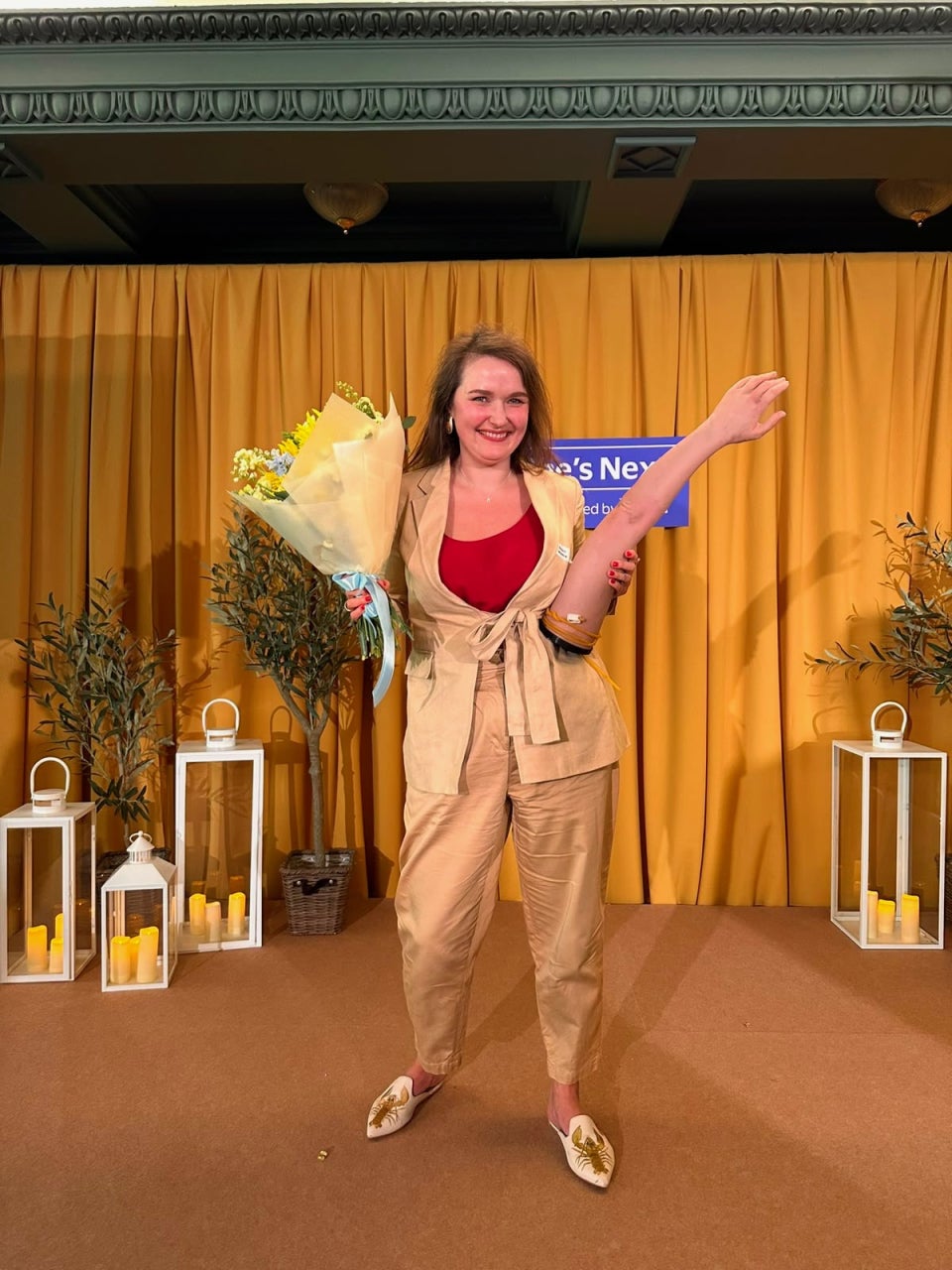
Research completed by the students was used in a PropsAid pitch at the Visa She’s Next program in the Baltics, and was selected as one of two national winners [CEO Helen Maidre is pictured left, accepting the award]. The award comes with a €10,000 grant, a year of one-on-one business mentoring and access to a community of women founders across the Nordics and Baltics.
A global reach
This group of MBA students faced a unique challenge: they were working with an international company while they themselves were spread across the country, with Gepfrey and Kindwall-Keller in the Cleveland area and Serrano-Eftychiou and Qi based in Southern California.
“Despite being geographically dispersed, we learned how to collaborate effectively, leverage one another's strengths and work toward a common goal,” said Kindwall-Keller.
While technology facilitated their meetings and work, the students' curiosity and shared commitment are what made the partnership successful.
“Projects like this remind us that education can extend far beyond campus,” said Gepfrey. “The lessons, relationships and impact can reach across continents and create value for organizations and communities around the world.”
Finding connections
Although the students dug deep into the PropsAid business model to examine their operations and sketch out a plan for scalability, the most memorable part of the experience was the connections they made.
“While we developed a strong professional relationship with PropsAid CEO Helen, we also connected on a personal level,” said Gepfrey. “There were plenty of laughs throughout the process. Helen, Tammy and I would often joke and complain about the snowy weather in Cleveland and Tallinn, only to be reminded that Crista and Lisa were enjoying the sunshine in Los Angeles. Despite being spread across multiple countries, states and time zones, we built genuine connections and worked together seamlessly toward a common goal.”
Students had the opportunity to spend time working together in person during their trip to Estonia, coming face-to-face with PropsAid leaders. Meeting the team—and one another—helped them gain a deeper understanding of the opportunities and challenges the startup was facing.
The student shared a common favorite memory: a lunch that had nothing to do with the project or PropsAid.
“We went out to lunch at an American-style diner in Tallinn, Estonia,” said Gepfrey. “What I remember most wasn't talking about financial models or marketing strategies; instead, it was talking about life. We shared stories about our families, our careers, the joys we had experienced and the trials and tribulations we had each faced along the way.”