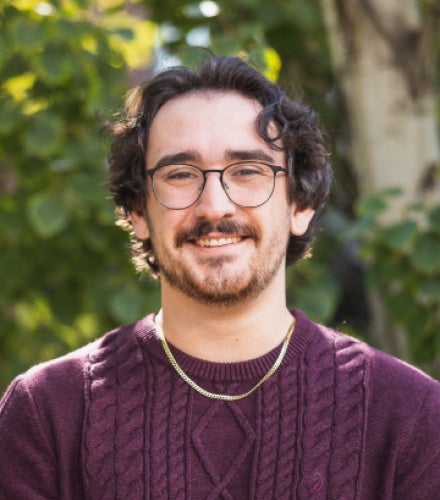
5 questions with School of Law’s Carter Callender, Class of 2026
As graduation approaches at Case Western Reserve University School of Law, students look back on the experiences that shaped their time on campus—and ahead to the paths they’re about to begin. From discovering their academic interests to gaining hands-on experience through clinics, competitions and internships, each journey reflects a balance of rigorous training and real-world application.
In this interview, Carter Callender shares what drew him to CWRU, the moments that defined his legal education and the lessons he’ll carry with him into the profession.
Answers have been lightly edited.
What initially drew you to CWRU?
My parents moved to Cleveland Heights sometime in my junior year of undergrad—that’s when I first noticed CWRU. As I began to get familiar with the area, I quickly realized how close we were to CWRU’s campus. I remember telling myself then: I would be at CWRU law school.
What actually got me in the door was the program itself. I was very focused on environmental law when I started out with a lingering interest in litigation, so CWRU’s focus on both of those programs really helped me see myself as a student on this campus. But—for sure—it was truly seeing the campus for the first time and a little bit of self-fulfilling prophecy.
What course or campus experience shaped your education most?
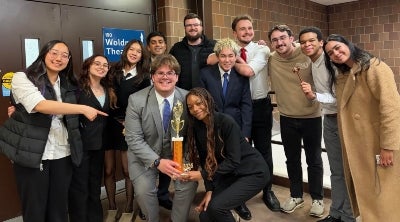
Mock trial—without a question. Really, anything that was related to trial or litigation work made my law school experience. Remember when I said that I had a lingering interest in litigation? The best part about CWRU is the opportunity to fully explore all of my interests, and I quickly realized my lingering interest was more of an obsession. The mock trial team was an amazing learning experience in my 2L year. In addition to competing, I got to coach the undergraduate mock trial team in my 3L year. It really encapsulated what the law school preaches—practical learning and application—all before you graduate. The best aspect of that experience wasn’t just being able to compete; it was the opportunity to learn from our amazing coaches, who are often recent graduates of the law school. They are incredible advocates and offered us advice on job searching, bar studying and even the 1L curriculum.
What is your favorite memory as a student at CWRU?
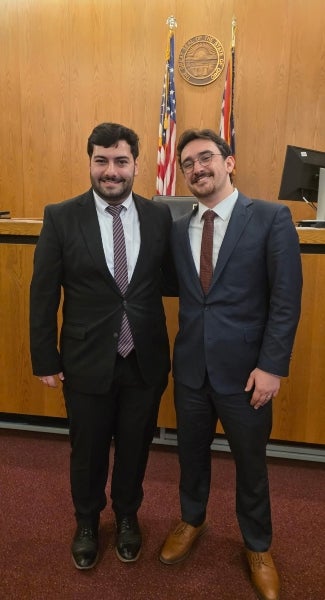
There’s a lot that comes to mind, from experiencing CWRU for the first time, to some of my favorite classes that I’ve taken, to the amazing amount of work I was able to do in my final year of law school. But the best experience goes back to what shaped my education the most: mock trial. One of my best friends from childhood is also in law school at Ohio State. We met in middle school, ended up going to the same college, and both had an interest in mock trial. In my two years competing, we’ve been able to “face off” in the fourth and final round of each yearly competition. It was a very full-circle moment that I got to experience, with one competition hosted in Columbus and the next hosted in Cleveland.
What’s next for you after graduation?
I’m lucky enough to head to Elk & Elk in Mayfield Heights where, after the bar, I’ll start as an attorney with them! Bar studying is the immediate next step, but I truly am looking forward to the experience there knowing that CWRU prepared me for that position.
What advice would you give to new students in your program?
Big picture: It’s not that deep. There are a lot of instances in law school where the work tempts you to get bogged down by minute details that don’t matter and aren’t worth your time. You spend time with these small facets of your reading or your papers for no reason—but it’s not that deep. Always keep yourself focused on what really matters and why you came to law school in the first place.
Small picture: Get a bookstand for your textbooks. Just a small one for your desk. It’ll prevent a lot of neck strain from hunching over your textbooks when you’re doing your reading at night. Also: highlighters—multiple colors. Create your own system, but in my opinion, it’s the most effective way to read.