Bridging the gap: CWRU students work to make healthcare communication clearer
Across the United States, a routine doctor’s visit isn’t always simple. For many patients, understanding medical information, navigating online portals or even knowing what questions to ask can feel overwhelming. This reality led to the creation of the Health Fluency Project (HFP), which aims to bridge the gap between the healthcare system and the communities it serves.
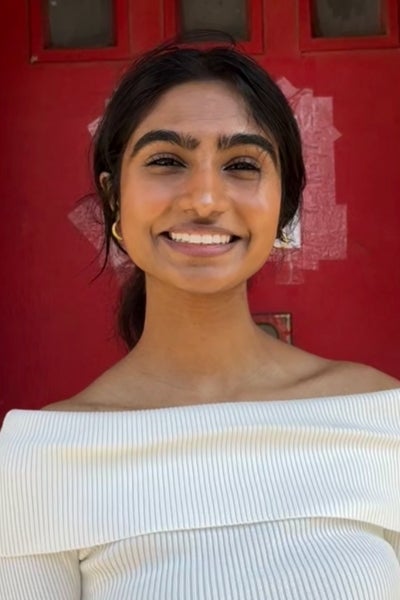
At Case Western Reserve University, third-year students and HFP co-presidents Vishnu Kumar and Nikki Pillai have taken that mission to heart, focusing on making health information not just available, but understandable.
Shaped by childhood experiences translating for family members and witnessing loved ones struggle to understand or feel heard in medical settings, both understood firsthand how easily communication gaps can impact care.
This led both to join the Health Fluency Project in 2024 and has since fueled their dedication to ensure that patients receive information in ways that are clear, culturally respectful and accessible.
Building confidence, one session at a time
Inside classrooms at the Hope Center, a Cleveland immigrant and refugee center, Kumar and Pillai saw how health literacy challenges shape everyday experiences for local residents. While leading English as a Second Language workshops, they worked with participants navigating not only a new language, but also a healthcare system they didn’t necessarily understand.
Through these sessions, the duo saw how language barriers and limited access to clear health information can create obstacles long before a patient begins discussing treatment options.
“Several participants told us that they often felt unsure what questions they should ask their doctors and sometimes felt hesitant to ask anything at all,” said Kumar, a nutritional biochemistry and metabolism student on the pre-dental track. “In some cases, interpreter services were not consistently available, which made those conversations even more difficult.”
To help participants feel seen and represented, they ensured that at least one volunteer on their team was fluent in the students’ native language, which helped them translate information directly and help explain concepts in a way that felt familiar and clear.
Over time, the pair saw uncertainty slowly turn into active participation. As sessions progressed, participants grew more comfortable—repeating vocabulary aloud, taking notes and photographing whiteboards or slides to revisit later.
“Some participants asked if we would return to run more workshops, which made it clear that the sessions were meeting a real need,” said Pillai, who studies biology and public health.
From classroom lessons to real-world impact
Behind the scenes, Kumar and Pillai were learning just as much. Alongside developing public speaking skills, they became more intentional about how they presented information—paying attention to pacing, simplifying concepts and reading nonverbal cues from their audience.
“At first, it was definitely nerve-racking to stand in front of new groups and lead a workshop,” Pillai said. “But the more sessions we ran, the more comfortable it became.”
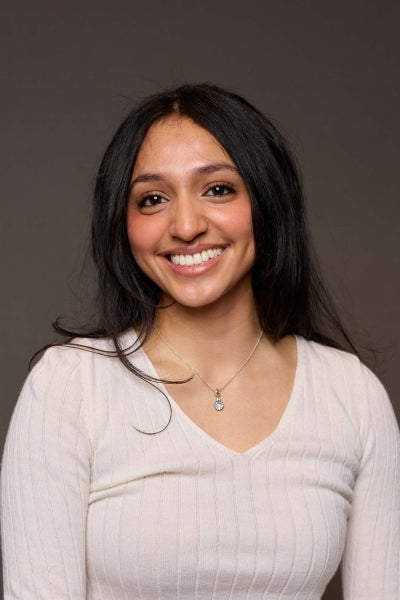
Today, they draw on both their experiences at the Hope Center and their academic work at Case Western Reserve University to guide their approach. Coursework in bioethics and medical humanities has shaped how they think about communication, autonomy and patient understanding in real-world settings.
“We came to see that ethical care isn’t just about providing the right treatment,” Kumar explained. “It also requires making sure patients actually understand their options and feel able to take part in decisions about their own health. Ideas like informed consent and patient autonomy only work if someone can understand the information.”
Their studies have also encouraged them to think more critically about how communication barriers show up in modern healthcare systems—especially in digital tools that can unintentionally widen disparities when information is overly technical, culturally insensitive or inaccessible to those with limited health or digital literacy.
“Studying bioethics has reinforced our belief that improving health literacy and language access isn’t just helpful,” they said. “It’s a core part of providing ethical, patient-centered care.”
Over the summer, Kumar and Pillai plan to continue these initiatives and are developing a virtual platform that will host recorded workshops and downloadable, plain-language resources for asynchronous access by members of the CWRU community—and beyond.
Through this opportunity, student volunteers will gain hands-on experience not only by helping deliver workshops, but also by designing culturally and linguistically competent handouts that translate complex medical information into accessible language.
On campus, the team also collaborated with Students4Refugees to help prepare, assemble, and distribute care kits for refugee communities in Cleveland.