The bug stops here: how a CWRU alum left Google to build an AI startup
Every time a software team releases an update, there’s a new risk of something else breaking. CWRU alum and entrepreneur Michael Rosenfield (CWR ’17), saw the problem firsthand at Google—and watched engineering teams manually check that nothing had gone wrong after every change.
His San Francisco-based startup, Decipher, uses AI to do that automatically—flagging problems before users ever encounter them.
“At CWRU, I was encouraged to build things outside of academics, whether it was at hackathons with friends or software craftsmanship classes where you produce something by semester end,” said Rosenfield, who majored in computer science at the Case School of Engineering and minored in cognitive science in the College of Arts and Sciences.
After graduating, he joined Google, where he served as a senior product manager on large projects including the first native ads format on Google Maps.
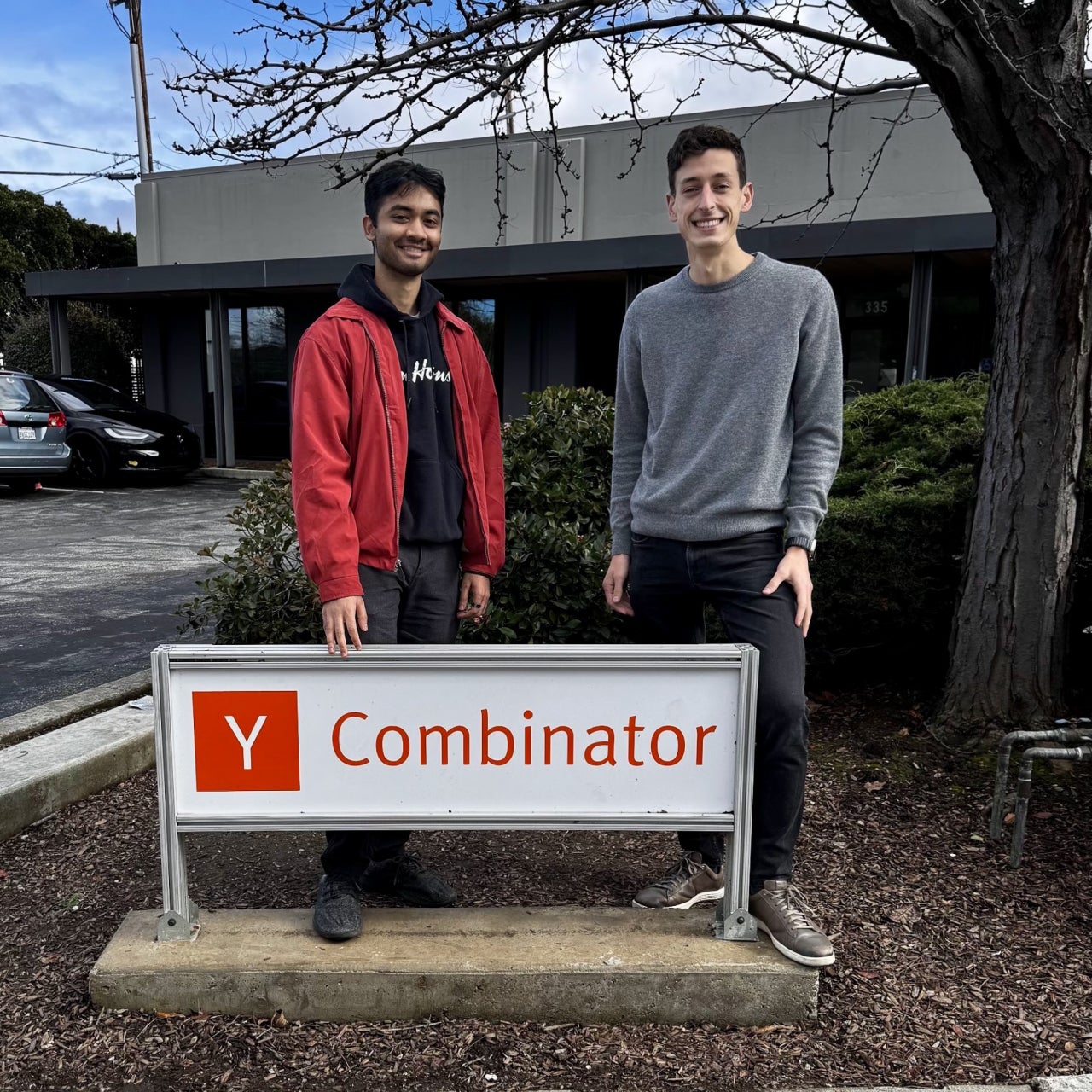
He left in 2023 to co-found DecipherAI alongside Rohan Das, a former Google staff engineer who had led the team behind the YouTube homepage. The company joined the winter 2024 cohort of Y Combinator (YC)—a prestigious Silicon Valley accelerator that has backed startups including Airbnb and Dropbox.
By the end of its YC program, Decipher AI raised a seed round—its first significant outside funding. Since then, engineering teams at Arize, Reducto, and M7—all fast-growing startups in the AI space—have signed on as customers, using DecipherAI to keep their own products running smoothly.
In the conversation below, Rosenfield reflects on his entrepreneurial path—including staying active with CWRU’s Veale Institute for Entrepreneurship—as well as lessons he took from YC, and what he tells CWRU students who want to launch their own startup.
How did you begin planning your business venture? What resources at CWRU were available to you that were helpful in getting started?
I started well after CWRU, so I didn’t take full advantage of the campus resources that are available to students today [including Sears think[box] and grants and programs through the Veale Institute of Entrepreneurship].
We effectively quit our full time jobs to explore solutions to the problems we saw while working at Google—especially challenges that are resonating with folks in the real world.
By the end of our time at Y Combinator, we successfully fundraised a seed round [a startup’s first significant outside investment—the initial funding that lets them hire, build, and grow].
What were some experiences you gained from Y Combinator (YC) that shaped your journey? What advice would you give students to take advantage of such networking opportunities?
Every week at YC they had great visitors at every stage of the entrepreneurship journey you could think of, from the Airbnb founder to a robotics company founder. They showed you how to think from different angles and asked good questions to expose what newcomers must understand about existing challenges.
You can sort of see what factors contribute to making a big sale when you’re in a room with hundreds of companies—and it sinks in that you can achieve it too.
What advice would you give students who want to participate in accelerators but don’t know where to start?
Start applying to a bunch. But the honest question to consider is if you will be in a good position to do well once you’re there. Much of the application process boils down to demonstrating skills that accelerators are looking for. It goes beyond education—it’s about being able to build something from start to finish.
There has never been an easier time to code, but can you do it in a way that solves someone’s problem? Prove to accelerators that you can build in tandem with the customers’ wants, whether that’s with a family friend, other students, or in your parents’ industry.
They want to know if you are the person who can truly go from point A to B in a three-month period.
What do you think is the most appealing part of having a software based company?
Working in hardware had its own difficulties in terms of planning years in advance and associating a real cost with little elements. With AI you can do really fun, infinite things and iterate incredibly quickly.
Software solves a huge portion of consumer and business problems, and it’s a cool space to be in.
What do you think the world will look like in 5-10 years with emerging AI technology? Are there any destructive elements to this?
The world will look similar but with more abstractions done for you.
For example, if you want to buy something you won’t have to explore in an annoying way across websites, because your AI will already know what you want. Except, it will be like that for everything. Engineers have mostly stopped coding, but they’re spending time on different tasks like architecture, design, and customer service. It’s not that they’ve stopped working, it’s just that their day-to-day tasks have changed.
There’s no way around the destructive drawbacks. It’s not that AI will completely replace the need for people to do jobs. However, there will be a harmful transition period from an educational or social media standpoint, or even after finishing a traditional college path of earning a bachelor’s degree.
I have faith that the right policies will be arranged. It will take intention.
What was a significant challenge you encountered when launching your product?
The biggest one is finding customers. You need to find somebody who feels the pain of a problem largely enough that they will use your product, then strike a balance between that and proceeding in the right direction.
You can say to a CWRU student: ‘I’ve got a really good queen mattress cover, you’re all going to love it!” And then you find out they don’t actually have queen mattresses. So you change it to twin mattress covers, but they cost a thousand dollars. Then you realize CWRU students don’t have that money to spend.
You always have to solve a problem in the right way for the right person.
What is your perspective on collaboration in starting a company?
My co-founder came from engineering while I came from the product side, which is focused on what to build and for whom. So, we bring together expertise from different areas.
Having someone with the same incentives, who has endured the same struggles, and asks the same questions is incredibly helpful to move in the right direction together.
What elements of your undergraduate experience at CWRU helped you grow into your role as a founder?
I gained real-world exposure through internships. Learning the fundamentals at school was valuable in kicking off my software journey.
There are students who do their work and then there are those who apply their work, which is its own kind of entrepreneurship. That alone is bringing a product into existence, which is a process that CWRU encourages.
Are there any limitations to the AI field?
I would say anything in the physical world like automating warehouse work or expensive robots that don’t communicate well with today’s large language models.
Novel research can be helped with AI, but you won’t solve anything by snapping your finger.
AI is also not great at aesthetic taste yet either, so it can help iterate a website quickly but not make it easier to use or more beautiful yet.
Anything you learned on the job that can’t be gained in the classroom?
Mostly things you can only learn through practice, like how to do a sales call and build product intuition. I joined a full-time job with an onboarding program for 2 years which teaches the fundamentals. Employees who are recent graduates tend to be put in a prime position to learn.
Entering industry sets you up for success and you can always choose to jump ship later to start your own independent business.
Karin Ong is a first-year student at CWRU and an intern with the university’s Veale Institute for Entrepreneurship