Can a startup create the next big step in organic chemistry with electricity? A CWRU alum is trying
A conversation with Jordan Swisher (CWR ’15), co-founder of a chemicals startup in stealth mode
Polymers are in your water bottle and grocery bag. They’re also in the carpet under your desk, the airbag in your car, the jacket on the back of your chair, and countless other places.
Most people never think about them—until there's a price spike or supply chains tighten, and then they suddenly command attention.
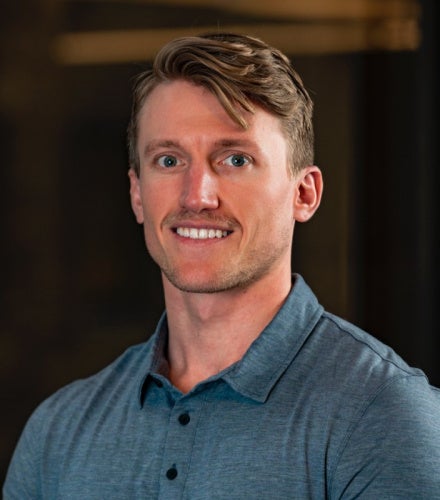
Jordan Swisher, PhD (CWR ’15), has been thinking about polymers for years.
He's the co-founder of a startup still in stealth mode, working to make industrial chemicals with electricity. The company uses electrocatalytic chemistry—a process in which electricity and catalyst materials drive chemical reactions—to replace some of the expensive, emissions-heavy steps in traditional manufacturing.
The first target (still under wraps) is something you are familiar with. The market is enormous, and the material is everywhere. Swisher’s bet is that renewable electricity can make production cleaner, more resilient and, once they scale, cheaper.
The work draws on years in chemistry labs and materials startups.
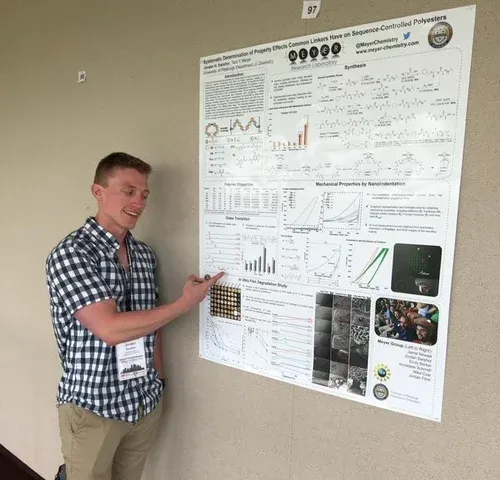
Swisher earned a BS in chemistry from CWRU’s College of Arts and Sciences, a PhD from the University of Pittsburgh in 2020 and served a postdoctoral fellowship at Northwestern, where he helped develop Megalibrary technology—an approach that lets researchers create and test vast numbers of material samples at once.
Leaving Northwestern, he put his academic career ambitions on hold, to serve as director of chemistry at Mattiq, a startup company aiming to revolutionize materials discovery through Megalibraries and AI. Before leaving in late 2025, Swisher led electrochemical research and helped secure federal funding.
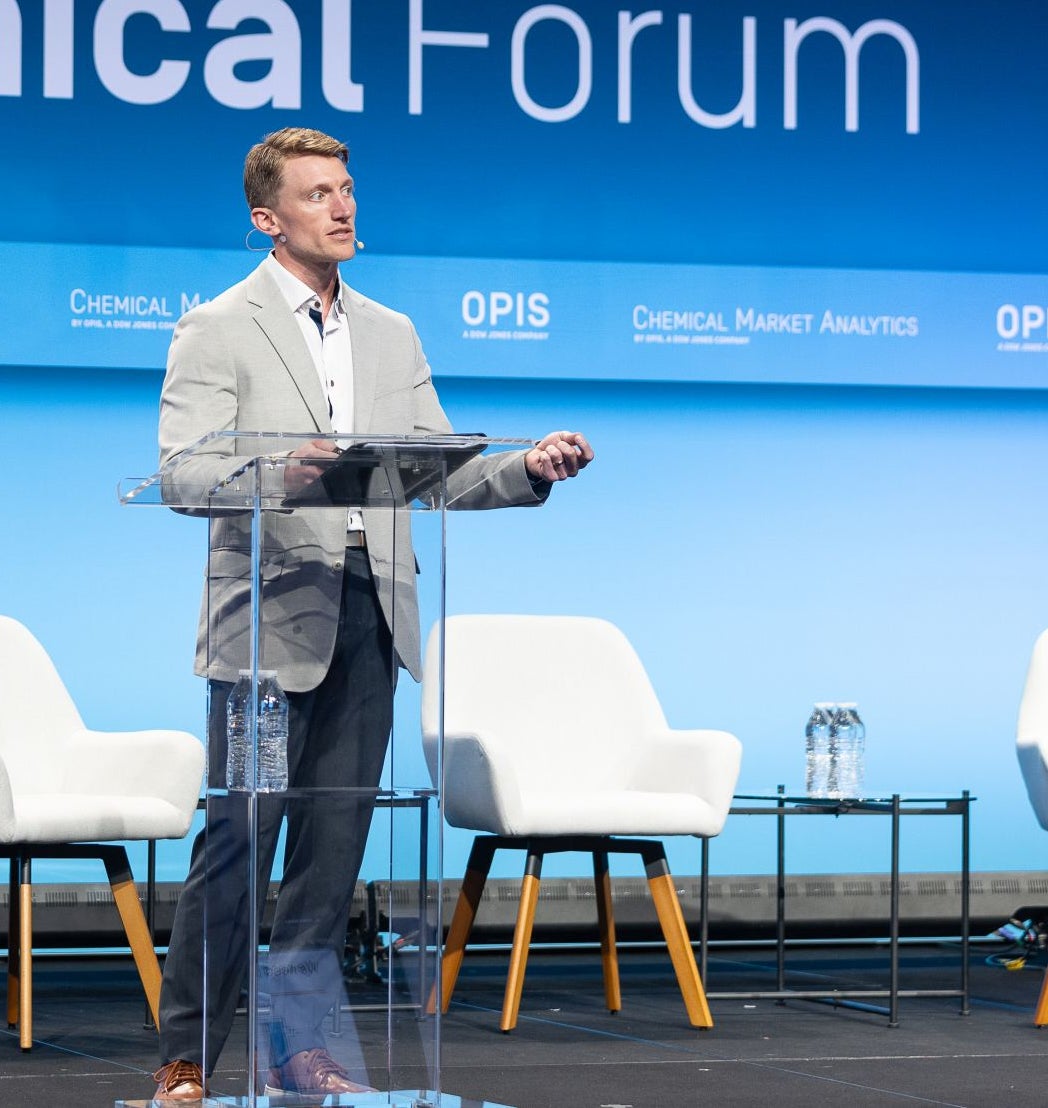
This spring, Swisher returned to CWRU’s campus for the Veale Institute for Entrepreneurship’s Entrepreneurship Speaker Series, where he walked students through a problem that’s equal parts technical and practical: how to make the materials inside cars, carpets and clothing without the cost, emissions and supply chain headaches that are inherent to today’s chemicals industry.
In the conversation below, Swisher talks about why startups demand extraordinary focus, the brutal organic chemistry exam that changed how he solves problems, and why students should say yes to more conversations—even when they don’t yet know where those conversations will lead.
What’s the most important lesson you’re bringing into this new chapter?
Two big things:
Lack of focus has killed more startups than almost anything else. Focused execution is paramount.
Spending more money to move faster is a trade-off you should almost always be willing to make, because the clock is always ticking.
What’s an exciting aspect of electrochemistry for the future of manufacturing?
It can solve so many of today’s chemical manufacturing inefficiencies—they let you skip dirty work you’d otherwise have to do with reagents.
You can use power from renewable resources to do chemistry directly. That means you avoid the downstream ripple effect of emissions, transportation and storage that comes with making chemicals. Dollars that don’t need to be spent are saved. Units that don’t need to be built are deprioritized.
What inspires your problem-solving approach? Did anything at Case shape how you think today?
I think about the world like an organic chemist. Our brains are wired in a weird, different way.
I look at problems the way I’d look at a retrosynthetic pathway—start with the product and work step by step backward.
Funny story: I think I got an 8% on my first-ever organic chemistry exam; turns out, partial credit isn’t always a thing. That propelled me to improve, and I’ve adapted that same stepwise procedure to everything I do now.
How did you start working toward industrial sustainability? What advice do you have for students who want to do the same?
Move to Europe—no, I’m just kidding.
Sometimes it’s a matter of lucking into it. I was passionate about sustainability, but I wasn’t necessarily chasing it career-wise. I got roped into a startup at my previous company that was focused on it. Five years later, I’ve gone deep into the world of sustainability and haven’t looked back.
What inefficiencies in the chemical and material supply chains are hardest to address?
One of the biggest challenges is capital expenditure (CAPEX) intensity—how much money it takes to build and maintain these systems. Economies of scale have pushed production into larger and larger facilities, leading to highly centralized supply chains.
This paradigm also makes it harder to innovate. Producers are hesitant to develop a new technology that might make their (greater than) $1 billion depreciated assets obsolete.
When did you get interested in entrepreneurship?
In 2020, when I first joined a startup.
How important is industry or corporate experience for starting your own company?
Industry or corporate experience? None. Startup experience? Very.
If you want to learn how to build a startup, go work in one first—not necessarily a big company. Watching how a startup operates day to day is the best experience you can get.

How do you deal with setbacks when you’re working with resources on this scale?
Learn from the mistakes, and put precautions in place so they don’t happen again.
There are millions of ways for things to go wrong. The important part is building procedures as preventative measures. Losing a bunch of money and operation time is a learning process.
What’s your strategy for building an effective team?
Hire more for attitude than skills.
All things equal, I’d take someone motivated to make things work over someone with an edge in experience or a niche skill set. That attitude of striving toward success is rare, and early hires will make or break the company. Attitude, work ethic and cultural fit matter most.
What’s your advice for students who are just starting to network? How do you pitch an idea to someone who doesn’t know your industry?
Always say yes to the meeting. If someone wants to talk, do it. If there’s a networking opportunity, take it. Networking is an improvable skill. The better you are at it, the more doors will open. You never know what might come from a simple conversation.
If you’re truly an expert, you should be able to pitch at every level of sophistication—from a professor who’s spent three decades in the technology space to someone who hasn’t got a clue.
What’s next for you?
We’re about to be off to the races building a generational chemicals company, changing the face of US chemical manufacturing. I’ll be at that for however long it takes to get there.
Bonus: A tip for students taking organic chemistry.
Don’t try to memorize everything. It’s way more important to map the electron densities in your mind. Build intuition around visualizing higher and lower electron densities in complex molecules.
Follow the electron clouds, and you’ll probably get good at it.
Karin Ong is an intern with the CWRU Veale Institute for Entrepreneurship.