Case Western Reserve University researcher receives award from the Hartwell Foundation to study cystic fibrosis gut disease
Leah Gates will study epigenetic mechanisms behind severe gastrointestinal complications in children with cystic fibrosis
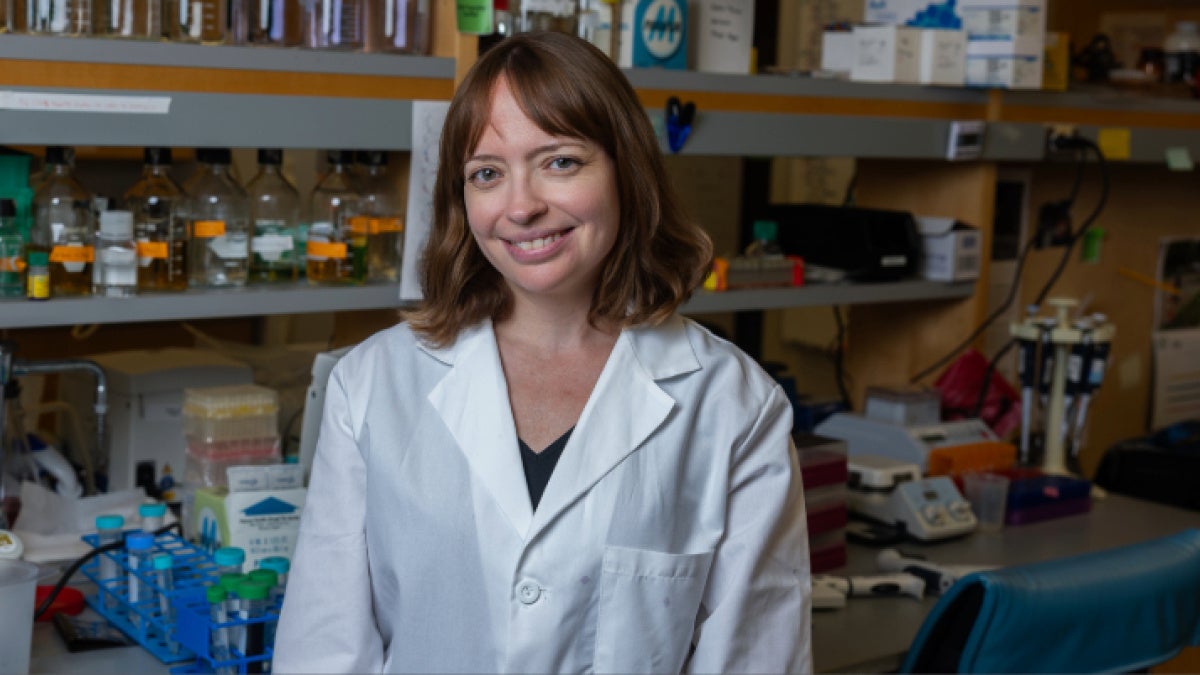
Case Western Reserve University researcher Leah A. Gates, PhD, has received an Individual Biomedical Research Award from the Hartwell Foundation to pioneer a new approach to treating life-threatening gastrointestinal complications of cystic fibrosis (CF) in children. Case Western Reserve is one of a select group of research institutions invited annually to nominate candidates for Hartwell Individual Biomedical Research Awards.
Gates, an assistant professor in the Department of Biochemistry at Case Western Reserve University School of Medicine, will receive $300,000 over three years to fund her early-stage, innovative project, “Targeting Epigenetic Regulation in Cystic Fibrosis Gut Disease.” Additionally, postdoctoral researcher Sanya Mehta, PhD, has been designated as the university's Hartwell Fellow, providing two years of direct-cost funding at $50,000 per year.
Recent breakthrough therapeutics, such as cystic fibrosis transmembrane conductance regulator modulators, have vastly improved pulmonary function and extended life expectancy for the more than 40,000 children and adults with CF in the United States. However, these therapies do not always address severe digestive issues. More than 85% of patients suffer debilitating gastrointestinal complications that begin before birth and persist throughout life. Infants and children may experience chronic pain, severe nutrient malabsorption, dangerous intestinal blockages requiring surgery and an increased risk of long-term complications such as colorectal cancer.
Gates’ research addresses a critical unmet need by targeting the underlying causes of digestive complications in cystic fibrosis that current therapies generally do not resolve. Instead of focusing solely on the well-known genetic mutation associated with CF, she explores epigenetic mechanisms—a hidden layer of molecular switches that control gene expression. By understanding and potentially resetting epigenetic changes affecting the intestinal lining, her work could pave the way for treatments that go beyond symptom management and directly restore healthy gut function.
“This transformative support from the Hartwell Foundation allows my lab to grow and pursue a new research direction, where we are expanding our research in epigenetic mechanisms to cystic fibrosis,” said Gates. “Our ultimate goal is to make discoveries about fundamental disease processes that can benefit patients.”
Unlocking the epigenetic switches
Specialized stem cells rapidly renew the gut lining. In CF, this renewal is disrupted, increasing permeability and damaging barrier function.
Using advanced mouse models and small, three-dimensional self-organizing tissue structures grown in the lab to mimic the architecture and function of the intestine, called organoids, Gates' research team and collaborators have generated preliminary data showing that the molecular switches controlling gene expression are profoundly dysregulated in the CF intestine. By mapping altered cellular mechanisms, Gates aims to reveal why these changes cause the disease and identify precise intervention targets. Her project will screen FDA-approved drugs and therapeutics already in clinical trials to reset these switches. Because safety data already exist for these therapies, the strategy could accelerate the development of clinical interventions for children, addressing an urgent need.
This project has key support in CF biology from the laboratories of Mitchell Drumm, PhD, and Craig Hodges, PhD, along with clinical expertise from Senthilkumar Sankararaman, MD at Cleveland Clinic.
“I am honored to receive this award and to be part of this outstanding scientific community,” said Gates. “I’m so thankful to have my lab here in the incredibly supportive and collaborative community from within my department to across campus and Cleveland.”