Tech, business and education: Discover 5 CWRU student startups
Editor’s note: Juliene Jones, the author of this story, is a student employee in the Department of University Marketing and Communications. She is a third-year student majoring in political science, international studies and sociology.
Case Western Reserve University students are entrepreneurial multitaskers, simultaneously launching businesses while earning their degrees. From AI-powered language tools to smart health devices to an inclusive swim cap, students on campus identify real-world problems and build innovative solutions.
With support from CWRU through programs such as Sears think[box], Veale Entrepreneurship Lab, the School of Medicine’s Translational Fellows Program and the Morgenthaler-Pavey Startup Competition, students have the opportunities, training and resources required to launch and grow their companies.
These students are working to bridge gaps in language, medicine and sports, while learning the importance of networking, research and strong teamwork.
Read more about five student startups and their founders at CWRU.
AISA Solutions: an AI-powered sign language learning app
Founded by: CWRU student Amirali Rezaei, and collaborators Reza Sadeghi and Ali Reza Paziresh
Through AI-powered apps, AISA Solutions develops digital solutions for deaf and hearing individuals, with accessibility at its forefront. AISA School, the startup’s first app, teaches American Sign Language (ASL) through lessons, interactive practices and real-time feedback.
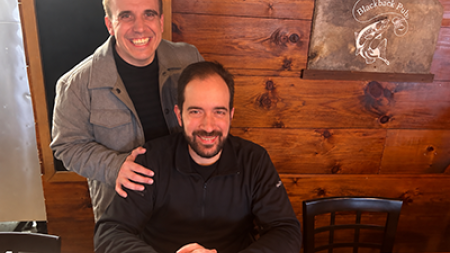
Amirali Rezaei, a third-year student studying finance and computer science, was inspired by a desire to communicate and connect with his cousin, who is hard of hearing.
Pursuing an integrated Master of Finance degree from Weatherhead School of Management, Rezaei's classes have exposed him to the business world and provided the necessary foundation to incorporate the startup and launch the app in 2025.. Last summer, Rezaei was one of the first five startups to go through the Veale Entrepreneurship Lab, a structured summer accelerator designed to support early-stage venture teams. Last year, Veale helped Rezaei formally incorporate the startup, which he founded in 2022.
Launching his first software startup has forced Rezaei outside of his comfort zone. His biggest challenges have been fundraising and scaling, but the experience has taught him how to confidently network, reach out to potential customers and have hard conversations.
Rezaei attributes the company’s success to his dedicated team, which includes another CWRU student: Ethan Hunt, a third-year computer science student.
AISA School currently has more than 200,000 downloads, more than 17,000 active users, and a paid version. Following the successful launch of their first learning platform, Rezaei and his team hope to add most major sign languages around the world.
“I'm a big believer that for you to learn business, you have to go and start a business yourself to experience it,” Rezaei said.
Neura: a smart sleep mask
Founded by: Ian Norfolk (CWR ’26), Kyle Porter (CWR ’26), Artem Zabarov (CWR ’26), Alex Melikhov (CWR ’26)
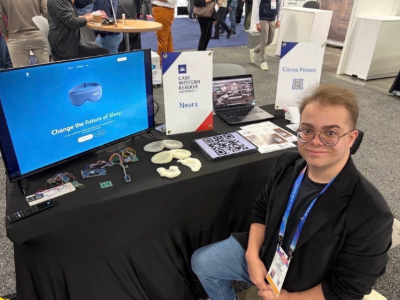
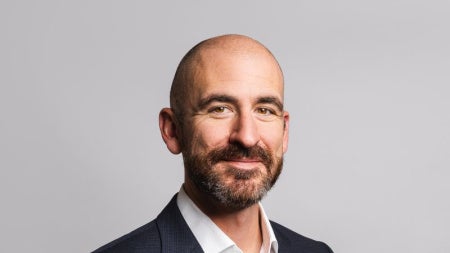
Interested in finding a solution to poor sleep and building physical technology, Ian Norfolk (CWR ’26) and his friends founded Neura.
Still in the early stages of prototype development, Neura is a smart sleep mask that uses a sensor suite and a machine-learning model to detect and analyze sleep stages with a 96% accuracy rate. Using a companion app, users are able to set a 30-minute window, during which the sensors will find the optimal time to wake up the user when they’ll feel refreshed.
Norfolk credits CWRU’s resources and connections— including Sears think[box] and Veale Entrepreneurship Lab—for allowing him and his co-founders to build Neura from the ground up. Norfolk, who worked at the Sears think[box] as a student technician, says the space gave him hands-on technical experience and skills outside of lecture halls.
As an engineering student, Norfolk had to learn the ropes of marketing, networking and customer acquisition. He learned the difference between making friends and making strategic business connections, saying it takes a different type of charisma to engage with potential customers and investors.
Norfolk developed and grew his networking and communication skills by attending conferences and trade shows, such as CES in Las Vegas and the Midwest House Summit in Columbus.
He is now refining Neura’s hardware prototype and developing manufacturing partnerships in the Ohio area, with the goal of keeping the technology made in America.
“I'm all about building technology,” Norfolk said. “I'm really passionate about trying to, at the end of my life, [being able to] look back and [say] ‘I built these things that made the world a better place.’”
OxyHeme: a blood test for anyone, anywhere
Founded by: Zoe Sekyonda
Zoe Sekyonda, a PhD student in biomedical engineering, is combining STEM research and entrepreneurship in OxyHeme, the concept for a device designed to assess stored blood and red blood cells samples in blood banks to determine how effectively they can still release oxygen after storage.
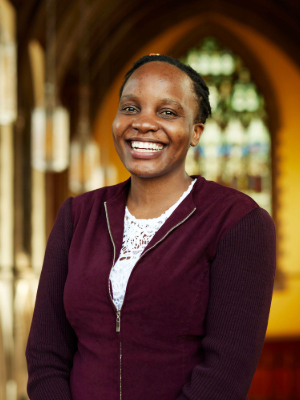
Sekyonda works with Umut Gurkan’s Biomanufacturing and Microfabrication Lab, where they developed the blood test. She also works with Andrew Rollins in the Biomedical Optical Lab, where they’re developing an optical reader prototype for the blood oxygen test. In the lab, Sekyonda has successfully measured blood to assess and identify various disorders and conditions, such as sickle cell disease.
In addition to applications in blood banks, Sekyonda also envisions the device being used in hematology laboratories to evaluate blood disorders that affect how red blood cells carry and release oxygen. Sekyonda’s goal is to develop an optical physical prototype point-of-care reader for testing blood samples in a clinical setting.
Sekyonda was motivated by a desire for her work to be able to directly reach patients and help save lives. Growing up in Uganda, Sekyonda knew she wanted to focus her PhD on developing point-of-care devices that are translatable and compatible in low-resource areas.
Jumping into the business world with an engineering background was a challenge for Sekyonda, but participating in the School of Medicine’s Translational Fellows Program, Morgenthaler-Pavey Startup Competition, and the Veale Entrepreneurship Lab at CWRU taught her how to design products for real-world application, conduct customer discovery, and understand how to position her research product as a value proposition. Learning these skills has been key to Sekyonda, who hopes to position her product to potential customers soon.
After succeeding in the lab, Sekyonda aims to develop a physical prototype and pilot the system in accredited blood bank and hematology lab settings to evaluate its performance with real-world blood samples and clinical lab workflows.
“When you do the PhD, you have the science, but then the next step is: How do you move the technology to reach the direct patients?” Sekyonda said. “That is where ventures come in, to take that technology from the lab and put it into different ventures, so that now it's able to reach your target patients.”
AquaLock: a swim cap for everyone
Founded by: Stacy Guech
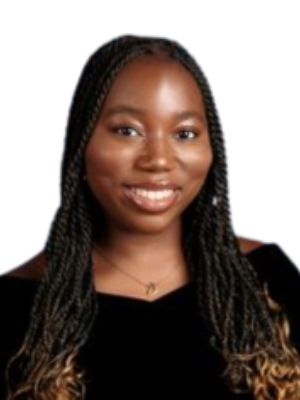
AquaLock, an inclusive swim cap line, is redesigning swim caps for different hair types, styles and volumes. The design combines an adaptive fit with layered materials designed to reduce water and chlorine exposure, retain moisture, and minimize friction on the hair and scalp.
Stacy Guech, a second-year undergraduate studying business information technology, was inspired by her own experience as a swimmer who struggled to fit a traditional swim cap over her hair.
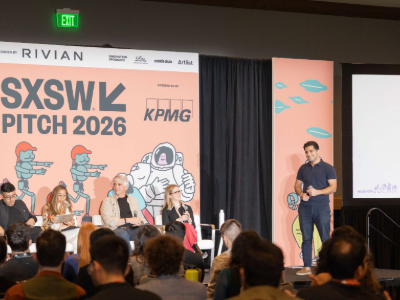
Guech pitched AquaLock in spring 2026 at the Morgenthaler-Pavey Startup Competition, through which she secured the startup’s initial funding. AquaLock placed second in the Idea Track, the category for businesses in their early stages of development.
As a business student, Guech’s extracurricular involvements center on entrepreneurship competitions and programs. By developing AquaLock, she has been able to apply what she’s learned to her own startup and build skills in research, product development, market analysis and public speaking.
Guech is currently building prototypes to perfect her swim cap design.
“I want to continue developing AquaLock through research, material testing, prototyping, and user validation, and ultimately bring it to market,” Guech said. “Building AquaLock allows me to apply the same skills I want to develop professionally, especially identifying problems, understanding users, and turning ideas into products.”
mAI Echo: cross-language interpretation in real time
Founded by: Cassandra López (CWR ’21)
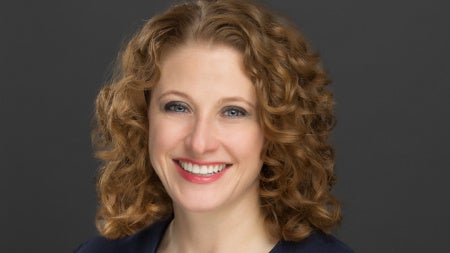
As a first-generation Mexican-American, Cassandra López has seen firsthand the challenges non-English-speaking families face, especially in healthcare. López, who has interpreted for her Spanish-speaking family since she was 4 years old, realized her experience is common among children of non-native English speakers.
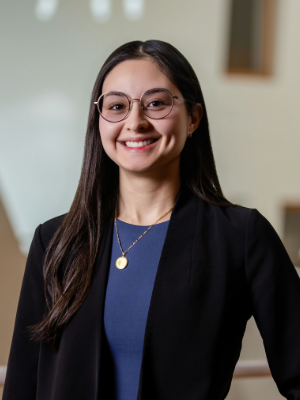
That’s why López, a bilingual speech-language pathologist and third-year PhD student in communication sciences, is developing mAI Echo, a tool to provide live cross-language interpretation between clinicians and patients by using personalized AI “vocal twins” to interpret speech in real time while still sounding like the original speaker.
Her research focuses on increasing the amount of speech recognition materials available to assess multilingual populations in audiology clinics. Read more about her research in the Speech and Auditory Research Lab (SpAR Lab).
Working on mAI Echo has taught López the importance of patience, research and a dedicated team. Through customer discovery, López learned how to ask the right questions and identify potential customers. López’s team of fellow CWRU students and alumni is also essential to her work, emphasizing the need for people who believe in the vision and value of mAI Echo.
Her team includes Thatcher Buck, a third-year polymer science and biomolecular engineering student; Aishani Patil (GRS, '26, computer science); Nathan Cox, a third-year computer science and business student; Emma Wang, a third-year computer science student; and Brandon Romero, a third-year computer science and math student.
López hopes to design mAI Echo for speech-language pathology and eventually expand it to other disciplines in health.
“I wanted to create something that helps people feel confident that, when they go to the clinic, they will have access to care and counseling that is individualized to their needs, without unnecessary delays.” López said. “We are all here trying to make something possible, and we are working together to make sure that one day that happens.”