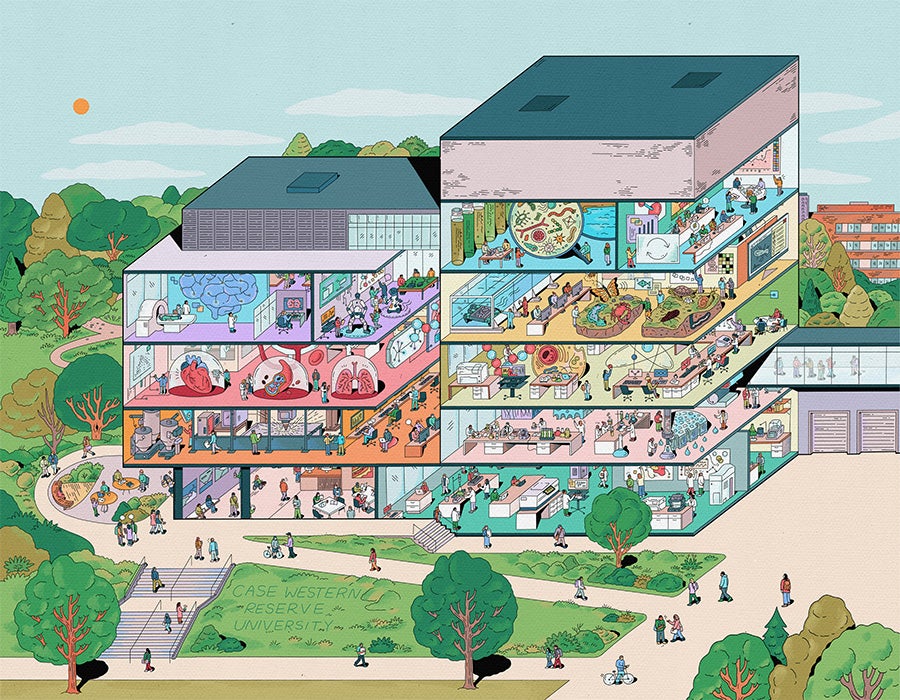
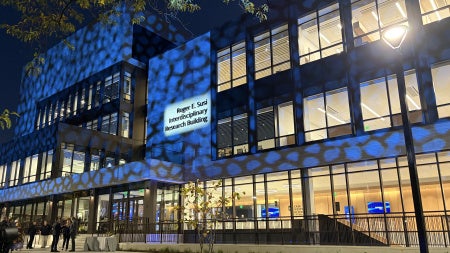
Targeting solutions: Inside the Susi Building’s Precision Diagnostics & Therapeutics research cluster at Case Western Reserve University
How a team of Case Western Reserve researchers is turning a decade of collaboration—and a portfolio of real-world innovations—into the future of precision medicine
This story is the fourth in a series introducing the research, people and building that will define Case Western Reserve’s next chapter of discovery. Over the coming weeks, we’ll go inside each of the seven research clusters and the resources that make the work possible.
Editor's note: This story was updated on Oct. 21, 2026, to reflect the new name of the building.
By many measures, the Precision Diagnostics & Therapeutics research cluster has already been generating the impactful, collaborative research the group is asked to tackle together in the new Roger E. Susi Interdisciplinary Research Building.
The faculty members who will form the new research group at Case Western Reserve University have been collaborating for years. The discoveries and innovations emerging from their labs have launched several startup companies, drawn tens of millions of dollars in funding and are poised to help patients around the world.
But under one roof in the Susi Building, these long-time collaborators will take their research further, find new efficiencies and work more dynamically toward impactful biomedical diagnostic and therapeutic applications.
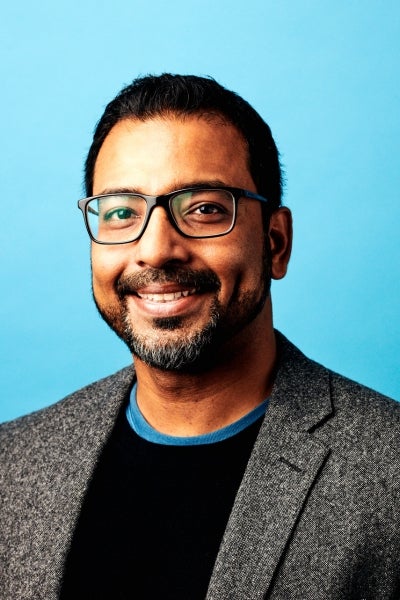
Or, as Anirban Sen Gupta, PhD, faculty lead for the cluster puts it, this is their studio-length album.
"There was a lot of music already happening," Sen Gupta said. "Now I can put it in an album. It's not like I'm releasing one single EP here and one single EP there. I'm releasing an album."
The album: Precision Diagnostics & Therapeutics. The studio: the Susi Building. The artists, or rather, the researchers:
- Sen Gupta, the Wallace R. Persons Professor in the Department of Biomedical Engineering;
- Pedram Mohseni, PhD, the Goodrich Professor for Engineering Innovation in the Department of Electrical, Computer, and Systems Engineering;
- Umut Gurkan, PhD, the Wilbert J. Austin Professor of Engineering in the Department of Mechanical and Aerospace Engineering;
- Abhinav Acharya, PhD, the Elmer Lincoln Lindseth Associate Professor in the Department of Biomedical Engineering;
- Agata Exner, PhD (CWR ’98; GRS ’00, ’03, biomedical engineering), the Henry Willson Payne Professor in the Department of Radiology at the School of Medicine;
- Mike Suster, PhD (CWR ’02; GRS ’04, ’11, electrical engineering and applied physics), research assistant professor in the Department of Electrical, Computer, and Systems Engineering; and
- Dante Disharoon, PhD, research assistant professor in the Department of Biomedical Engineering.
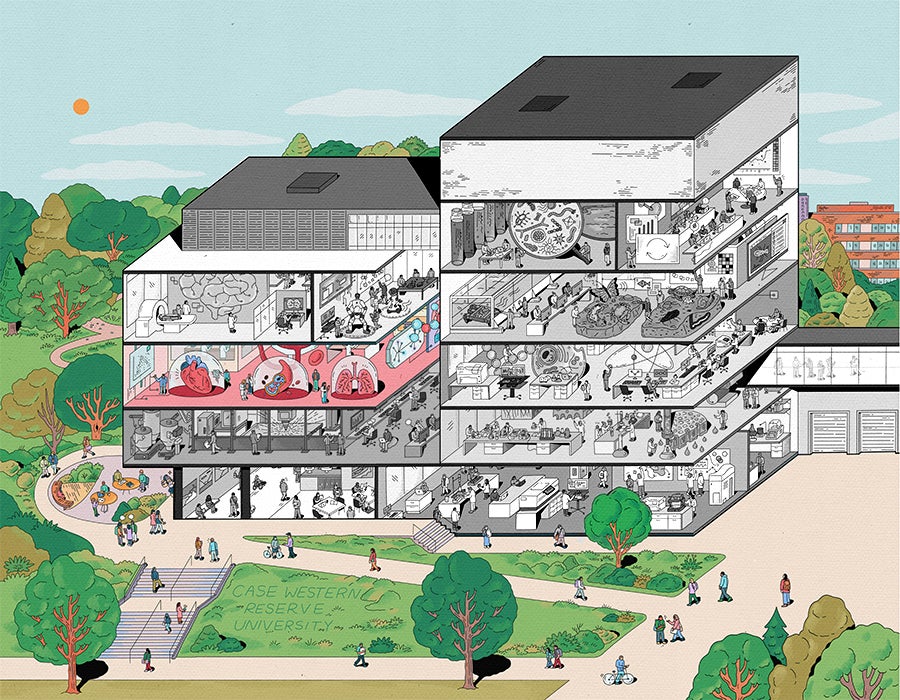
The Precision Diagnostics & Therapeutics cluster will work from the second floor of the Susi Building to develop the tools, techniques and technologies to close the loop between identifying what a patient needs and delivering it—at the right moment, in the exact amount, for that specific individual.
Consider continuous glucose monitoring options that allow patients to monitor their blood sugar at home. That's precision diagnostics. When connected with an automatic insulin pump that can deliver the appropriate dose of insulin to the patient as needed, that's precision therapeutics.
"It's essentially answering the questions of, who needs something? What do they need? How much do they need? And when do we stop?" Sen Gupta said.
Already delivering solutions
The cluster will apply a precision medicine framework to other care settings, situations and conditions. Its members already have a strong track record of successful innovations in this space.
For instance, CWRU startup Hemex Health licensed point-of-care screening technology invented in Gurkan’s lab to develop its product Gazelle. To date, it’s been used to screen more than 5 million babies and children for sickle cell disease globally. This year, it received FDA Breakthrough Device Designation and is approaching U.S. approval.
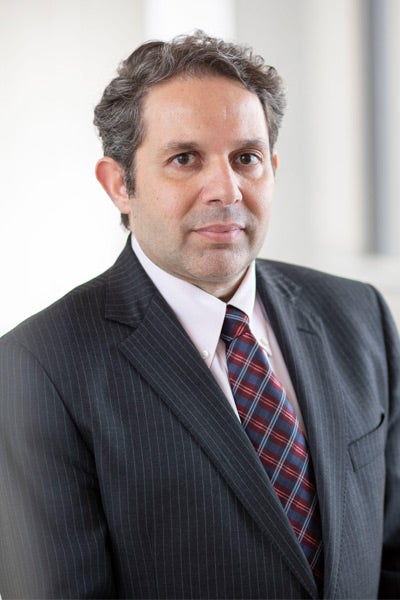
Mohseni and Suster invented ClotChip, a point-of-care diagnostic tool that can rapidly measure blood coagulability that was commercialized by CWRU spinout company XaTek Inc. This is vital data for patients with hemophilia, a genetic disorder causing insufficient blood clotting that can lead to excessive bleeding.
On the treatment side, Sen Gupta and his team have made fundamental discoveries for managing bleeding and clotting dysfunctions and are developing synthetic platelets for transfusion medicine, which could advance trauma medicine for hemorrhaging patients. Sen Gupta co-founded CWRU startup Haima Therapeutics, which uses platelet-inspired therapy to treat blood-related ailments.
Acharya extends the group's reach into the immune system. His research aims to reprogram how immune cells behave, with target conditions ranging from solid tumors to polytrauma.
He's also launched two startups of his own, reinforcing what he describes as a defining trait of the group: "We are all very translationally driven to advance our technologies to treat patients."
Taking collaborations further
The cluster will explore different modalities of therapeutics, detection and diagnostics, with research areas that will continue to evolve once they're under one roof.
While blood research has served as a common theme for many of the collaborations to date, Sen Gupta sees it as a unifying springboard to new research areas that will be explored as the cluster members begin working together in the Susi Building.
The longtime collaborators agreed: Why start from scratch?
“Let's hit the ground running” with what we know, Sen Gupta said, "and then other things can develop around it and emerge from it."
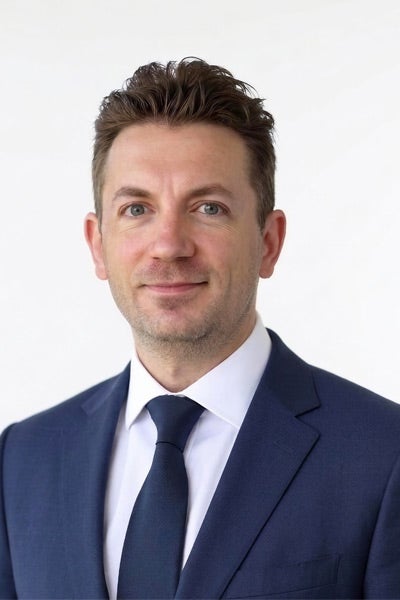
Each of the members brings deep, distinct expertise and technical capabilities to the cluster. Together, they intersect with one another and compound, driving their work toward greater impact.
Gurkan, for example, outlines the three key areas of expertise to the cluster, with translational and commercialization experience in each area: Microfluidics (the science of working with small-volume fluids), point-of-care diagnostic technology development and human tissue-on-a-chip systems.
The tissue-on-a-chip systems in the cluster align with a new federal initiative to replace animal testing with better alternatives and focus on modeling human disease in the lab. For instance, Gurkan's team could model an individual's vascular disease or cancer to then test how well a specific treatment would work on that disease model. CWRU startup BioChip Labs launched in 2020, commercializing the microfluidic tissue-on-a-chip technologies for applications in sickle cell disease.
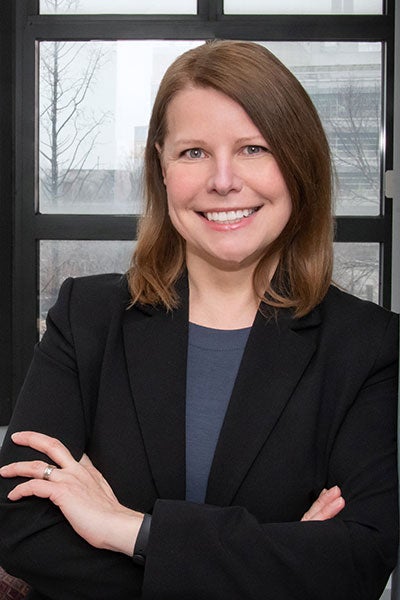
He collaborated with fellow cluster members on all of these projects—with Mohseni on point-of-care diagnostics, with Sen Gupta and Acharya on human-disease-on-a-chip models. Gurkan worked with Exner, whose research includes nanobubble ultrasound contrast agent-based diagnostics, to develop real-time imaging methods for microfluidic human disease models.
The cluster's work is already interdisciplinary and multi-sector, stretching not only across fields, but across industry and government partners. In a shared lab, they are optimistic they can take that further.
The Susi Building offers an important visibility for researchers that’s currently difficult while geographically scattered. The central location provides a window into the types of interdisciplinary collaborations undertaken at CWRU, which is a huge advantage when it comes to federal funding, Sen Gupta said.
If all capabilities are under one roof, it would be very efficient and strategic to demonstrate to funders the university's research capacity for building, for example, a robotics-enabled trauma treatment solution with the NeuroRobotics cluster, one floor above, Sen Gupta said.
Mohseni, too, is optimistic that the unified cluster within the Susi Building will open doors to bigger funding opportunities, such as training grants or center-level grants.
The Susi Building also provides new opportunities for industry engagement. Acharya is looking forward to developing deeper relationships with industry partners to see how they can leverage the equipment and expertise within the cluster and Susi Building to advance their work—something that's virtually impossible to do when the instrumentation is spread across multiple buildings on campus, he said.
Where the next breakthrough starts
The Precision Diagnostics & Therapeutics cluster can also turn to neighboring clusters in the Susi Building for some of those capabilities and to explore new research opportunities.
More than a year before the Susi Building's opening, Sen Gupta began discussions with faculty leads from a number of research clusters, including Molecular Therapeutics, with which they share a floor, as well as Advanced Materials & Manufacturing, the James M. Galm, PhD, PE Electrochemical Engineering & Energy Science and NeuroRobotics.
And students are set to benefit from all of this, with access to mentorship opportunities from multiple principal investigators as they're immersed in a cross-disciplinary environment.
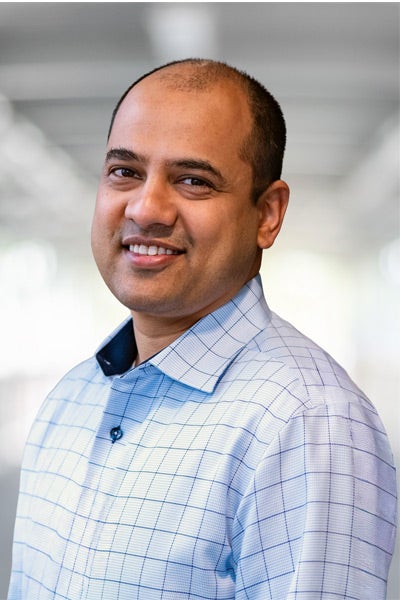
"Because we are [currently] in different buildings, different silos, physically separated, our students are not able to exchange ideas on a daily basis," Acharya said.
The cluster members purposefully designed the space in the Susi Building to sit staff and students next to one another so people can work together seamlessly, troubleshoot any issues and ask questions.
That proximity is also the perfect space for great ideas to flourish. Gurkan identifies two ways that collaborations typically start. First, when a researcher has an idea and seeks out a colleague whose work aligns. The other emerges more naturally when an idea takes shape over a cup of coffee or during a hallway chat.
Gurkan has had both types of these collaborations throughout his career, and finds the ideas that emerge naturally and unexpectedly are much more likely to succeed.
"I think when an idea emerges between two people as part of a casual conversation over coffee or lunch, they're more likely to own that idea and follow that idea further," he said.
These moments that invigorate everyone with a fresh idea are exactly what the Susi Building is designed to foster. The cluster members are eager to discover the possibilities and ideas that will emerge as they take their collaborations to the next level—and perhaps record their greatest hits.