CWRU Athletes in Medicine: The power of peer mentorship
Balancing the demands of athletics with the rigorous path toward a career in medicine is a uniquely challenging—and rewarding—experience. At Case Western Reserve University, a new student-led mentorship initiative is working to make that journey more supportive and sustainable for pre-med student athletes.
Case Western Reserve University Athletes in Medicine (CWRU AIM) is a club designed to connect undergraduate student athletes interested in medicine with medical students who were once in their shoes.
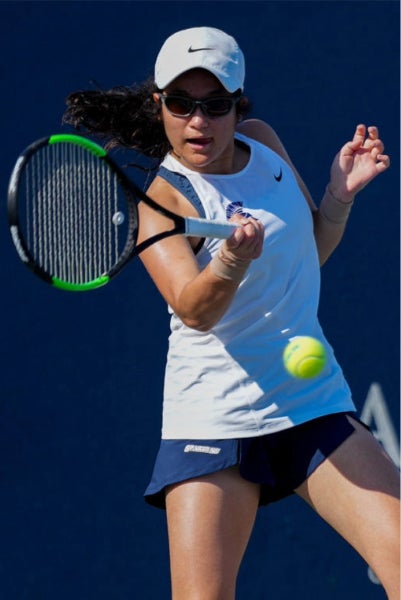
The idea for CWRU AIM grew out of personal experience. As a women’s tennis player, Hannah Kassaie’s (CWR ’24) favorite part of undergrad was CWRU athletics. Still, she acknowledges that being a student athlete interested in a future in health and medicine wasn’t all sunshine and roses.
“The experience as a pre-med athlete is really unique and, while a lot of fun, can be stressful at times,” said Kassaie. “Specifically at CWRU, the academics and athletics are at a high level, and having to manage difficult pre-med classes, extracurriculars, research and leadership—while also traveling and putting in dozens of hours a week for athletics—can be hard.”
While Kassaie was fortunate to have a good support system, she recognizes many aren’t so lucky. Now a medical student at the university, she’s working to bridge the gap between being an athlete and becoming a physician.
With that goal in mind, CWRU AIM was born.
At the heart of CWRU AIM is its mentorship program, which pairs pre-med and pre-health athletes with medical students who previously competed in collegiate athletics. Matches are based on specific interests and experiences, allowing for more meaningful and relevant guidance.
Mentors and mentees are encouraged to meet at least monthly, but there’s flexibility in when and how they communicate. Twelve former-athlete medical students are matched to 23 athletes, with most mentors taking on two mentees to meet the high demand.
Beyond mentorship, the club hosts meetings during which they cover topics like applying to medical school, preparing for the Medical College Admission Test, deciding whether or not to take a gap year, finding research opportunities, accessing CWRU resources and more.
The medical students who have brought the club to life share a common motivation: making the path easier for those who are in the same position they once were.
“I went to college at the University of Alaska-Fairbanks, where there were limited advising opportunities for those on the pre-med track. With no doctors in my family, I was forced to blindly blaze my own trail,” shared Lainey Lioi, a first-year medical student who is helping run the club. “By creating AIM with Hannah Kassaie, I hope to be part of a new wave of mentorship opportunities for CWRU undergraduate student athletes.”
For the athletes who have their sights set on healthcare, the positive impact of that new wave is already obvious.
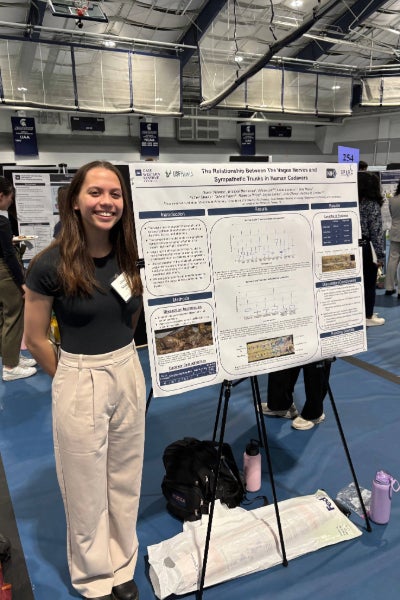
“Having a mentor who has gone through what I am going through has been extremely helpful because they understand the situation I am in and the hardships that we can face as pre-med student athletes,” said Lioi’s mentee, Grace Misiunas, a senior track and field athlete preparing to apply for medical schools. “It also takes some of the fear and pressure of applying to medical school off my back because I know that I have a support system to help me through it and a role model who has done it before.”
Ultimately, CWRU AIM represents a full-circle moment for Kassaie—a chance to give back to the programs and people that helped her get to where she is now.
“I want to pay it forward and share any experiences that might help student athletes, so they don't feel like they need to sacrifice athletics in order to be pre-med or vice versa,” she said. “Athletics is a great experience that shouldn’t feel like a barrier to becoming a doctor.”
Thanks to Kassaie and the mentorship community she’s built, it no longer has to be.