CWRU representatives are helping to shape the future of gerontology
Two faculty members and a doctoral student contributed to building a new framework for aging-related education programs
Three Case Western Reserve University representatives are helping shape the future of gerontology education, contributing to a national effort that will guide how students across the United States—and beyond—learn about aging.
Aloen Townsend, Ralph S. and Dorothy P. Schmitt Professor of Social Work at the Mandel School of Applied Social Sciences (MSASS); Courtney Reynolds (SAS ’15), a Mandel School doctoral student and member of the elder justice research team at the Benjamin Rose Institute; and Kylie Meyer, PhD, assistant professor at the Frances Payne Bolton School of Nursing, were selected for a national workgroup to update the Gerontological Society of America’s gerontological competencies.
These standards provide a framework for undergraduate and graduate programs offering certificates, minors and degrees in gerontology, defining what students should know and be able to do as they prepare to work with aging populations.
Townsend, Reynolds and Meyer were part of a 25-member interdisciplinary workgroup representing fields including psychology, nursing, social work, education and health sciences. The range of specialties in the workgroup reflected the nature of the gerontology field, which spans numerous disciplines to better understand and support aging.
A decade of progress
Work on gerontological competencies first began in 2012, with initial guidelines published in 2014. However, the field has evolved significantly over the last decade, prompting the need for a comprehensive review.
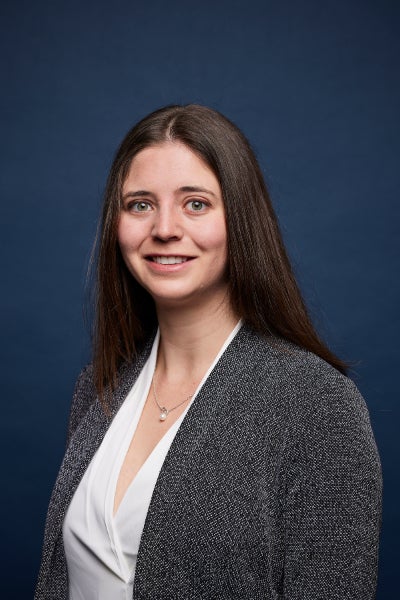
“New research has expanded our understanding of social and environmental influences on aging,” Meyer explained. “The biopsychosocial model is just the beginning; we recognize the effects of culture, built and lived environments, policy systems, social systems and the economy as influencing the experience of aging.”
The updated competencies reflect this broader, more nuanced view. They are designed not only to guide curriculum development, but also to help define professional identity in a field that draws from many disciplines.
“Clear competencies help define what it means to be a gerontologist,” Meyer said. “They help us articulate the core knowledge and skills that distinguish gerontology from other fields.”
Contributions from Case Western Reserve
For Reynolds, who focuses on elder justice issues such as abuse, neglect and exploitation, joining the workgroup was an opportunity to give back to a specialty she strongly believes in. Her background in applied research at the Benjamin Rose Institute made her a strong fit for shaping research-related competencies as part of the research subgroup, along with Townsend.
Meyer, meanwhile, contributed to the psychology subgroup, drawing on her expertise in aging, mental health and caregiving. Her involvement was also closely tied to ongoing work at Case Western Reserve to update its own educational offerings.
“At Case Western Reserve [Frances Payne Bolton School of Nursing], we were already revising our long-standing Certificate on Aging program,” Meyer said. “Participating in the national competencies update felt like a natural extension.”
The participation aligns closely with the university’s gerontological programs, courses, and research across the Mandel School, the College of Arts and Sciences, and Frances Payne Bolton School of Nursing, which will likely incorporate the competencies into their curricula. In addition to the revised Certificate of Aging, opportunities for students to specialize in aging are available across several disciplines, including the adult-gerontology primary care nurse practitioner graduate degree; graduate certificates in gerontology through the University Center on Aging and Health; and a BA in gerontological studies, among others.
Together, these efforts reflect a shared goal: preparing students to improve the lives of older adults through research, practice and policy.
“Gerontology helps students understand aging beyond stereotypes, balancing gains and challenges that come with aging,” Meyer said. “It prepares graduates for an aging society where older adults are a growing population served by healthcare, social services and even customer service systems.”
Looking forward
As aging continues to shape societies worldwide, the work of this interdisciplinary group—and the contributions from Case Western Reserve—will help ensure that the next generation of professionals is ready to meet the moment. With the updated competencies now approved and published, their impact will be felt in classrooms and programs across the country.
For the Case Western Reserve participants, the experience was both professionally meaningful and personally rewarding—with Reynolds seeing it as part of a larger mission.
“We have a unique opportunity to affect positive change and outcomes for the older adults around us in real time and for ‘future us’ as well,” she said. “The idea that I can work with, for and on behalf of older adults to help improve their lives in some way is a privilege.”
Meyer echoed that sense of forward momentum, emphasizing the importance of collaboration and innovation in the field.
“Gerontology is endlessly fascinating because it connects so many domains,” she said. “There’s something exciting about being able to take what you’ve learned and build on it—and to collaborate with others who do the same.”