CWRU undergraduate Chloe Meyer named recipient of the prestigious Barry Goldwater Scholarship
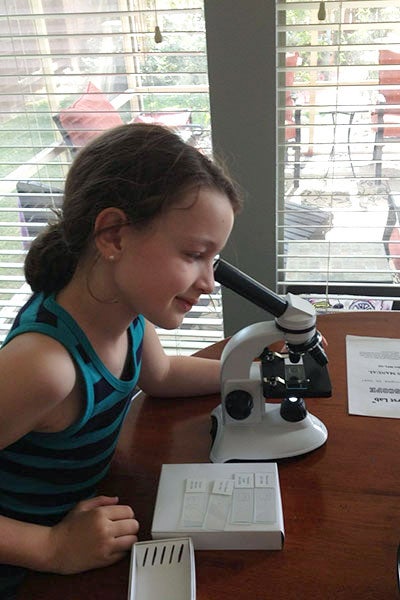
In elementary school, Chloe Meyer often got reprimanded for asking too many “why?” questions. When she asked for a microscope for her 8th birthday, her mom knew what Meyer herself would not until many years later: she was destined to become a researcher.
Instead, when Meyer came to Case Western Reserve University as a first-year student, she had plans to become a doctor, ideally pursuing an MD-PhD program for her training. That plan came undone when Meyer spent a summer conducting research in a lab at Washington University in St. Louis School of Medicine.
“I fell in love with research,” said Meyer, a rising fourth-year student majoring in physics. “I knew that's what I wanted to do with the rest of my life.”
And now her innate inquisitiveness is being rewarded on a national level. This spring, she was named a recipient of the prestigious Barry Goldwater Scholarship.
Now in its 40th year, the scholarship is awarded by the Barry Goldwater Scholarship and Excellence in Education Foundation to select undergraduate researchers in science, engineering and mathematics nationally. The university nominates students for consideration following a detailed application process. Meyer was among 454 undergraduates nationally to receive this year’s scholarship out of an estimated 5,000 applicants. In addition to a full scholarship, recipients receive access to a distinguished network of current and former scholars.
Being named to the 2026 class of scholars was even more meaningful for Meyer, who applied as a second-year student but was rejected. She gave herself a few days to recover, and then resolved to try even harder the second time around. Working closely with LaTasha Johnson, assistant dean in the Office of Undergraduate Studies, Meyer made a plan for the next application cycle.
In a field marked by setbacks and small victories, getting such an honor can be a relief.
“In research, it’s hard to refrain from comparing yourself to other people in your field,” Meyer said. “It’s a source of validation because sometimes I feel like I’m still not doing as much as I could [but] I got Goldwater so it means I’m doing something right.”
Making research a space for all
Meyer was drawn to the medical field through personal experience. When she was diagnosed with a rare genetic condition— Ehlers-Danlos syndrome—as a child, not much was known about this group of disorders at the time.
“It was disheartening,” said Meyer, who was told there was not much doctors could do to help her. “So I wanted to make a change for other people that were in my situation, and I thought the only way I could do that was by becoming a physician. I learned that was very wrong.”
Through her work in labs on campus and at other universities, she’s discovered the impact her research can have.
At CWRU, she conducts research year-round in the Chakrapani Lab, examining the structure and function of glycine and serotonin receptors using the two-electrode voltage clamp technique, with potential implications for such conditions as chronic pain, hyperekplexia and autism spectrum disorder.
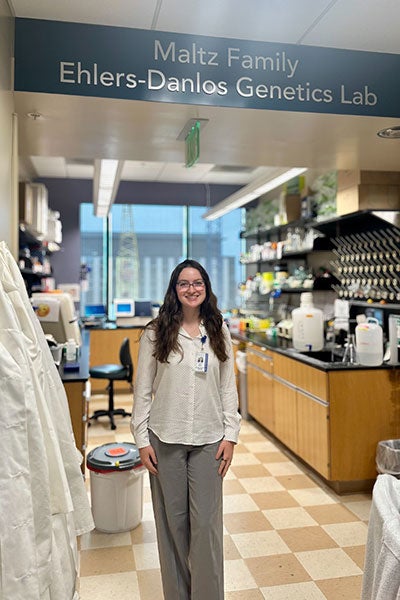
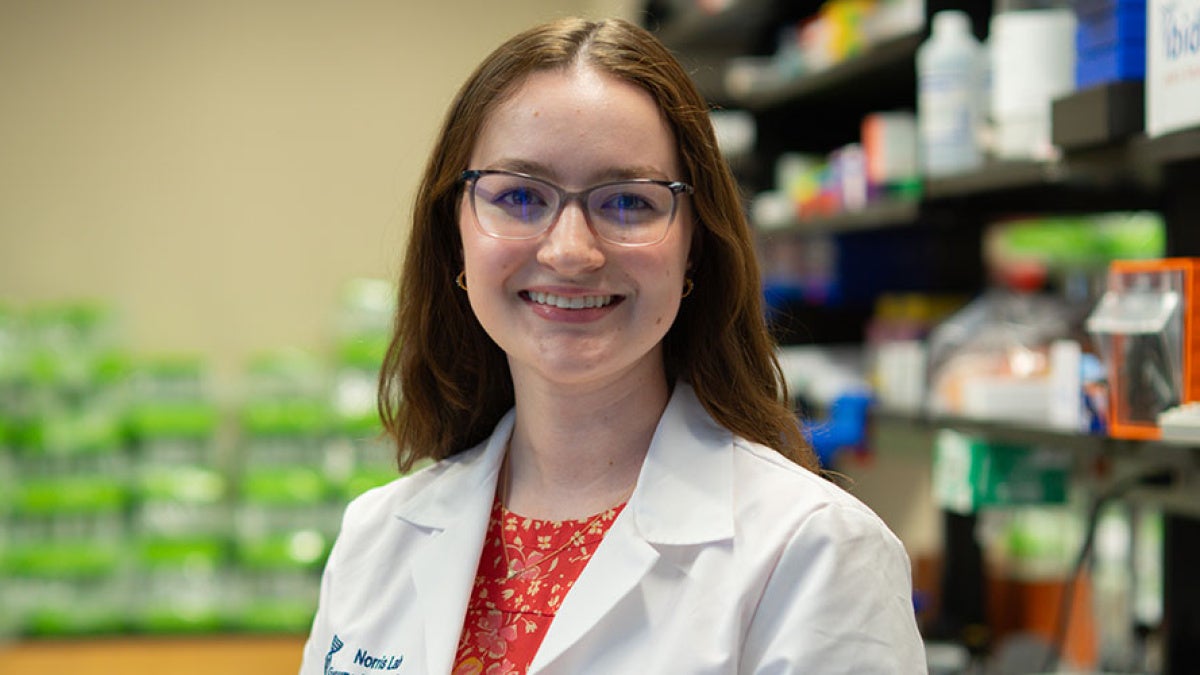
During the summer of 2025, Meyer had the opportunity to conduct research on her own condition through a dedicated research program in the Norris Lab at the Medical University of South Carolina. Using the patient-scientist model, Meyer and others with Ehlers-Danlos syndrome leveraged their lived experiences to conduct research to better understand the condition.
“It was the first time I’d met someone else with my condition so it was amazing to make friends with my condition, and also to work on understanding [it] better,” Meyer said.
Meyer hopes to lean into the patient-scientist model in her future research career. She aspires to become a principal investigator of her own fully accessible lab, creating spaces where others can use their lived experience to contribute to research on their own rare genetic conditions to improve treatment, diagnostics and care.
In the meantime, she aims to advocate for accessible spaces wherever she is. On the national level, she’s the only undergraduate student on the Biophysical Society’s Committee for Inclusion and Diversity. At CWRU, she has sought to make Greek life more accessible as a DEI manager of the Sigma Sigma Sigma sorority.
As the next step in her research career, Meyer will apply to PhD programs in biophysics and physiology in the fall.