Developing a robotic companion, CWRU graduate student aspires to support astronauts' mental health in space
Editor’s note: Jasmine Vo, the author of this story, is a student employee in the University Marketing and Communications department. She is a fourth-year student majoring in communication sciences.
Austin Wilson's childhood dream of becoming an astronaut had fallen to the wayside during his teen years, but it was always at the back of his mind. After graduating from CWRU with his bachelor's in computer science, he began to examine what he really wanted to do—and began to look to the skies.
He returned to CWRU and is now pursuing a master’s degree in computer engineering while he prepares to fulfill the requirements to become an astronaut.
“I am actively taking flight school courses as well as scuba diving training since astronauts also train a lot underwater,” Wilson said.
In 2024, Wilson (CWR ’22) joined the Social and Physical Human-Robot interaction (SaPHaRI) Lab, which uses empathetic, emotionally intelligent, human-centered design to create technologies that enhance human well-being across robotic and digital interactions. It’s led by Alexis E. Block, D.sSc, assistant professor at Case School of Engineering.
Mission: Mental health
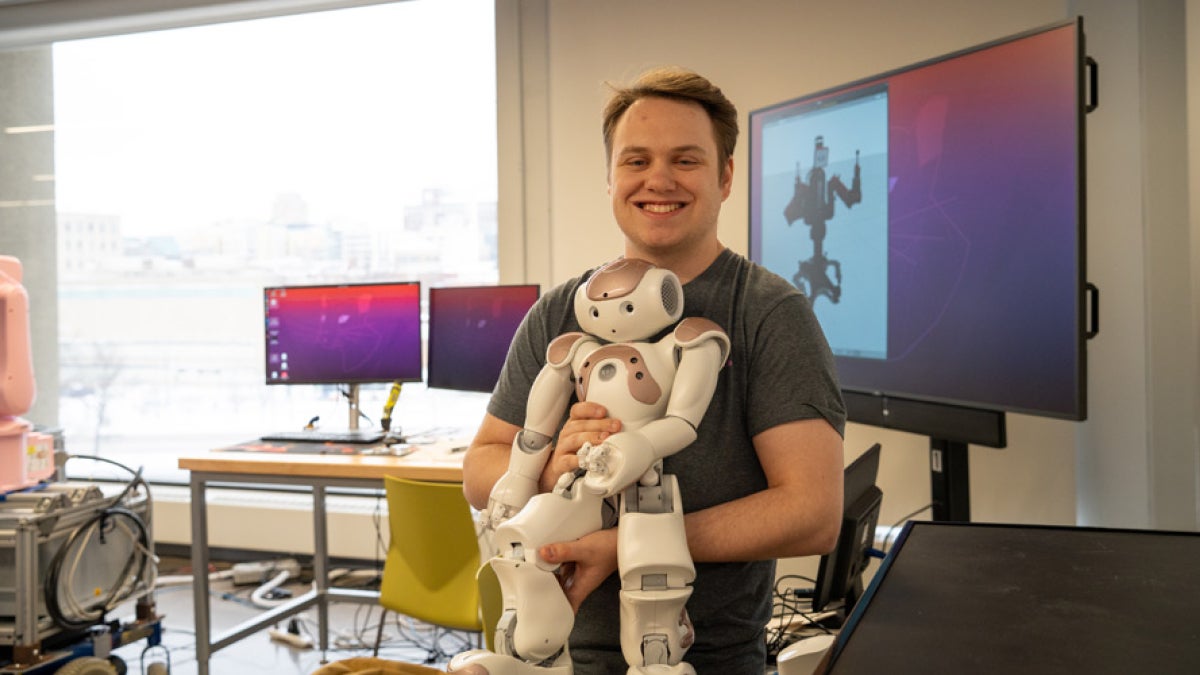
As a student in the lab, Wilson is working on a project that combines his dreams of becoming an astronaut with Block’s passion for social robotics and mental health. Wilson is developing a multimodel framework — a system that can process various inputs, such as speech or eye gaze data, to generate an appropriate, empathetic robot response. This project, AstroPsych, aims to provide a robotic companion in space for astronauts to support their mental health.

Since 2023, the SaPHaRI Lab, founded by Alexis E. Block, Dr.Sc, has aimed to investigate and improve human-robot interactions, initially inspired by her longing for family members' hugs.
This is particularly important when the communication between Earth and space is delayed, and human therapists are not instantly available. In some cases, communications between astronauts and mental health specialists on Earth can be delayed to 20 minutes one way, according to Moiser et al, making consulting activities potentially inefficient. This means robotic companions like AstroPsych may be useful for people with limited or delayed communication or access to help, like astronauts during space travel.
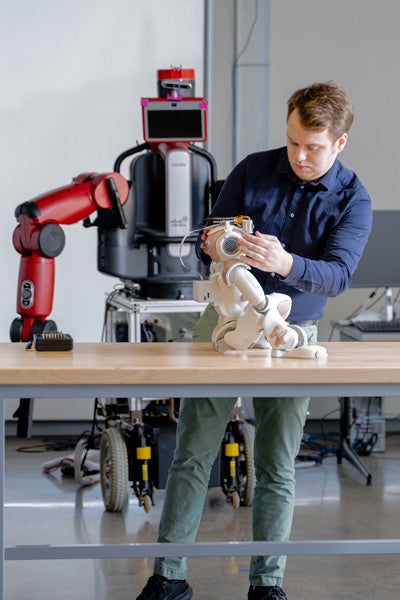
Robotic companions like AstroPsych could also be employed on Earth to support individuals with mental health needs. AstroPsych could, for instance, assist isolated individuals—such as those without internet access or access to a qualified human therapist.
AstroPsych, however, does not aim to replace human therapists, but to improve access to care for individuals with mental health needs when human support is not instantly available.
“My hope is that what we have developed at the SaPHaRI Lab will be used when I become an astronaut,” Wilson said.
Recently, Wilson presented a platform-agnostic, fully integrated hardware and software upgrade system for legacy robots at the 2026 IEEE/SICE International Symposium on System Integration (SII 2026) conference. This system enables robots to better detect their environment and deliver higher-quality conversations, which they showed enhances user experience.
By developing this system, Wilson and the team hope to improve the capabilities of old-fashioned robots that are no longer being supported by the providers, thereby extending their operational lifespans. See a video presentation of the project submitted to the conference.
Converging expertise
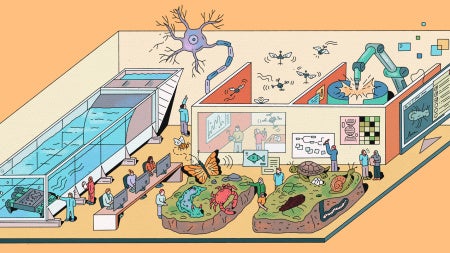
The SaPHaRI Lab is part of the Human Fusions Institute (HFI), an interdisciplinary research, education, and translation ecosystem that aims to advance and scale ethically-driven human-technologies. HFI — and, within it, the SaPHaRI Lab — provides a collaborative environment to develop new innovations like AstorPsych.
Wilson said his experience in the SaPHaRI Lab — his first time working in a research lab — is unlike any company he’s worked at. The lab brings together co-workers with cross-disciplinary backgrounds, providing diverse insights into how people communicate.
“We have students coming from various educational backgrounds, from engineering majors to cognitive sciences and psychology, and diversity beyond their educational backgrounds,” Wilson said. “This diversity allows us to think about and approach engineering and communication problems differently, which is especially beneficial for the building of a device that can support human mental health.”
Full circle at CWRU
Developing AstroPsych in the SaPHaRI Lab has been the perfect blend of Wilson’s interests. In high school, he became interested in web development work and decided to study computer science and computer engineering at CWRU.
“Being a Clevelander, I know about CWRU’s engineering programs,” he said, “and I was sure that I could see myself growing here.”
As he prepares to graduate with his Master of Science in Computer Engineering in 2026, Wilson’s eyes remain on the stars.
Wilson plans to complete his remaining flight school requirements and finish his master’s coursework shortly, positioning himself to qualify as an astronaut candidate.