Four Case School of Engineering faculty earn prestigious NSF CAREER Awards
Four Case School of Engineering faculty members are tackling some of today's most complex scientific and technological challenges—from making artificial intelligence (AI) more trustworthy and manufacturing more efficient, to creating robots that can provide emotional support and a more humanlike sense of touch.
Their work recently earned each of them a Faculty Early Career Development (CAREER) Award from the National Science Foundation (NSF), the agency's most prestigious honor for early-career faculty. The award recognizes researchers with the potential to serve as academic role models through outstanding research, education and community engagement while supporting projects that advance both scientific discovery and student learning.
Meet the four faculty members behind the awards—and learn how their research could shape the future of AI, advanced manufacturing, robotics and human-machine interaction.
Alexis E. Block
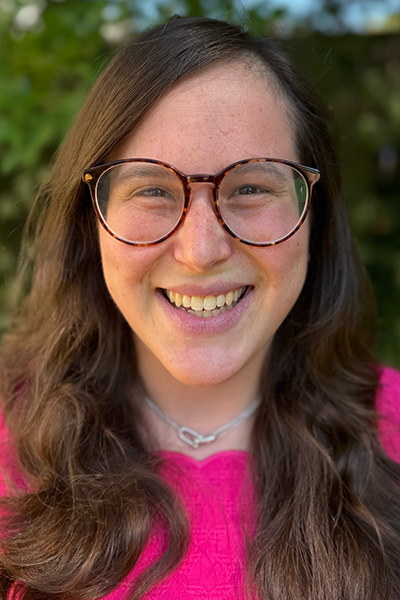
When a person isn't available to offer someone comfort during moments of emotional distress, could a robot help?
Alexis Block, DSc, will use her NSF CAREER Award to explore that question by developing robots capable of recognizing signs of emotional distress and responding with coordinated speech, gestures movement and—when appropriate and with consent—supportive touch. The project builds on years of research in human-robot interaction, including her earlier work studying how robotic hugs can provide comfort.
Block, assistant professor in the Department of Electrical, Computer and Systems Engineering, will collect synchronized data on speech, posture, movement and physiological signals during structured emotional experiences using participants’ self-reports to help interpret these signals. Her team will use those observations to develop models that help robots estimate when someone may need support and determine how to respond in ways that people perceive as comforting, appropriate and respectful of personal boundaries.
"I have been asking how robots can provide meaningful support during emotional distress since 2016,” Block said. “At the time, this direction of research was unfamiliar to many people, and its importance was not always immediately understood. I felt strongly that as robots became increasingly present in our lives, we needed to think seriously about equipping them with ‘emotional intelligence’ alongside artificial intelligence."
Beyond the research, the CAREER Award will support an Empathetic Robotics Residency for graduate students, an interdisciplinary HumaniTech Bootcamp for undergraduates, and expanded robotics workshops and research opportunities for high school students throughout Northeast Ohio.
"Human connection is irreplaceable," Block said. "These robots are intended to serve as an additional source of support during moments when a person is unavailable or difficult to reach.”
Jing Ma
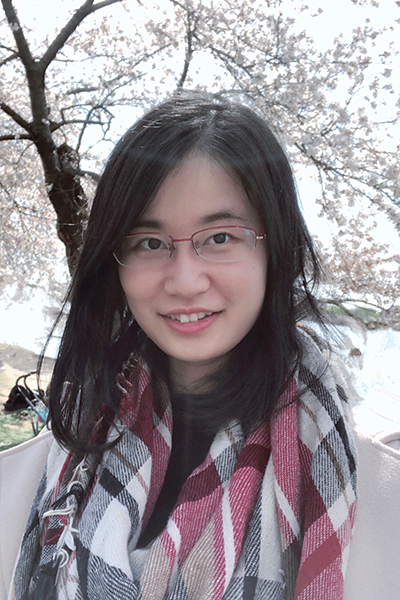
Supported by her NSF CAREER Award, Jing Ma, PhD, will develop new methods to help AI foundation models—the large, pre-trained systems behind tools like ChatGPT—understand and reason about cause-and-effect relationships instead of relying solely on statistical correlations.
Ma, an assistant professor in computer science and engineering who holds the Timothy E. and Allison L. Schroeder Professorship in Computer and Data Sciences, aims to make AI systems more transparent, reliable and trustworthy in applications where understanding why something happens is just as important as predicting what will happen.
"We want to push this research further and help people use AI in a more comprehensive and reliable way," Ma said. "We also want to relieve people from this AI panic. We're not trying to replace humans—we want to help people focus on what really matters."
To accomplish that, Ma's team will study what happens inside foundation models as they generate responses, then develop new methods to improve their causal reasoning and correct errors when the models rely on misleading patterns instead of true cause-and-effect relationships.
Those advances could improve AI systems used in healthcare, scientific discovery and environmental decision-making, where understanding cause and effect is essential for making informed recommendations and policies.
Receiving the CAREER Award is both an honor and an opportunity, Ma said.
"This award shows that NSF recognizes the potential impact of this research direction," she explained. "It's very inspiring for me to lead this project and attract more students and researchers to work in this area."
The five-year award will also support graduate students working alongside Ma on the project. She said all of the research outputs—including publications, code and datasets—will be made publicly available, helping other researchers advance the development of trustworthy AI.
Luke Osborn
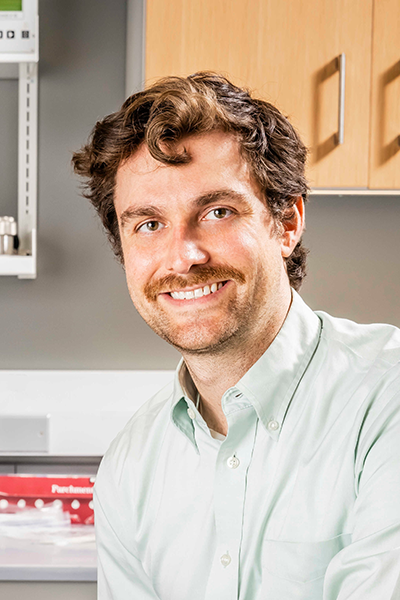
Luke Osborn, PhD, will use his NSF CAREER Award to develop a biologically inspired electronic "skin" that gives robots a more humanlike sense of touch. By helping robotic systems better detect and interpret tactile information, his research could enable people to interact more naturally and effectively with remotely operated robots and advanced prosthetic limbs.
Osborn, assistant professor of biomedical engineering at Case School of Engineering and the School of Medicine, will design layered, multimodal sensors that mimic the structure and function of human skin. Based in the Human Fusions Institute, his lab will build and test prototypes using materials that respond to different touch sensations, then evaluate how that added information improves a person's ability to control a robotic manipulator.
"Human skin is really good at feeling a lot of different things," Osborn said. "We're trying to improve the quality of that touch information that can be extracted from a robot manipulator by developing an electronic skin that can differentiate pressure, temperature, wetness and other useful properties."
The technology could improve robotic systems used in rehabilitation, disaster response, deep-sea exploration and space missions—situations where people rely on robots to safely interact with environments they cannot easily access.
Beyond the research, the NSF CAREER Award will support an open-source toolkit that helps students and researchers build bio-inspired touch sensors, along with hands-on workshops introducing participants from around the country to the growing field of bio-inspired engineering.
"This CAREER Award lets us ask how biologically inspired devices can improve a person's ability to effectively operate or control a robotic system," Osborn said. "It's exciting because it brings together people from different engineering disciplines to tackle a problem with applications across many different fields."
Abhinendra Singh
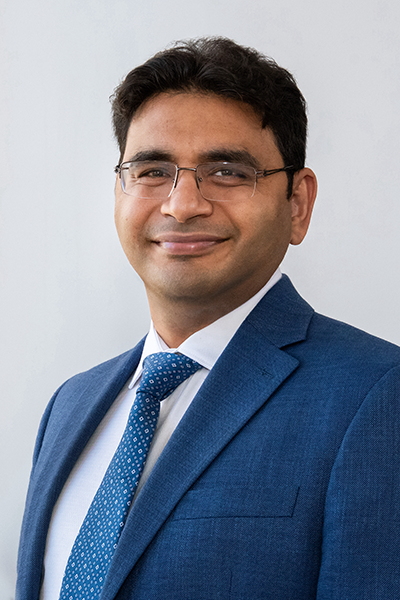
Abhinendra Singh, assistant professor in the Department of Macromolecular Science and Engineering, will use his NSF CAREER Award to develop computational, theoretical and data-driven models that predict how dense mixtures of particles and fluids flow. These complex "suspensions" are found in countless everyday products—from foods and cosmetics to paints, pharmaceuticals and concrete—but manufacturers still often rely on costly trial and error to determine how they should be processed.
"Almost every product you use passed through a stage where particles were suspended in a liquid and had to flow through a pipe, a nozzle or a constriction," Singh said. "The problem is that we still can't reliably predict that flow when the ingredients get complicated."
By combining physics-based simulations with machine learning, Singh aims to predict the behavior of these materials. His research focuses on especially challenging real-world suspensions, where particles vary in size and chemistry and are carried in polymer-based fluids—a combination that remains difficult to predict despite its widespread industrial use. If successful, the work could help engineers better identify formulations and processing conditions, reducing waste, energy use and manufacturing costs.
Beyond advancing Singh’s research, the NSF CAREER Award will support immersive educational experiences using virtual, mixed, and augmented reality, allowing students to step inside simulations and interact with complex particle-based materials in new ways.
"It's a huge honor," Singh said. "This is an award that celebrates not only the research, but also the teaching, mentorship and outreach aspects of being a scientist. It also reflects the creativity, hard work, and dedication of the students and researchers in my group, whose contributions make this work possible."