Get to know Michael Yaffe, CWRU School of Medicine's 2026 Commencement speaker
Commencement marks the moment when students become alumni—when every hour spent in classes, labs and hospital rooms pays off as graduates take the next step on the path to doctorhood.
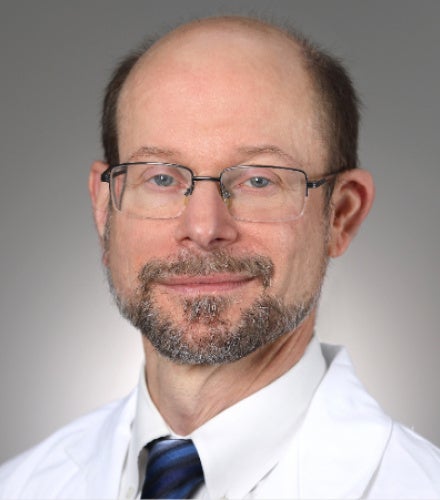
For Michael B. Yaffe, MD, PhD (GRS ’87, pharmacology; MED ’89), Case Western Reserve University School of Medicine’s 2026 Commencement represents a return to the place that launched his own journey to becoming a physician-scientist and educator. On May 17, Yaffe will deliver the school’s commencement address.
Yaffe is the David H. Koch Professor of Science and professor of biology and biological engineering at the Massachusetts Institute of Technology (MIT) as well as an attending surgeon and intensivist at Beth Israel Deaconess Medical Center, where he specializes in injury and surgical oncology. In addition, he directs the MIT Center for Precision Cancer Medicine and the Koch Institute Clinical Investigator Program.
A decorated veteran of the war in Afghanistan, Yaffe retired as a colonel from the U.S. Army Reserve Medical Corps in 2021. He is an elected member of the Association of American Physicians, a fellow of the MacVicar Faculty and a co-founder of several companies, including Consensus Pharmaceuticals, On-Q-ity and Merrimack Pharmaceuticals.
Ahead of commencement, we spoke with Yaffe about how his beginnings at Case Western Reserve have led to great success—and to get a preview of the wisdom he plans to share with the School of Medicine’s newest graduates.
What inspired you to become a surgeon and researcher?
I knew from a pretty early age that I wanted to be a doctor. Like a lot of kids, I was fascinated by the surgeons on the medical TV shows that were popular at the time. I even used to “practice” on my stuffed animals—cutting them open with a scalpel, removing some stuffing, and sewing them back together. Looking back, it’s a little surprising my parents didn’t have me evaluated more thoroughly, perhaps by a child psychiatrist!
More than anything, though, I was just relentlessly curious about how things worked—especially how specific arrangements of atoms and molecules somehow turn into the macroscopic properties of things in the everyday world that we experience. Plus, I’ve never hesitated in my career to ask ridiculously childish questions: Why does wood float? Why is metal shiny? Why can we see through glass? Why does a cut heal? Why does hitting your elbow make your whole arm go numb? And, of course, where do hiccups come from? How could atoms and molecules explain these behaviors? I never really grew out of that phase.
Two events in third grade probably nudged me even more toward medicine. In the fall, I broke my left femur in a bike accident, and in the spring, I was hit by a car and broke my right femur (along with a concussion, just to round things out). At the time, that meant six to eight weeks of in-hospital traction for each injury, so I spent a good chunk of that year in the hospital. It was a formative experience. I shared rooms with kids who had their bodies deformed or paralyzed from polio, muscular dystrophy and other serious conditions, which further piqued my curiosity and deepened my exposure to medicine. I sometimes tell medical students on trauma rotations that not every patient with multiple long bone fractures and a closed head injury fits a “social degenerate” stereotype—some of them grow up to become trauma surgeons.
In college, I studied engineering and physics. This same sense of profound curiosity, especially about how the human body works, made me want to see if I could apply a quantitative engineering-style approach, grounded in physics and chemistry, to the study of biology and medicine. At that time (late '70s and early '80s), there were only two universities that excelled in thinking this way—applying engineering methods to explore and treat human disease—and they were Case Western Reserve and Johns Hopkins. I had grown up in Baltimore, which at the time was a bit of a dangerous city, and I wasn’t especially eager to go back, so CWRU became the obvious choice. Cleveland wasn’t exactly known for being quiet and uneventful back then either, but it had incredible medical opportunities and one of the earliest and most successful MD-PhD programs.
Before coming to CWRU, I spent a summer at Hewlett-Packard Research Labs in Palo Alto and had the chance to shadow a neonatology fellow in Phil Sunshine’s NICU at Stanford. It was an eye-opening experience—the unit was incredibly advanced, and much of the technology keeping those precious tiny babies alive had come straight out of the Stanford electrical engineering labs. The emotional connection that I felt to those premature infants was so strong that when I got to CWRU, I expected that I would do something similar and become a neonatologist. But along the way, I fell in love with the idea of the body as a self-regenerating machine, and the idea that we could do molecular engineering using physical tools to steer the body to repair itself in very particular ways, so I ended up becoming a surgeon. I guess I realized that I liked to fix things, and people are pretty interesting things to fix!
At the same time, I have remained fascinated by how many basic questions about surgery we still can’t answer. We don’t really have a very good molecular or cellular understanding of why surgery works as well as it does, why it fails in some cases, or how we can make it work even better. That combination—being able to take care of patients in a very direct way while also trying to answer those bigger questions—ultimately pulled me toward a career as both a surgeon and a researcher.
How did your CWRU education help shape you and your career?
The education I received at CWRU was really the linchpin for everything I’ve been able to do in my career. It wasn’t just the scientific and technical training—though that was outstanding—but also the humanistic side of medicine that I learned from my teachers at CWRU.
CWRU was very ahead of its time in how it taught medicine. Instead of learning everything in isolated silos like biochemistry, anatomy and physiology, the curriculum was organized by organ systems—an idea championed in the 1950s and '60s by Jack Caughey, one of the legends of the school. This integrated approach, where we learned about the normal human in year one and about human disease in year two, was tightly coordinated with our learning of physical diagnosis.
Consequently, we were expected to integrate what we saw with our eyes, heard with our stethoscopes, or elicited with our exam with what was happening at the molecular and cellular level, and then confirm it with labs and imaging. This way of thinking—always going back from the clinical manifestations of the disease to the molecular arrangements of cells and tissues that explained the macroscopic findings—fits perfectly with how I’ve always tried to understand the world. It’s something I still emphasize today: “See the macroscopic, think about the microscopic.”
I’ve carried that approach with me throughout my career, both in caring for patients and in teaching undergraduates, graduate students, medical students and residents. It’s what made CWRU special, and I hope that spirit is still alive and well.
The second critical part of my CWRU medical education was learning how to be a humanistic physician. It’s easy, especially for people like me with a background in engineering and science, to think of medicine as just fixing broken parts. But medicine is fundamentally human, and that human connection is something no technology or AI can replace.
I’ll admit, that part didn’t come entirely naturally to me at first. But I had extraordinary mentors who showed me what it looks like in practice. The great neonatologist Marshall Klaus and Tom Mettee, chair of Family Medicine, demonstrated the importance of compassion and connection, which they showed by example.
Later, Jerry Shuck and Jeff Ponsky taught me about the unique bond that is created between a surgeon and their patient—the immense trust patients place in you when they turn their bodies over to your knife.
Klaus recognized early on that I belonged in critical care and steered me toward Howard Nearman, who mentored me extensively in the old SICU at Lakeside Hospital. Together with Joel Peerless at MetroHealth, they taught me how to care for patients and families during the most critical and vulnerable moments of their lives. That’s where you really have to bring everything together—thinking at a very high level medically, while also being present, honest and supportive.
All of that stuck with me. To this day, I still try to combine those two sides of medicine: thinking carefully and rigorously about the biology at both the molecular level and the macroscopic level, while also remembering that there’s a person—and a family—on the other end of it.
I learned all of this from my mentors here at CWRU. I hope I have made them proud for the time and effort that they expended towards me over the years.
What message would you like to share with this next generation of physicians and scientists as they begin their careers?
I try to live my scientific life by five general rules:
- Never work on anything you aren’t interested in … With the corollary that anything eventually becomes interesting if you work on it long enough.
- Never never never never never never quit. You can walk away from an important problem for a while if you have to, but never quit on a problem that you think is important to solve.
- Don’t show blind obedience to scientific authority. Trust your own observations and your own data, not what the textbook says. Half of what we think we know is wrong, we just don’t know which half.
- A Smith & Wesson beats four aces. Find some method or some technique that you can master and use again and again.
- Whatever you say you are, you are. Believe in yourself.
How do you feel about returning to campus as the School of Medicine commencement speaker?
It is truly one of the greatest thrills and honors of my life. There’s nothing more meaningful than being asked to return to the place where your career first took root. I say that with complete sincerity.