CWRU honors two Faculty Distinguished Research Award winners: Grace McComsey and Michael P. Scharf
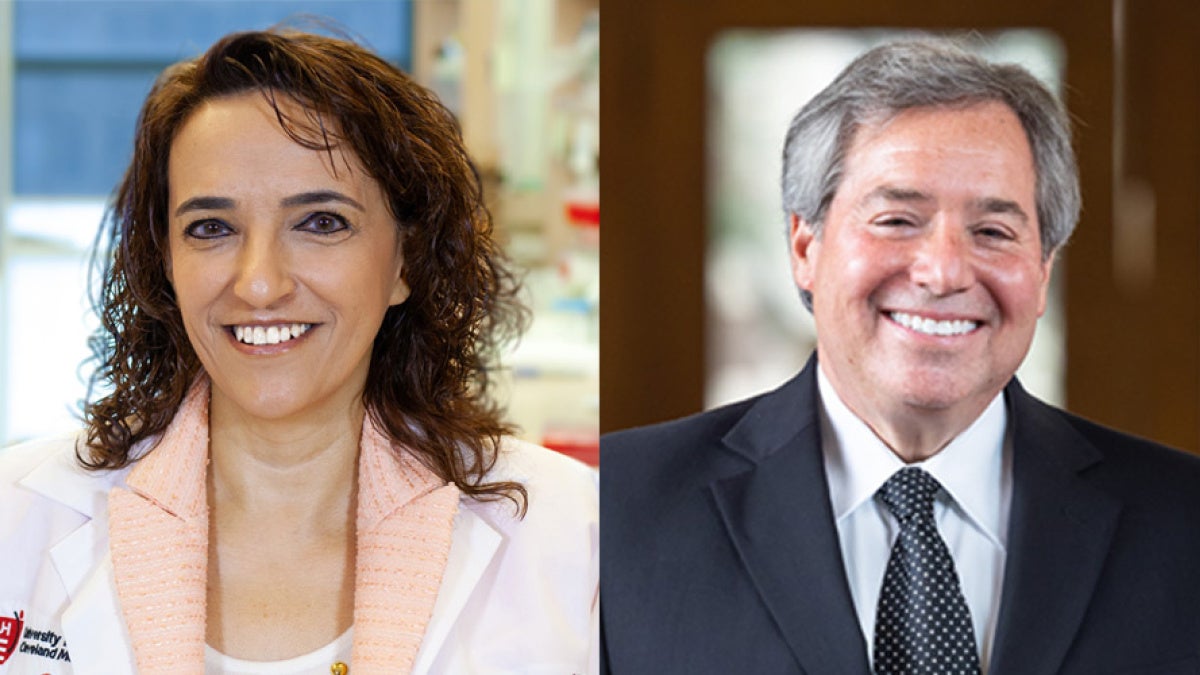
Case Western Reserve University awarded the 2025 Faculty Distinguished Research Award to Grace McComsey and Michael P. Scharf for their work in making a far-reaching impact in advancing medicine and in international diplomacy.
Established in 2013, the Faculty Distinguished Research Award is given annually to faculty members who have made outstanding contributions on a grand scale through their research. It is among the top honors bestowed upon faculty at Case Western Reserve.
Learn more about McComsey and Scharf—and their contributions to their fields.
Grace McComsey
Vice Dean for Clinical and Translational Research
School of Medicine
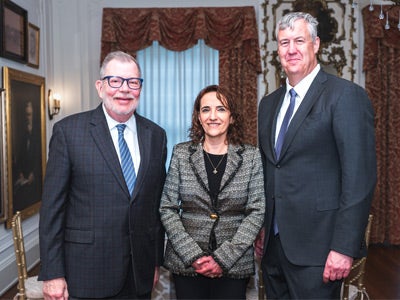
With more than 400 papers published, it's difficult for Grace McComsey, vice dean for clinical and translational research at the School of Medicine, to pinpoint a single project or highlight of her research career to date.
But she can tell you what made her career: an unwavering dedication to her patients and a bold decision to cold-call senior researchers across the country for help.
After completing her training in adult and pediatric infectious diseases, McComsey was working as a clinician and seeing patients with HIV, many of whom were getting lipodystrophy, a condition where fat accumulates in the belly and away from the limbs. Lipodystrophy was devastating, not only for the risk of diabetes and heart disease, but also for the stigmatization patients faced, deteriorating their quality of life.
"I always want to do research that matters for people, research that will positively change their life," McComsey said.
To better understand the mitochondrial dysfunction associated with lipodystrophy, McComsey needed a senior researcher who could conduct analysis on patient samples. So she began calling experts. She shared her idea with researchers and asked if they'd work with her.
"I think it was very gutsy for me to do that as a young clinician without research experience," said McComsey.
Though many people declined or didn't answer, a researcher at Baylor University told her yes—as long as she sent a two-page paper outlining and justifying her idea. McComsey didn't leave campus that day until she sent over a write-up.
They went on to collaborate on research about mitochondrial dysfunction among HIV patients. Their paper was recognized for "Best in AIDS 2003," and it was McComsey's first major paper in her career.
Soon after that, she secured two large R01 grants from the National Institutes of Health (NIH), which supported research that identified which HIV medications were causing mitochondrial toxicity and lipodystrophy. McComsey and many other providers were able to switch patients off those medications and improve their lives. She was awarded a national award from the Infectious Diseases Society of America for her work on lipodystrophy and metabolic effects of HIV.
Her research today continues to focus on the metabolic and cardiovascular complications of HIV, as well as Long COVID—both areas she identified by turning to the clinic to understand what her patients are suffering from.
"Seeing a lot of people in the clinic, I could feel what's important for them, I could see what is killing them, what is causing them to have a decreased quality of life," McComsey said. "So I always say I have a passion for doing research [about] problems that my patients are suffering from."
Michael Scharf
Associate Dean for Global Affairs
Joseph C. Hostetler -- BakerHostetler Professor of Law
Case Western Reserve University School of Law
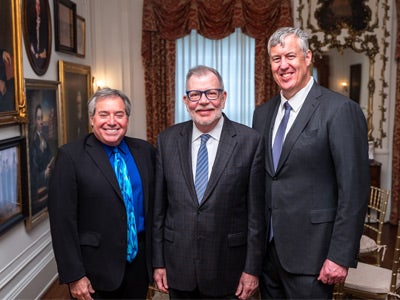
Michael Scharf, associate dean for global affairs at Case Western Reserve University School of Law, has devoted his career to some of the world’s most complex legal challenges.
A specialist in international criminal law, Scharf's work has pushed him into new areas of human rights, piracy, and the law of war while keeping the School of Law at the heart of global justice debates.
"It’s hard to imagine anything more important and impactful in any field of law than what I do," said Scharf, Joseph C. Hostetler -- BakerHostetler Professor of Law. "And what people always ask me is, 'you're such an upbeat person. How can you be that way when you're dealing with genocide, crimes against humanity and war crimes?' And I think the answer is because I feel like I'm making a difference."
His prolific scholarship has spanned the globe. He led an interagency team to draft the Statute for a modern-day Nuremberg tribunal in response to the Yugoslavia crisis.
He helped train judges involved in the prosecution of Saddam Hussein. Scharf consulted for the Rwanda Tribunal as it addressed atrocities following the genocide and served as assistant prosecutor to the Cambodia Tribunal as it prosecuted the Khmer Rouge leaders.
His expertise brought him to The Hague as amicus counsel, where he was the first American to do an amicus presentation before the appeals chamber in the International Criminal Court.
Most recently, Scharf is working with Ukrainians as they work to prosecute Russians for environmental war crimes.
He created the War Crimes Research Lab, where he and students conduct research assigned by international tribunals. Their work has shaped landmark rulings—notably The Sierra Leone Tribunal’s cases involving Charles Taylor and the recruitment of child soldiers—and even garnered a Nobel Peace Prize nomination for their impact on international justice.
"That's an example of how impactful this kind of research can be, and how, as a university, we get recognition for it," Scharf said.
In another case when piracy broke out in Somalia, the students of the lab conducted extensive research on historical piracy cases. Scharf presented it to the Supreme Court of Seychelles, which cited that work in a landmark decision.
He recently submitted a manuscript for his 22nd book, which Carolina Academic Press will publish in September. Adventures and Misadventures in International Justice is a memoir of his adventures and lessons learned from his experiences.
In addition to his work at the law school, Scharf also serves as president of the American branch of the International Law Association and produces a show on ideastream, Talking Foreign Policy, where he hosts experts from around the world to discuss important issues in international law and diplomacy.
He is also co-founder and managing director of the Public International Law and Policy Group, a non-governmental organization that has provided legal counsel in two dozen peace negotiations and assists countries with transitional justice after conflicts.
"I can't solve all the world's problems, but I can make things a little better," he said. "I can help deter some of these atrocities from occurring in the future. I can help bring justice to the victims, and that keeps me going."