Hear from six students presenting at Intersections tomorrow
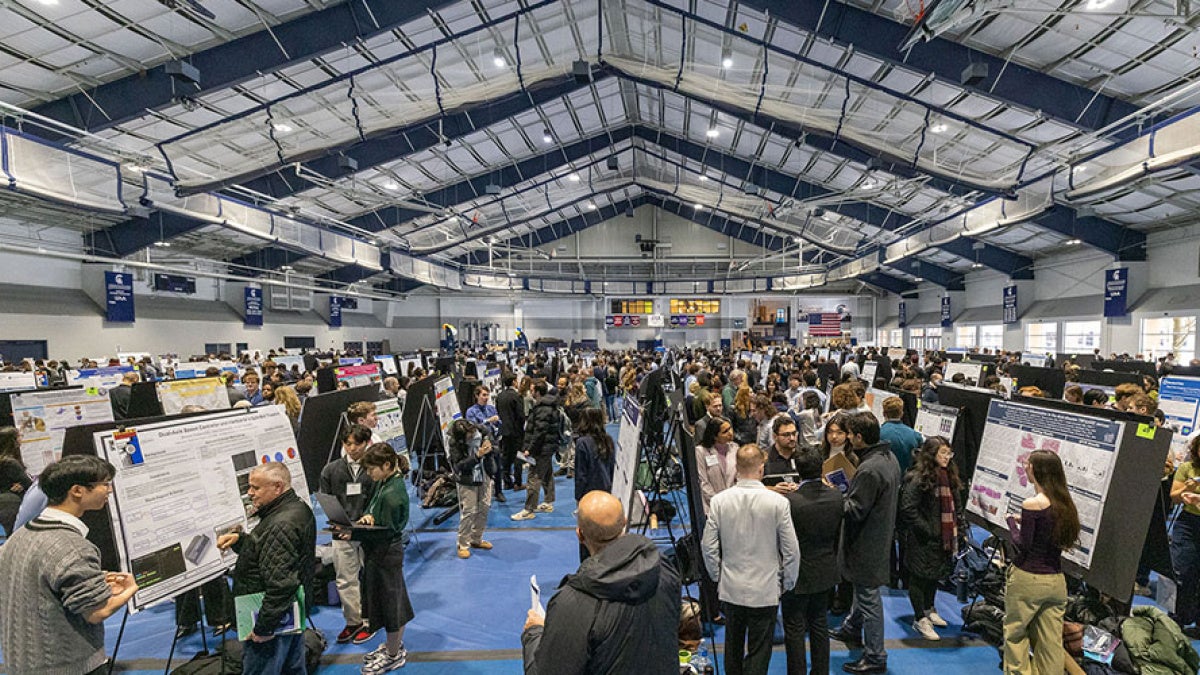
For many of Case Western Reserve University’s undergraduate researchers, summer has been an opportunity to continue their work, advancing discoveries and sparking new questions. As they have honed their faculty-mentored research projects, some of those students will present what they have been working on during Summer Intersections tomorrow (July 30) from 10 a.m. to noon in the Veale Convocation, Recreation and Athletic Center.
Students from a wide array of disciplines will have the opportunity to develop their research communication skills while members of the CWRU community can learn about the breadth of projects happening across campus.
We spoke with six of tomorrow's presenters to give you a preview of what to expect. Get more details about Intersections.
Answers have been lightly edited for clarity and length.
Shreya Ghati
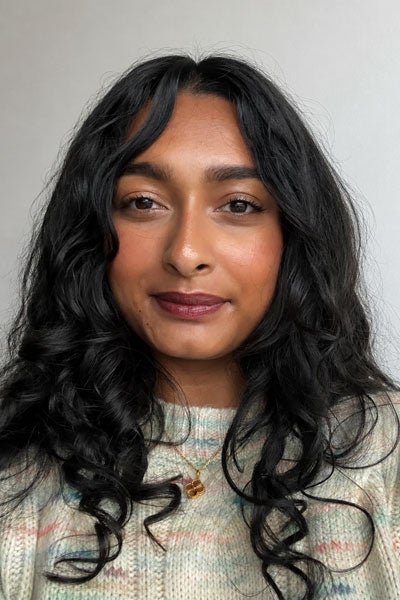
Rising second-year student majoring in biochemistry, working with mentors Parameswaran Ramakrishnan, PhD, and Sophia Gavalas
1. Tell us about the project you’ll be presenting.
My project focuses on identifying a potential new treatment strategy for acute myeloid leukemia (AML), an aggressive blood cancer with high rates of relapse and therapeutic resistance. I'm investigating whether metformin, a drug commonly used to treat type 2 diabetes, can be repurposed as an adjunct therapy for AML. Specifically, I'm studying whether metformin reduces a protein modification called O-GlcNAcylation, which is elevated in AML and helps activate the pro-survival transcription factor NF-κB. By disrupting this pathway, we're exploring whether metformin can promote leukemia cell death and improve treatment outcomes. Because metformin is already widely used and has a well-established safety profile, understanding its mechanism in AML could open the door to more accessible and cost-effective therapeutic strategies.
2. What did you enjoy most about working on this project? What kind of work went into it?
What I enjoyed most was being able to contribute to a project with clear translational potential while learning techniques that are fundamental to cancer research. Because this project explores a relatively new research direction, there wasn't much previous literature to guide us. Therefore, many experiments involved troubleshooting and adjusting our expectations as we learned from each result. Every experiment helped me better understand how molecular pathways influence cancer cell behavior and how those discoveries could eventually translate into better treatments for patients. As an aspiring physician-scientist, this is exactly the kind of work I’d like to contribute to.
The project involved a combination of cell culture and molecular biology techniques. Working alongside my mentor, Sophia, I performed cell viability assays to determine how AML cells respond to metformin treatment, and I used Western blotting and qPCR to examine changes in O-GlcNAcylation and the expression of genes involved in cell survival. I also worked closely with my mentor to interpret results and troubleshoot experiments. It was rewarding to see how each experiment built on the previous one to answer a larger biological question.
3. Why do you believe students should get involved with Intersections?
Intersections is a great way for students to share the work they've been passionate about while learning from research happening across many different disciplines. It's a chance to not only learn how to do science, but also how to communicate it effectively. I believe science is only as impactful as our ability to share it with others, and Intersections gives undergraduate students a supportive environment to develop those communication skills while connecting with faculty and peers from across campus.
Vidya Indrakumar
Rising third-year student majoring in neuroscience, working with mentor Andrew Pieper, MD, PhD
1. Tell us about the project you’ll be presenting.
I'm presenting a project titled “Investigating how acetylated tau contributes to the higher risk of Alzheimer's disease following traumatic brain injury” in the laboratory of Dr. Andrew A. Pieper in the Department of Psychiatry. In this project, I am characterizing a novel mouse model and building off of the lab’s previous finding that traumatic brain injury (TBI) causes increased levels of acetylated tau. I am specifically testing the hypothesis that increased levels of acetylated tau are the causal link between TBI and increased incidence of Alzheimer's disease (AD). To confirm this, an acetylation mimetic mouse model was crossed with an Alzheimer’s mouse model. Thus far, my work has shown accelerated pathology in this genetic cross, proving that acetylated tau accumulation after TBI can accelerate AD pathology. This has implications for protecting TBI patients from an increased risk of developing AD by reducing the acetylation of tau with existing FDA-approved medications.
2. What did you enjoy most about working on this project? What kind of work went into it?
I really enjoyed the fact that I could understand every step as well as the rationale behind the project. I mainly did immunofluorescence work for this project, including sectioning, staining, and analyzing. My work over this summer was possible through the Rebbeca E. Barchas MD Summer Student Fellowship in Translational Psychiatry, and the support from Dr. Barchas allowed me to immerse myself in research, strengthen my skills, and prepare me for my future career as a scientist.
3. Have you presented before?
I have presented at Intersections and other conferences before, starting from first year until now.
4. Why do you believe students should get involved with Intersections?
Intersections is a great opportunity for students to practice presentations in a low-stress environment and it's also a great way to explore research. I've been able to expand my research from attending Intersections just like at a real conference, and I really enjoyed talking to people from all sorts of different backgrounds in research.
Oliver Johnson
Rising second-year student majoring in physics, working with mentor Yihang Wang, PhD
1. Tell us about the project you’ll be presenting.
I’m presenting my work on DEMON (Dynamic Exploration of Molecular Simulations through Optimized Navigation), a reinforcement-learning framework for helping molecular simulations explore more efficiently. Molecular dynamics can model how atoms move, but important events can be difficult to observe because they occur rarely. As a result, conventional simulations can require prohibitively large amounts of computation to capture events relevant to scientific discovery and medicine. Existing techniques can help sample these rare events, but many rely on system-specific information, limiting their usefulness for new or poorly understood molecules.
DEMON learns how to distribute simulation effort across multiple simulations to better search for these events without relying on hand-designed molecular features. Rather than treating every trajectory equally, it learns which ones are most useful to continue exploring at a given moment. Our goal is to develop exploration strategies that transfer between molecular systems, making the method more useful for studying molecules whose behavior is not yet well understood.
2. What did you enjoy most about working on this project? What kind of work went into it?
I’ve most enjoyed how much the project has pushed me outside my comfort zone across multiple distinct areas. It brings together reinforcement learning, statistical mechanics, molecular simulation, representation learning, and software engineering, so progress has meant continually learning and making connections across fields. Over the past 10 months, I’ve built and accelerated our simulation workflows, implemented and evaluated decision-making models, and experimented with architectures that help the agent learn from molecular trajectory data.
I’ve also really enjoyed working in a group where questions from physics, chemistry, and computing come together. My colleagues in Professor Wang’s lab bring different disciplinary perspectives and backgrounds, creating an excellent environment for new ideas.
3. Why do you believe students should get involved with Intersections?
Intersections gives students a chance to turn the work they have been doing into a conversation with the broader CWRU community. Explaining a project to people outside your field is a valuable way to clarify your own thinking, receive new perspectives, and make connections with other students and faculty. It is also an approachable way for students who are curious about research to see the range of work their peers are doing. In that sense, presenters can help spark other students’ interest in research while sharing their own work.
Zoe Kao
Rising third-year student majoring in mechanical and aerospace engineering, working with mentor Ya-Ting Liao, PhD
1. Tell us about the project you’ll be presenting.
My project uses computational fluid dynamics (computer simulations of moving gases and heat) to study how fire spreads between two closely spaced materials in microgravity. Flames behave differently in space because there is very little buoyancy to make hot gases rise, so airflow and the arrangement of nearby materials have a greater influence on how a flame grows and moves.
This is especially important in spacecraft and future lunar habitats, where equipment and materials are often packed closely together. By studying how the distance between two materials affects heat transfer, oxygen supply and ignition, my project can hopefully help inform safer material spacing and fire prevention strategies for space environments.
2. What did you enjoy most about working on this project? What kind of work went into it?
I really enjoyed working with Professor Ya-Ting Liao, who has been incredibly encouraging throughout the project. Computational fluid dynamics is fascinating because it allows us to visualize complex processes that would otherwise be difficult to observe, especially in space! The project involved learning the simulation code, running cases with different material separations, troubleshooting technical issues and analyzing large amounts of output data. I enjoyed developing a better understanding of fire dynamics and its intricacies throughout the process. Also, the temperature and flow-field plots were very colorful!
3. Why do you believe students should get involved with Intersections?
For me, Intersections is an excellent opportunity to practice explaining my work clearly to people outside my field. Being able to communicate complicated ideas in an understandable way is an important skill in both research and professional settings. I have also really enjoyed attending Intersections in previous years and walking around to see the wide variety of projects. People do so many cool things, and getting a glimpse into the broader CWRU research community is a lot of fun.
Alex Khouli
Rising third-year student completing a dean’s-approved major in health equity and policy, working with mentor Wayne Tsuang, MD, PhD
1. Tell us about the project you’ll be presenting.
My poster looks at how the switch from the Lung Allocation Score to the Composite Allocation Score in March 2023 affected equity in lung transplant waitlist outcomes. Specifically, I looked at whether neighborhood-level factors, such as internet access and income inequality, were associated with a candidate's likelihood of being transplanted, and whether that association changed after the new allocation system went into effect.
2. What did you enjoy most about working on this project? What kind of work went into it?
Something I really enjoyed was diving into statistical modeling and working with a large national registry. I hadn't done that kind of work before, so it pushed me to pick up a lot of new skills. It was also my first time writing a manuscript, which was its own learning curve. I also found it fascinating, and it genuinely changed how I think, to see how a single policy change can ripple through outcomes in ways that aren't obvious until you actually dig into the data.
3. Why do you believe students should get involved with Intersections?
Intersections is a great way to get real feedback on your work outside your own lab or department, and to see the breadth of research other students are involved in across campus. It pushed me to explain my project clearly to people outside of the field I am working in, which made me understand my own findings better.
Cindy Xu
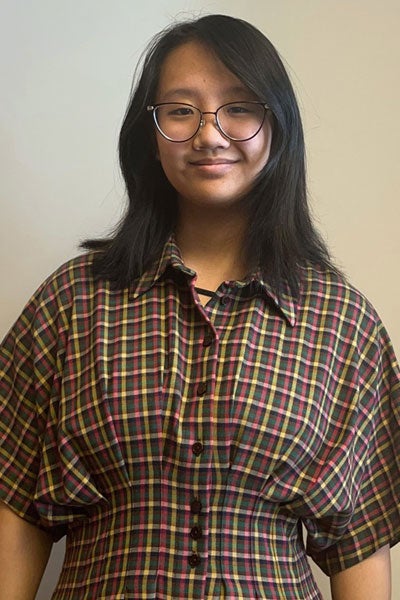
Rising second-year student majoring in biomedical engineering and materials science and engineering, working with mentor Janet L. Gbur, PhD
1. Tell us about the project you’ll be presenting.
My research focuses on transvenous leads, insulated wires that connect cardiac implantable electronic devices, such as pacemakers, to the heart. These devices are increasingly common, with over 1.2 million implanted each year. While they provide life-changing therapy, leads may need to be extracted due to device upgrades, malfunction, or infection. Lead extraction is a high-risk procedure, as lead fracture can cause catastrophic vascular injuries.
My project is focused on outer jackets of these leads. Inside the body, these leads face active immune foreign body responses. Because of this, the outer jacket of the leads may degrade, which may lead to fracture during lead extraction. I simulated these immune responses with a Fenton’s reagent, a solution which caused oxidative degradation. I soaked seven different lead jacket materials, including polyurethanes and silicones, over a period of 28 days. Every few days, I sectioned off a small portion of the lead jacket. These portions were characterized to see how the lead jackets change over time. The goal is to identify at what stage in soaking the degradation of the lead jacket most closely matches a lead explanted from the human body, which will allow for a standardized preconditioning process to inform more realistic mechanical testing procedures of lead extraction techniques.
2. What did you enjoy most about working on this project? What kind of work went into it?
I really enjoyed the process of practicing and refining my science communication skills throughout this project. I spent a lot of time thinking about the most effective ways to present my methods and data, as well as tailoring presentations (like this Intersections poster) to different audiences. I think science communication is incredibly important, especially in today’s interconnected world, where making research accessible is critical in bridging the gap between researchers and the general public.
3. Have you presented before?
This will be my second time presenting at Intersections. I am excited to share my research with the CWRU community! I previously presented a different project at Spring 2026 Intersections. I’ve also presented at other research conferences before.
4. Why do you believe students should get involved with Intersections?
Presenting at Intersections is an amazing opportunity for students to practice their science communication skills. There is a diverse audience of fellow students, faculty and staff, which allows presenters to practice conveying your interesting and complex research to a wide range of people (some of whom do not have a lot of knowledge in your field, and some who do). Intersections also provides a chance for you to engage in interesting discussions about your research and to receive valuable feedback.