For many, cancer is more than a headline or a statistic. It’s a diagnosis that changes a family’s life, a loved one navigating treatment or a friend rallying a community to support someone they care about. With many types of cancer affecting people across generations and communities, the fight against the disease takes many forms—from early detection and medical research to patient advocacy, community support and fundraising.
Throughout the year, observances shine a light on cancers affecting the cervix, colon, children, breast and other areas, reminding us of the importance of continued research, treatment advances and support for patients and their families.
At Case Western Reserve University, members of the community contribute to that work in meaningful ways. From developing a rapid, chairside oral cancer test to hosting fundraising events for cancer research, their efforts reach beyond classrooms and laboratories into the Cleveland community.
In recognition of Lung and Pancreatic Cancer Awareness Months, both annually observed in November, read on to discover how several individuals contribute to the fight against cancer, whether through research, advocacy or community engagement.
Answers have been edited for clarity and length.
Sarah Cioffi
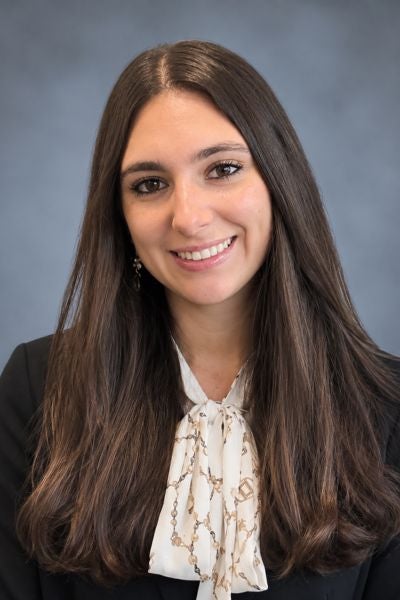
Fourth-year statistics student on the pre-med track with minors in Spanish, mathematics, chemistry and biology
College of Arts and Sciences
While a batch of cookies cannot cure cancer, it can offer comfort to someone undergoing treatment. Guided by this belief, Sarah Cioffi founded Baking for a Cause, a student-run club that brings homemade treats and support to local organizations, including the Louis Stokes Cleveland VA Medical Center, Hope Lodge and Ronald McDonald House.
As a first-year student, Cioffi created Baking for a Cause after volunteering at a local homeless shelter in 2024. Today, she oversees the club’s general body meetings and day-to-day operations—from leading the organization's executive board and helping with budgeting to coordinating visits and donations for nearby residents.
“I have always enjoyed giving back to my community, and baking yummy desserts and putting a smile on someone’s face seemed like an amazing way to do that,” said Cioffi, who is expected to graduate in 2027. “I wanted to start baking at a larger scale, so I went through the process of establishing Baking for a Cause as an official organization at CWRU.”
What does “fighting cancer” mean to you personally?
Cioffi: During my senior year of high school, I had the opportunity to research Triple-Negative Breast Cancer (TNBC) at the Jackson Laboratory and was fascinated by the cellular presentation and immune system changes caused by cancer. This drove me to pursue a pre-medical track at CWRU since I wanted to see how clinicians treated cancer and how they molded treatment with the lived experience of patients.
For me, fighting cancer is beyond just treatment. It is caring for the whole person, supporting their families and reducing isolation. Cancer is a debilitating disease, and it takes a whole community to treat it.
Agata Exner
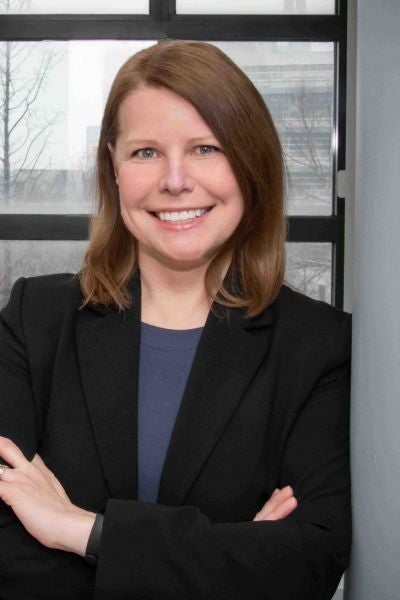
Henry Willson Payne Professor, Department of Radiology, School of Medicine
Professor, Department of Biomedical Engineering, Case School of Engineering
As a biomedical engineer, Agata Exner focuses not only on understanding problems, but also on developing technologies that can help solve them. In the Exner Laboratory, she works to advance more effective and accessible imaging methods that help detect cancer earlier. She also investigates image-guided, tumor-specific treatments designed to target cancer while sparing healthy tissue—potentially reducing side effects for patients.
“I frequently get contacted by physicians looking for better technology to improve the use of ultrasound imaging in oncology,” she said. “They are eager to use our agents when they become available, and this means to me that we are already inspiring physicians to do new things and tackle problems in new ways.”
Having watched close family members and friends navigate cancer, Exner understands the potential impact of earlier detection. Her training at Case Western Reserve University inspired her to pursue cancer research, where she helped pioneer a nanoparticle-based technology that uses specific biomarkers to help ultrasound imaging identify cancer cells. The technology also expands ultrasound's capabilities to include molecular imaging, allowing researchers to visualize cancer-related biomarkers and potentially detect tumors with greater specificity.
What resources, opportunities or collaborations at CWRU have helped advance your work or interest in cancer research and care?
Exner: CWRU has incredible, creative researchers and trainees. It also has an outstanding ecosystem that inspires interdisciplinary research advancements and translation of technologies developed in the lab to impactful clinical advancements. This happens through the collegial and collaborative atmosphere and our close alignment with clinical partners in the greater Cleveland area, as well as biomedical industries already located in Northeast Ohio.
Arushi Pandit and Hammad Safi
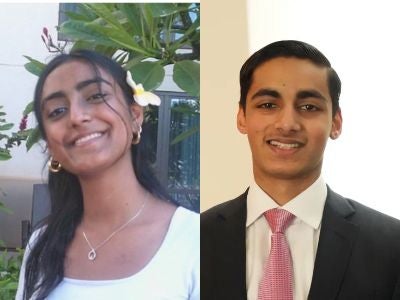
Third-year neuroscience students
College of Arts and Sciences and School of Medicine
At CWRU, campus activities fairs often open doors for students to explore new interests, connections and opportunities. For Arushi Pandit and Hammad Safi, it led them to the Case Cancer Initiative, a student organization that brings together students interested in oncology through cancer education, research and service.
Drawn to the club’s guest speakers, research opportunities and volunteer experiences, both found ways to explore their interests beyond the classroom. Today, they serve as co-presidents, helping create those same opportunities for others by planning events, connecting students with researchers and organizing fundraisers.
But for Pandit and Safi, making a difference also means showing up for families facing cancer in small but meaningful ways. Through the club, they help members find creative ways to brighten patients’ days—from writing letters of encouragement for those at places such as University Hospitals’ Seidman Cancer Center and the Ronald McDonald House to planning a partnership with CWRU’s flower club to create and donate flower vases.
How do you hope the Case Cancer Initiative's outreach and service efforts make a difference for patients and their families?
Pandit and Safi: We can’t solve cancer in a day, so we take steps to help families feel more comfortable, such as writing letters to patients. It doesn’t solve the issue but it makes the process a little better for them, and playing a part in that is definitely important. We try to do anything that we can to help while also educating the broader community.
Pushpa Pandiyan
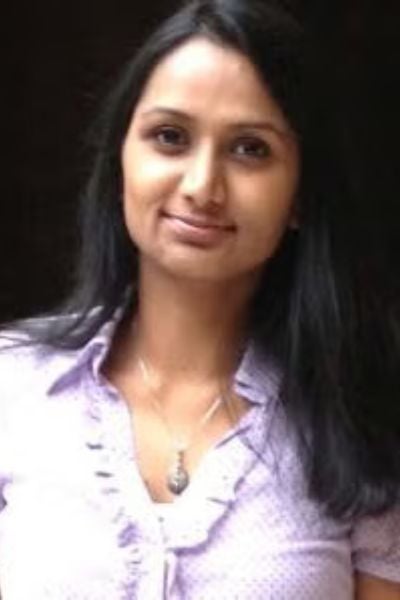
Associate professor, Department of Biological Sciences, School of Dental Medicine
Member, Immune Oncology Program, Case Comprehensive Cancer Center
For Pushpa Pandiyan, the questions driving her cancer research are deeply personal. After losing an uncle and the father of a close friend to the disease, she has watched others she knows die despite available treatments. Those experiences have left her wondering why the immune system, particularly its T cells, sometimes fails to recognize and eliminate cancer cells—even in people who have otherwise lived healthy lives.
That question has become central to Pandiyan’s work. A researcher at Case Western Reserve University School of Dental Medicine, she studies T cells and the signaling pathways that act as immune-system “brakes,” regulating how these cells function. Her research focuses on understanding why cancer develops and progresses, particularly in the oral cavity, and identifying biological changes that could help detect cancer or susceptibility earlier. She also investigates how aging, chronic inflammation and infections such as HIV may increase cancer risk, with the goal of identifying new targets for prevention and treatment.
Although Pandiyan has studied T cells and immune regulation since graduate school, joining the dental school sparked a particular interest in oral cancer. Today, she explores how the environment surrounding oral tumors can suppress the activity of cancer-fighting T cells and influence patients’ responses to treatment. By understanding what holds these immune cells back, she hopes to uncover new ways to help the body fight back.
What gives your work a sense of purpose, and what potential do you see for its impact on cancer treatment?
Pandiyan: I continue to be reminded of the importance of this work when I hear that more people I know are being diagnosed with cancer. Each diagnosis reinforces for me that we need to understand why the immune system sometimes fails to control cancer and find better ways to help it do so. There are now highly effective immunotherapies targeting immune-system “brakes,” including PD-1 and CTLA-4, and I have had the unique opportunity to work on both of these proteins during my career. That connection gives my work a strong sense of purpose. I believe that understanding the different molecular brakes that regulate T-cell function will be increasingly important for developing more precise and effective cancer therapies and for determining which patients are most likely to benefit from immunotherapy.