Meet 4 CWRU students who spent the summer conducting research
These students spent the summer exploring research questions that excite them
Picture your perfect Cleveland summer.
Do you see a blazing Lake Erie sunset? Hear the roar of the Guardians crowd? For scores of Case Western Reserve University undergraduates, what they envision is a laboratory buzzing with scientists and rows of library stacks ready for them to dive into research. These students spend their summers working side by side with faculty and other research mentors, potentially making discoveries in fields from science and engineering to arts, humanities and social sciences.
The questions to explore are vast—and so are the benefits. A summer experience gives students the opportunity to “activate what makes your heart sing,” said Siobhan Aaron, PhD, RN (GRS ’21, nursing), a mentor and assistant professor at CWRU’s Frances Payne Bolton School of Nursing. It also provides a taste of the day-to-day work of a researcher, said James Calipetro III, a fourth-year student who conducted research on children’s books this past summer. Moreover, the focused June to August time period levels up students’ skills and career ambitions—and often gives them experience with CWRU’s neighboring world-class partners.
“A full-time research opportunity exponentially accelerates students’ growth as scientists,” said neuroscientist Murat Yildirim, PhD, who mentors several CWRU students each summer in his Cleveland Clinic lab and is a member of the National Cancer Institute-designated Case Comprehensive Cancer Center. “Our undergraduates become part of a collaborative team where they work alongside faculty, graduate students and postdoctoral fellows who play an essential role in mentoring them as they learn research techniques and how interdisciplinary science is done.”
The experience also shows motivated undergraduates that their work can have a real impact on science and on the world—not to mention the facility where they are working. “For my lab, it’s really changed the whole picture,” Yildirim said. CWRU undergraduates have led key research projects with him; in fact, they were first authors on the first three papers to come out of his Cleveland Clinic lab.
A key source of funding for CWRU undergraduates is the Sponsored Summer Research Program (SSRP), a competitive program that pools support from the CWRU Undergraduate Research Office, Case Alumni Association, the Office of the Provost and others to cover working and living expenses, said Beth Nahlik, PhD, director of undergraduate research in the CWRU Undergraduate Research Office.
Since 2015, nearly 1,000 students have received SSRP awards, including more than 100 this summer. Here are four of their stories.
Turning waste into gold
Tucked on a lab shelf in CWRU’s Department of Chemical and Biomolecular Engineering is a glass bottle of what looks like water. But you wouldn’t want to drink it: It is, in fact, synthetic wastewater—a chemical cocktail that mimics the composition of filtered wastewater and a handy (and better-smelling) stand-in for the real thing.
“I chose to come to Case [Western Reserve] because there are so many research opportunities here on campus.” —Joshua Kuwana, second-year chemical engineering student
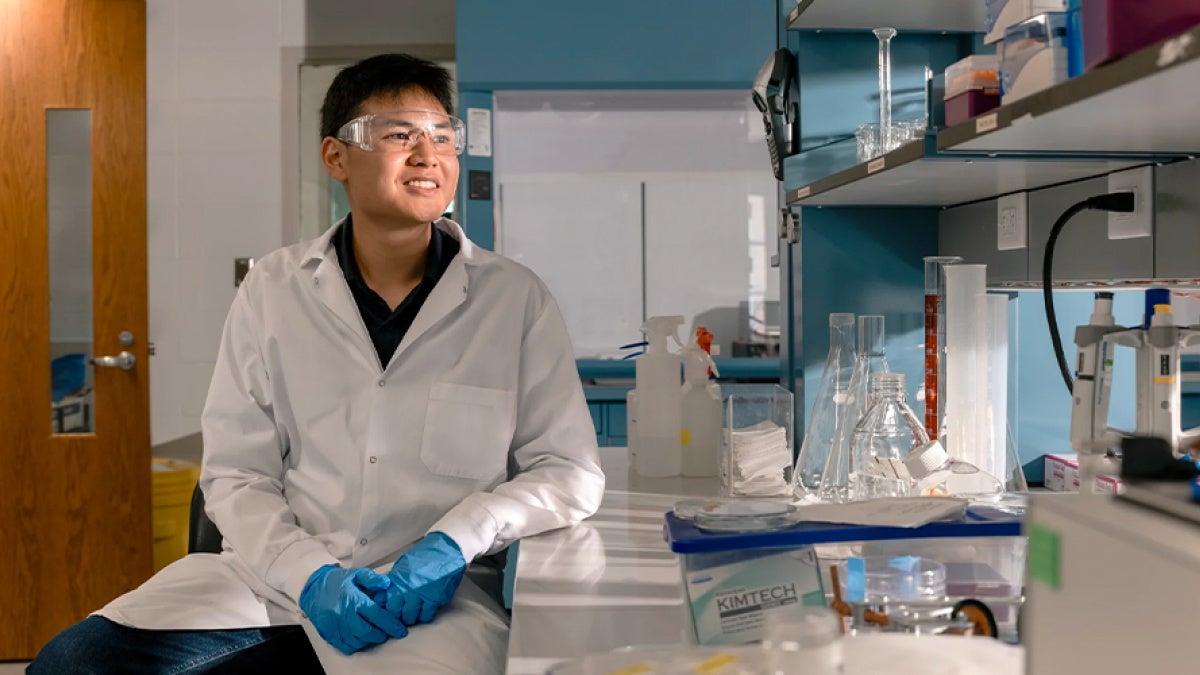
This summer, second-year chemical engineering student Joshua Kuwana used it to grow and study a substance called struvite, a mineral made of magnesium, ammonium and phosphate ions that can cause blockages and damage equipment in wastewater treatment facilities.
But to farmers, struvite crystals are an ideal source of slow-release fertilizer. Most phosphorus fertilizer on the market today comes from mined phosphate rock, a nonrenewable resource, said associate professor Julie Renner, PhD, who leads the lab where Kuwana worked. Worse, she added, many fertilizers cause excess phosphate to contaminate waterways, feeding plant overgrowth and harmful algal blooms like those that Lake Erie has seen in recent decades.
By making it easier to harvest struvite from wastewater, Kuwana’s project could help “make gold out of waste,” she said.
Working with PhD student Terril Vallikalam, Kuwana experimented with adding short biomolecules called peptides, as well as a variety of other ions and chemical compounds, to wastewater. They used infrared spectroscopy and X-ray diffraction to reveal details of the crystals grown in each wastewater mix.
“I chose to come to Case [Western Reserve] because there are so many research opportunities here on campus,” Kuwana said. “The research mentors I’ve worked with not only taught me advanced lab techniques and analytical tools but also demonstrated how to challenge oneself to think creatively and to continue to persist through unexpected challenges in the lab.”
An eye on brain tumor growth
Glioblastoma is considered the most common and most aggressive cancerous type of brain tumor in adults. Though some treatments can slow its progress, glioblastoma has no cure, and physicians track its growth largely through MRI and CT imaging—expensive and time-consuming scans that reveal changes in the shape and size of tumors but shed little light on how cancer cells are disrupting brain circuits.
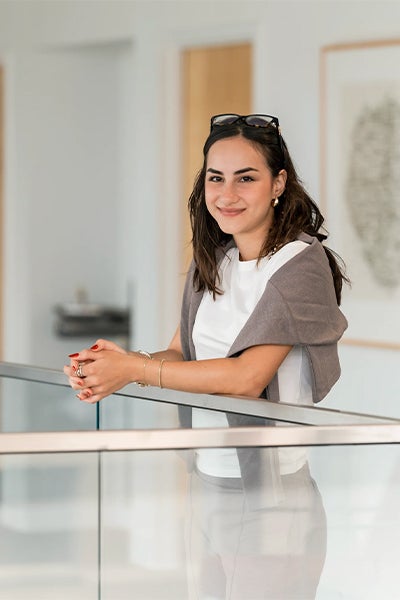
Working in Murat Yildirim’s Cleveland Clinic lab, Zeynep Cansev, a fourth-year biomedical engineering student, developed a new way to monitor the progression of glioblastoma tumors using nothing but cameras and computers. Cansev’s summer work drew on tens of millions of images collected of laboratory models with different stages of glioblastoma. Taking advantage of deep learning algorithms that can quickly recognize patterns in large data sets, Cansev tracked minute details of movement changes as the disease progressed. Then, she used a deep learning model to uncover the combination of behavioral changes that was the best predictor of tumor status.
Working closely with graduate students in the lab, Cansev brought together cancer neuroscience, computational analysis and artificial intelligence (AI) to build a predictive framework linking behavioral changes to glioblastoma progression. Before the availability of AI, this work would have taken years; now it can be done in a single summer. “We made substantial progress toward identifying behavioral signatures that distinguish healthy from tumor-bearing [models] and capture changes across disease stages,” said Cansev.
Glioblastoma is typically diagnosed in its late stages, Yildirim said, but work like Cansev’s could help physicians spot tumors earlier, when they are more treatable. By giving researchers a low-cost, high-speed way to monitor tumor growth, Cansev’s model could also make it easier to test potential new therapies, speeding the path to seeking regulatory approval.
“I decided to come to Case [Western Reserve] because it has one of the best biomedical engineering programs in the world,” said Cansev, who in the future wants to work on biomedical devices for patients with neurological conditions such as Parkinson’s or Alzheimer’s. ”Personally and professionally, this summer gave me a much stronger understanding of how machine learning can be applied to neuroscience in a meaningful way.”
Research-based care for caregivers
In the United States alone, 12.7 million family members and others provide unpaid care to people living with Alzheimer’s disease and other forms of dementia, according to a recent Alzheimer’s Association report, often at significant emotional, financial and physical cost. While research on family caregivers often focuses primarily on those supporting loved ones at home, roughly half of nursing home residents and 40% of assisted-living residents have Alzheimer’s and dementia—many of whom have family members taking active roles in caregiving as well.
“... this experience showed me how research can directly improve the lives of patients and families.” —Paris Martin, fourth-year nursing student
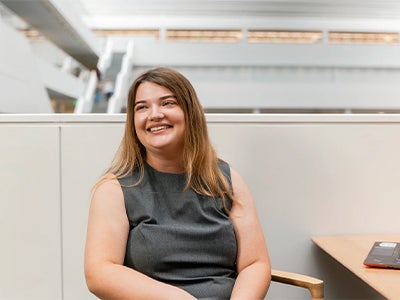
Fourth-year nursing student Paris Martin focused her summer research on better understanding the emotional lives and needs of this group. Working with Assistant Professor Siobhan Aaron, Martin examined nine in-depth caregiver interviews Aaron previously co-conducted. Martin found that everyone interviewed had some symptoms of depression, with more than half experiencing moderate to severe symptoms.
Martin also found common themes emerging among informal caregivers with loved ones in nursing homes: the financial burden of paying for care, the stress of decision-making, a need for deeper education about the trajectory of Alzheimer’s disease and related dementias, and the loneliness that often accompanies caregiving. “Hearing their experiences emphasized how much emotional burden caregivers often continue to carry, even after their loved one enters long-term care,” Martin said.
Martin and Aaron hope to work with care facilities to turn these insights into programs designed to support the families of people who have moved to nursing homes through all stages of their dementias. “Families may no longer provide the same hands-on care,” Aaron said, “but they continue to advocate, make difficult decisions and carry the emotional weight of the disease.”
For Martin, who is applying for PhD programs, the summer experience solidified her goal of pursuing a career that combines nursing practice with research. “As a nursing student,” she said, “I have been passionate about providing compassionate, evidence-based care, but this experience showed me how research can directly improve the lives of patients and families.”
Representing visual disability in picture books
Madeline, Pete the Cat, Curious George, the Pigeon: For generations of kids, they are more than made-up picture book characters. They are friends and alter egos. Their stories help children understand themselves and others.
“I’m really using this summer to explore what it is like to be an academic.” —James Calipetro III, fourth-year student
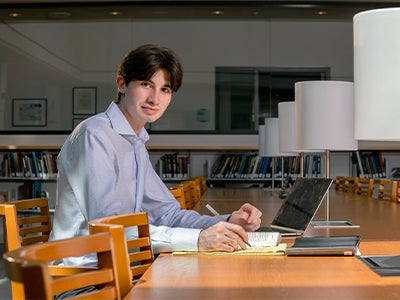
But some characters are absent from the vast canon of children’s picture books, including people with blindness. “How creators—authors, illustrators and printers—present characters and their identities triggers real-world consequences,” wrote fourth-year student James Calipetro III in his research program proposal. A derogatory depiction has the potential to leave a lasting memory on readers. And when there is no depiction at all, they miss out on an early opportunity to build compassion and empathy.
Calipetro—who is studying economics and English while also earning a Master of Accountancy degree—became interested in the dearth of characters with visual disabilities in children’s books last summer, while taking a course in children’s literature with Cara Byrne, PhD (GRS ’11, ’16, English), a lecturer in CWRU’s Department of English. This summer, with Byrne’s guidance, Calipetro took a deep dive into this gap.
His approach is based on a model that puts the ways readers experience books into three classifications: “Mirrors” reflect readers’ own experiences; “windows” show them the world through the eyes of someone else; and “sliding glass doors” invite the readers to enter the world of the book.
Calipetro asked how this framework, which is typically applied to racial and cultural representation, can guide the authors and illustrators of children’s books to create works that help young readers better understand and empathize with people with blindness.
“I’m really using this summer to explore what it is like to be an academic,” he said. Calipetro plans to continue his research as a capstone project, culminating in an article for journal submission.
“Hopefully a teacher, a parent or a librarian will benefit from my work and will make a decision to read something that opens a sliding glass door to somebody.”