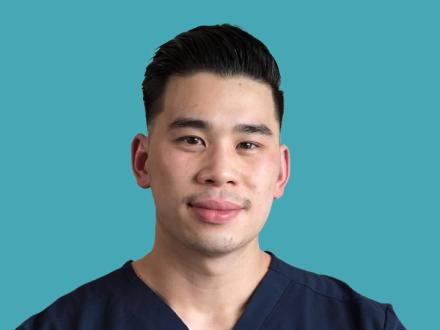
How a CWRU dentist is expanding dental care across Canada
A conversation with alumni entrepreneur Brandon Mark, DMD (DEN ’21)
Katie Critchett is a fellow with the CWRU Alumni Venture Fund, which invests philanthropic dollars into CWRU-affiliated startups
On a mission trip before dental school, Brandon Mark, DMD (DEN ’21) spent time treating patients in El Salvador who had never had access to basic dental care. The experience moved him—and pointed him in a new direction. If he was going to build something, it would be built around access.
Mark arrived at the Case Western Reserve University School of Dental Medicine with that conviction already forming. What CWRU gave him was the training, the exposure, and the people to sharpen it.
Rotations at Cleveland Clinic and University Hospitals put him in front of patients early. Mentors were generous with their time. And the community of people working through the same demanding program—classes, labs, many hours of studying each day, hospital rotations—gave him something harder to quantify: a standard, a cohort, a sense of what it looks like to do hard things alongside people you trust.
He was also, in parallel, running a direct-to-consumer oral care brand. Hygiene Dr. had a toothbrush donation model, a growing affiliate network, and eventually more than 1,000 dental partners. He was day trading on the side. Dental school, by his own admission, was a challenge.
The company he leads today, mh2 Dental, is expanding across Canada through a model built around opening each clinic from scratch rather than acquiring existing practices—a deliberate departure from the private equity rollup approach that has reshaped much of the dental industry. Three locations opened in the first year. Two more are underway. Five additional sites are in planning.
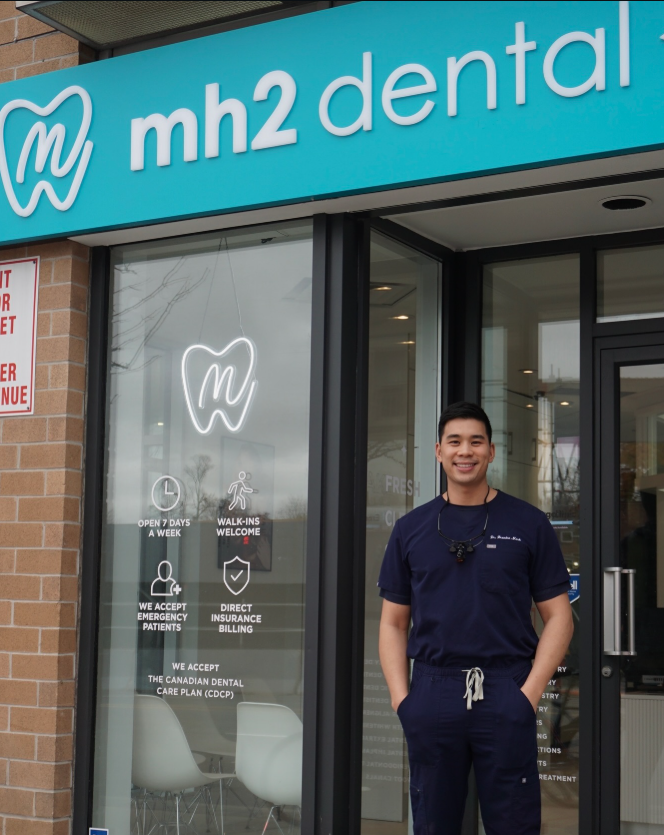
In the conversation below, he talks about what he’d do differently, what the private equity rollup trend gets wrong, and how his time at CWRU—and staying involved with the Veale Institute for Entrepreneurship—shaped the founder he’s become.
What inspired you to start mh2 Dental?
It came from a mix of my interest in the business side of dentistry and a mission trip I took to El Salvador while in college. Being able to see the impact dental care can have on people’s lives was eye-opening.
We were treating patients who had no access to affordable care, and seeing their gratitude following treatment changed my outlook on how I would provide care. Treating patients is a privilege, and that experience stuck with me—it encouraged me to find a way to provide high-quality, affordable dental care at scale.
If you could go back to day one of mh2 Dental, what would you do differently?
I’d start earlier and spend less energy on the flagship location in downtown Toronto—especially given the complexities of working with a designated heritage building. These are historically significant structures protected by preservation laws, which meant design reviews and building code adjustments that slowed growth, tied up capital, and added costs as construction prices spiked.
Heritage retrofits are far trickier than new builds. It was frustrating at times, but I learned a ton.
What was the most valuable part of your time at Case Western Reserve?
The people, and the shared challenge of getting through dental school. I wasn’t naturally inclined to studying, so balancing classes, labs, hospital rotations at Cleveland Clinic and University Hospitals, plus the demands of the program was a real challenge.
Being involved in student council and the clinical affairs committee made it more enjoyable and gave me a sense of community. I met people I’m still close to, and mentors who were generous with their time. At the same time, I was running entrepreneurial projects in parallel—which forced me to get disciplined and figure out what actually mattered.
What does mh2 Dental do that others don’t?
We’re more tech-enabled than most practices—live booking, multiple digital funnels, open seven days a week in convenient locations. But it’s not just about tech. A lot of people still find dentistry intimidating. We focus on creating clinics that feel warm and nonjudgmental. When it’s easy and feels good, people actually come in.
I’ve also learned how important it is to delegate. When you’re running multiple locations and juggling legal, finances and operations, you have to stay in the quarterback role and trust the people around you. Having the right team is everything—it’s what lets you scale without losing quality.
What’s something about you that helps you succeed?
After dental school, I learned I have ADHD, which explains a lot in hindsight. When I’m interested in something, I can hyperfocus for hours—sometimes working until 3 a.m. without realizing how much time has passed. That same wiring also explains why school felt disengaging at times and why it was harder to stay focused.
I also spent time studying how Aspen Dental scaled to over 1,000 clinics. At some point, it became clear the best way to learn was to work there directly—so I did.
What are your thoughts on the private equity rollup trend in dentistry?
It can scale fast, but it’s not always smooth. Differences in staff, renovations and long-standing ways of doing things make consistency tough—and patients sometimes leave when ownership changes. A lot of private equity models focus on stripping things down to boost efficiency and profits, which doesn’t align with how I think about dentistry.
Practices should stay clinician-led, with patient care at the center. That’s why we build each clinic from scratch rather than acquiring existing practices. It’s more work and more risk, but it lets us set strong operating procedures from day one, keep the experience consistent, and build something premium.
How has working in the U.S. influenced how you’ve built mh2 in Canada?
Working at Hudec Dental and Aspen Dental showed me firsthand what works and what doesn’t—how managerial structures and internal operations run at scale. It also highlighted big differences in patient behavior. In Canada, insurance or government programs cover most dental care, so patients aren’t used to paying out of pocket. In the U.S., people are much more willing to finance care.
Seeing that shaped how we run operations and design the patient experience. It’s about taking what works in U.S. practices and adapting it to fit Canadian expectations.