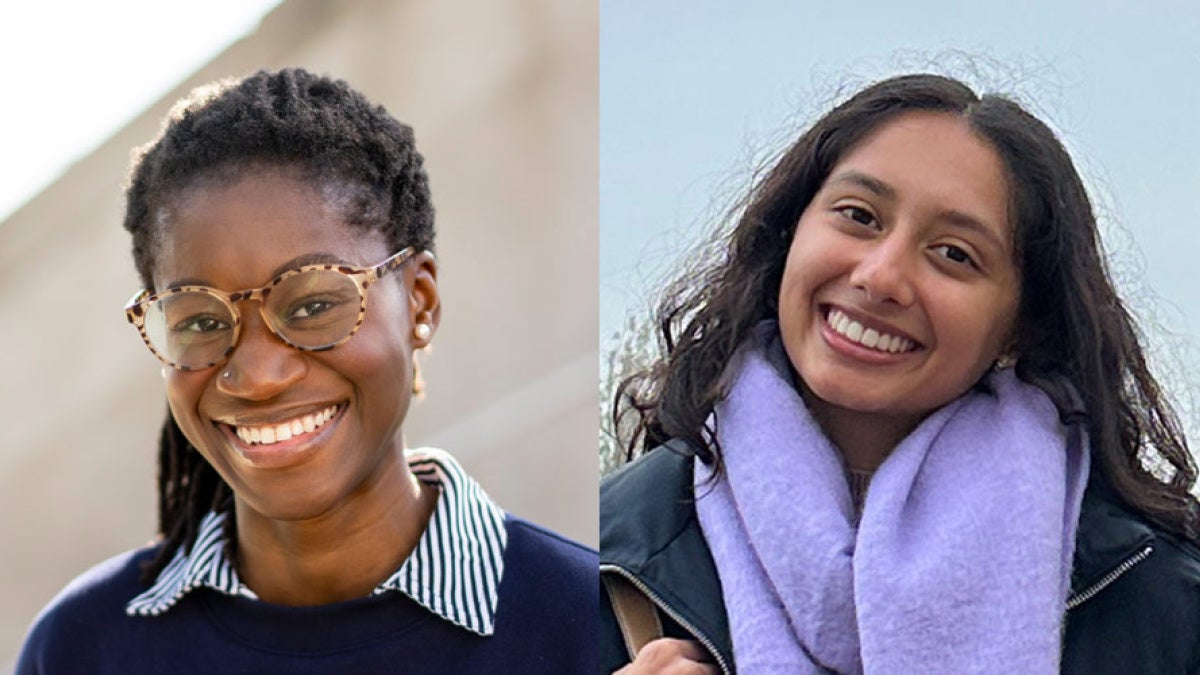
How two CWRU students with clear career goals made the most of a head start
For Feyi Rufai and Suhani Nog, CWRU’s Pre-Professional Scholars Program offered more than a direct path to medical and dental school: it created space to explore, study abroad and grow
For some students, college is a time to explore interests to find the path that inspires them most. For others, it’s a means to a pre-determined destination. At Case Western Reserve University, exceptional undergraduate students who know they’re heading for careers in medicine or dentistry can get a jumpstart through the Pre-Professional Scholars Program.
Through this program, prospective students can apply as undergraduate students and gain conditional acceptance into the university’s medical or dental medicine schools. Students in this program have access to mentorship opportunities and a clear path to graduation.
For some, including medical student Feyi Rufai and dental student Suhani Nog, the program came with the added relief of knowing they had the next step in their educational journeys planned out and the freedom to explore varying academic interests.
We spoke with Rufai and Nog to learn more about their experiences and how it prepared them for advanced degrees.
For the undergraduate class of 2031, the deadline to apply for the Pre-Professional Scholars Program is Dec. 1.
Opportunities inspire a future doctor
When weighing her college options, Feyi Rufai turned to her mother, who she considers her academic advisor. As a high school student, Rufai’s mind was already set on a career in medicine, but moving to a new city and committing to eight years at a single university was daunting.
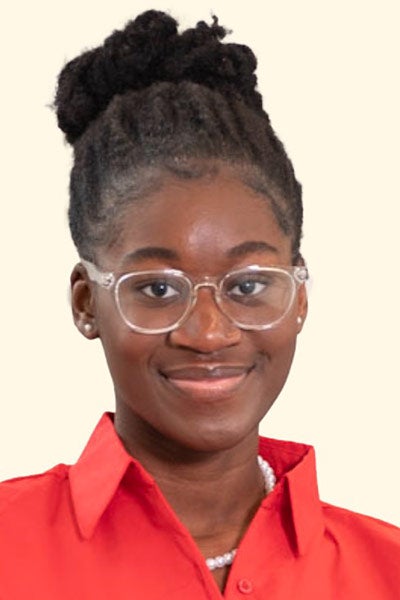
The more she learned about Case Western Reserve, though, Rufai knew the institution was a place where she could thrive. Ultimately, the university’s collaborative nature drew her in.
“I didn’t want to go somewhere where a scarcity mindset is the standard,” she said. “CWRU had the opposite mindset that made it feel like there was an abundance of opportunity.”
Now a third-year student at the School of Medicine, Rufai has certainly found it.
The Pre-Professional Scholars Program gives students the opportunity to earn back-to-back degrees, but Rufai opted to take that a few steps further. In addition to two bachelor’s degrees—one in psychology and the other in sociology—Rufai also completed a master’s degree in bioethics and medical humanities at CWRU before beginning her medical education.
Her master’s program allowed her to gain clinical experience before donning a white coat. During her visits to the Louis Stokes VA Medical Center, Rufai fell in love with a new patient population while the program prepared her to tackle complex questions that often don’t have a single “right” answer, such as where to send a patient experiencing homelessness after they’ve been discharged.
“I love talking to people about different hypothetical situations whether it’s giving people placebo medications and lying to your friend about the ugly shirt they bought,” she said. “I just love hearing different people’s motivations. My master’s in bioethics and medical humanities allowed me to turn this long-term relationship I had with ethics into something more structured.”
During her undergraduate education, Rufai also found ample opportunities to take classes that many would consider “unconventional” for a pre-med student. However, she often found common threads that related back to medicine.

Now in medical school, Rufai is learning more than ever about herself. Through the school’s Block 8 and Tuesday seminars, which often are rooted in humanistic principles, Rufai has become a better listener, both for her patients and loved ones.
For prospective students deciding whether the Pre-Professional Scholars Program is the right fit for them, Rufai suggests they take time to clarify why they want to pursue medicine and write it all down. This can help them determine if medicine is where their interests truly lie or whether they would find more fulfillment in another field.
Writing it all down also serves another purpose: It’s something to look back on when things get hard and motivation is needed.
Rufai’s reason for going into medicine? Growing up, she looked up to her father and witnessed firsthand how much a healthcare professional can mean to their patients.
“I saw how he could relieve his patients' stress with just words and how he shared in their joy from birthdays to graduations to weddings,” she said.
A personalized path to dentistry
For Suhani Nog, the Pre-Professional Scholars Program offered a sense of certainty that made her undergraduate experience more meaningful.
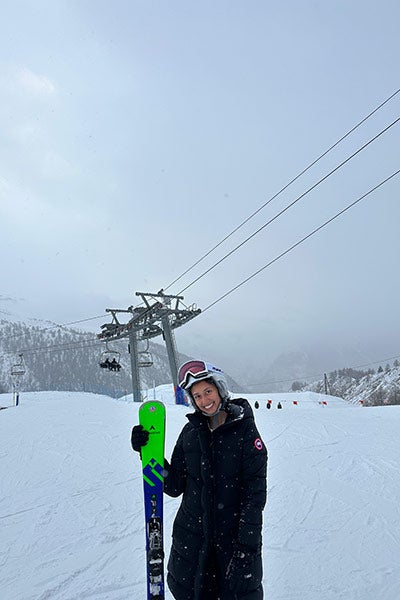
Now a second-year student at the School of Dental Medicine, Nog came to CWRU as an undergraduate in the fall of 2022.
Nog knew right from the outset exactly what courses she needed to complete because the expectations for her studies at the School of Dental Medicine were clear. That freed up space in her schedule to explore other interests and experiences that pre-health paths often make more challenging. She pursued a major in economics and spent a semester abroad in the Netherlands.
These activities weren’t frivolous; they allowed her to personalize her education to her future plans.
Like her mother, Nog hopes to open her own dental practice down the road, which her studies in economics will help support. Additionally, Nog places a high value on travel and has considered settling abroad later in her career.
Last summer, she went abroad again for a visiting scholar internship studying head and neck cancers in Switzerland. Nog credits her background in economics—and the emphasis on statistics it required—as a contributing factor in landing the scholarship.
“I definitely see Europe in my future somewhere,” she said. “But none of this would have ever happened if it wasn't for study abroad. It just also made me so much more independent and stronger as a person.”
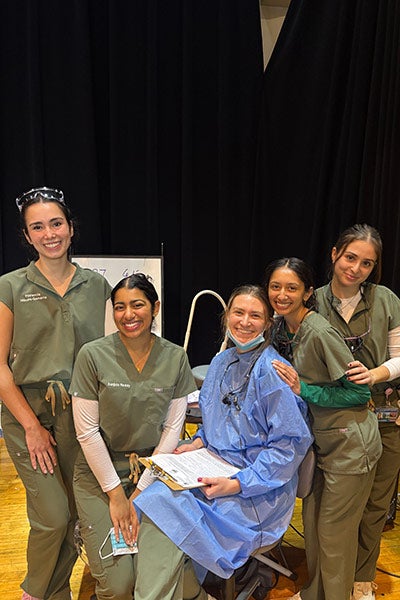
While these opportunities have helped Nog prepare for aspects of her future career, so much is still unfolding.
Most recently, Nog has developed an interest in public health dentistry, inspired by a year one opportunity at the dental school, during which students had the opportunity to visit local elementary schools and apply sealants on children’s teeth to help protect against tooth decay. She cites it as one of her favorite experiences in dental school thus far.
Though it’s too early to decide on a particular specialty, she knows she wants to work with her hands and play a crucial role in helping eliminate pain.
“I want to be someone who patients feel comfortable and confident coming to when they are the most vulnerable,” she said. “I gain so much satisfaction and fulfillment from knowing that I was able to help make someone's life better, especially through easing something as debilitating as dental pain.”
Through the PPSP and her involvement as former president of the university’s Pre Dental Society, she has had extensive opportunities to mentor other students. Nog has found those teaching moments fulfilling, and she hopes to become involved in education later in her career.
“What I love about dentistry is how many paths it opens up. I can see myself in private practice, in public health, and eventually in education, and I don’t think I have to choose just one,” she said.
Though studies in dental medicine are inherently difficult, Nog feels her undergraduate studies at CWRU prepared her well for the challenge. Even better, the flexibility she was afforded through the Pre-Professional Scholars Program left her feeling like she made the most of her undergraduate years, whether it was the ability to participate on the CWRU Cheer Team, study abroad or explore new areas of study.
“For me, the best thing was just having the freedom to have the best undergraduate experience of my life,” Nog said. “I will always be thankful to Case [Western Reserve] for that.”