Inside the build: Meet individuals behind the construction of CWRU’s ISEB project
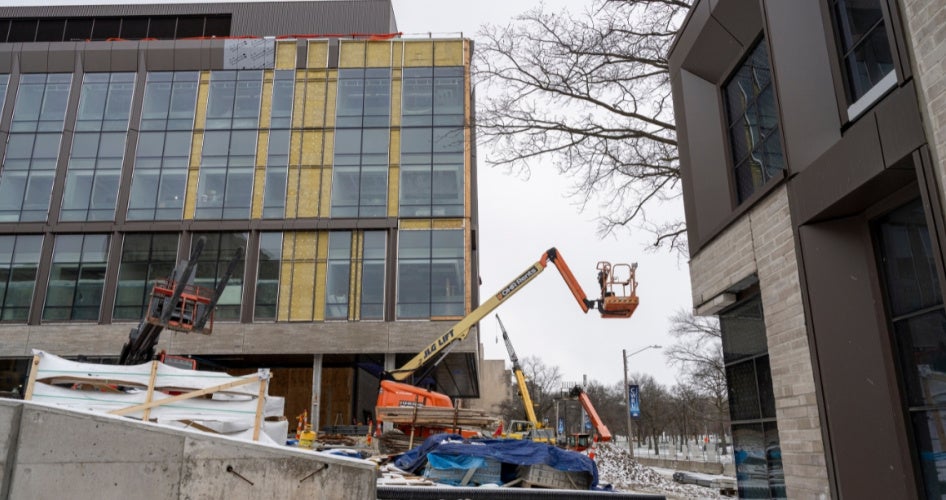
This October, Case Western Reserve University will open the doors to its new Interdisciplinary Science and Engineering Building (ISEB), a 189,000-square-foot facility designed to foster innovative research across eight collaborative laboratories. While many will have the opportunity to see the finished space, far fewer may realize the complexity and coordination required to bring a building of this scale to life.
Before the members of the CWRU community get the chance to step inside, the building has been years in the making—shaped not only by steel and glass, but by the people integral to its construction.
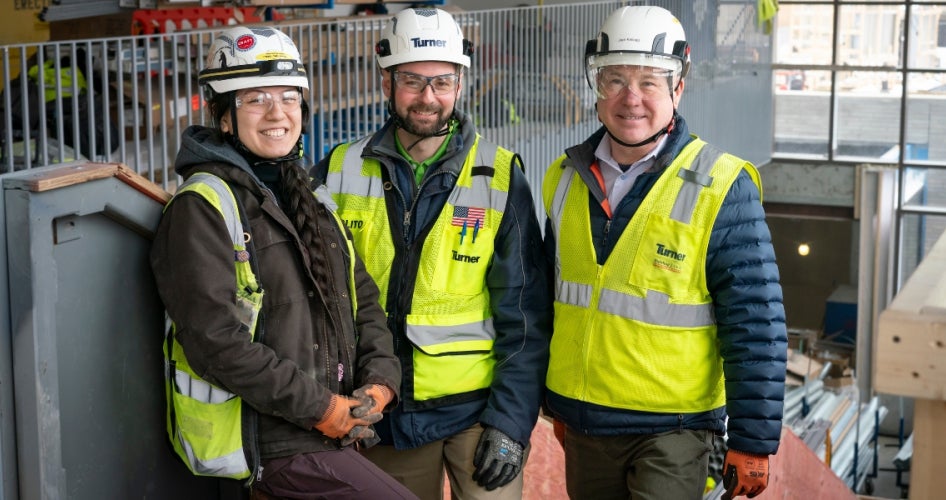
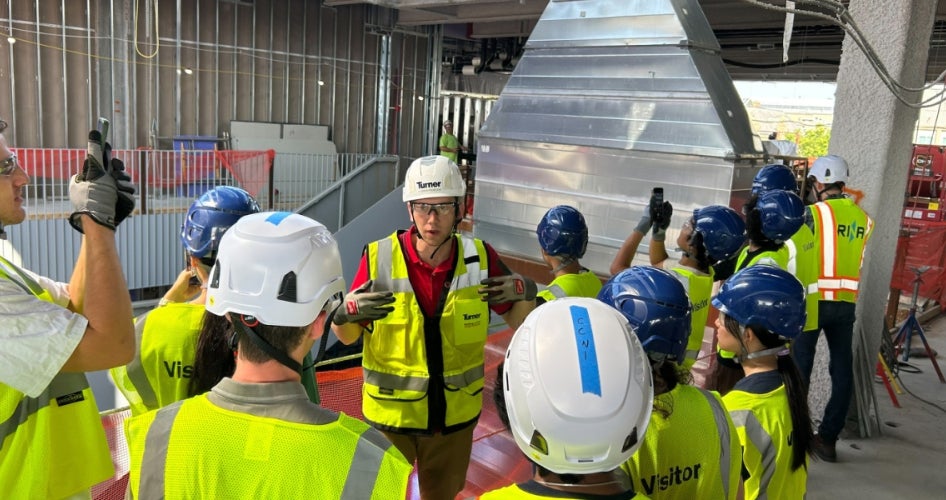
Behind the ISEB’s framework, lighting and electrical systems is a team of more than 1,000 individual construction trade workers onsite, who work to ensure the building’s structural integrity, safety and functionality. Part of the team for Discovery Builders—a joint venture among Turner Construction Co., Adrian Maldonado & Associates Inc., Next Generation Construction and the AKA Team—are several CWRU alumni who have helped guide the project from early design conversations to its final stages.
Engineering in real time
For Jack Kellogg (CIT ’87), project executive, the ISEB represents more than just another construction project—it’s a full-circle moment. Having previously contributed to projects such as the Maltz Performing Arts Center during his time with Turner Construction, Kellogg now helps lead the construction of one of the university’s most ambitious academic facilities. From the earliest planning phases, he has worked behind the scenes to ensure teams have the resources they need while upholding the building’s high standards for quality and safety.
That vision takes shape on the ground through the work of engineers such as Philip Polito (CWR ’07), senior project engineer, who translates design into reality. From reviewing architectural specifications to coordinating with trade partners, Polito ensures that every detail—down to materials and measurements—aligns with the project’s standards.
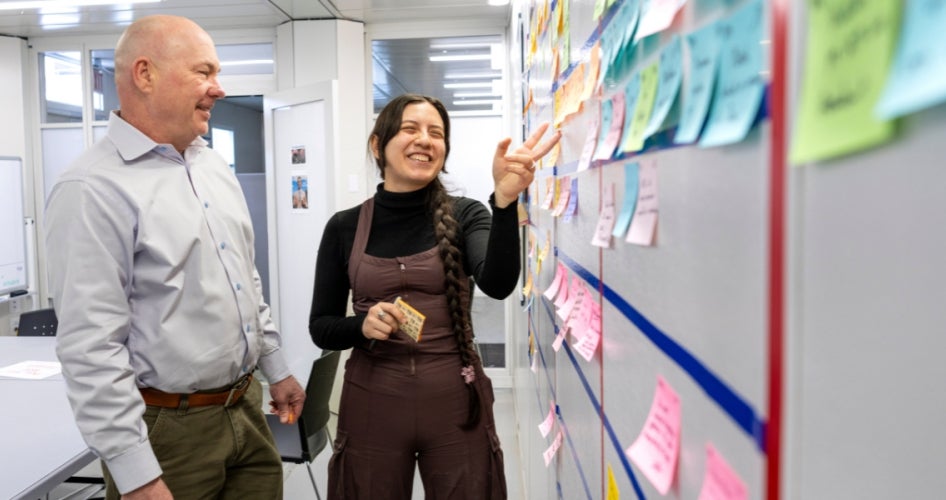
For those earlier in their careers, the ISEB has also become a training ground. Abigail Mondragon (CWR ’25) first joined the project as an intern, balancing coursework with long days tracking deep foundation installations. Now a full-time engineer, she oversees the installation of lab casework equipment—an evolution that mirrors both her own growth and the project’s progression. Her former responsibilities have since been passed to Andrew Froelich, a third-year civil engineering student stepping into the fast-paced environment of a major construction site.
By the time their peers walk through the ISEB’s doors for the first time, Mondragon and Froelich will already know the building from the inside out—having helped bring it to life as the only CWRU students involved in its construction. Through their work, both have developed one of the most essential skills in engineering: problem-solving.
“Having that skill is immensely important on the project because sometimes they have to think outside the box, get creative and really test the thought process on how to solve a problem,” Polito said. “I try to just give them the initial nudge—where we need to go on the end goal—and let them use their intelligence, knowledge, experience and everything they’ve learned.”
Beyond hands-on experience, the project exposes emerging engineers to the evolving tools shaping the industry—from advanced scheduling platforms to AI-driven systems that support safety monitoring and cost analysis. It also presents insight into real-world challenges that extend far beyond the classroom.
Constructing the ISEB on a hillside, for example, required careful planning, as the Martin Luther King Jr. Drive side sits lower than the Case Quad. This led engineers to determine how to safely demolish Yost Hall, excavate the site and implement an effective earth retention system.
“We had to do quite a bit of engineering work to determine how to tear down Yost Hall and then how to retain the earth—how we dug a big hole and how we could use that earth retention system effectively and efficiently,” Kellogg explained.
Learning beyond the classroom
Coursework at CWRU—from soil mechanics to concrete and materials engineering—helped prepare students like Mondragon and Froelich to contribute to these complex decisions in real time. Still, the project has required the team to navigate additional challenges, including environmental considerations, supply chain disruptions and sourcing constraints.
Despite these obstacles, the team remains focused on what comes next. When the building opens, they look forward to the research it will house—work that has the potential to drive innovation, strengthen Cleveland and address some of today’s most pressing medical, social and environmental challenges. They are especially excited about the building’s transparency, with glass-lined spaces designed to make research visible and accessible.
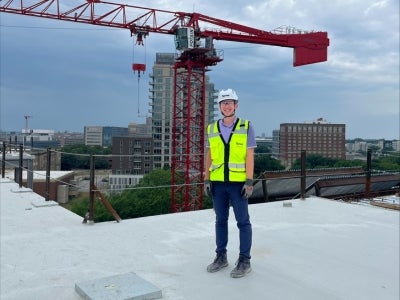
“One of my favorite parts is how committed a lot of the trade workers are to really doing a high-quality product and how they’re helping us work through all the issues that are involved in building this kind of complicated project,” Kellogg said. “Working with the trade workers and seeing how committed they are has been really gratifying for me.”
For Froelich, the experience began at a career fair hosted by the Department of Civil and Environmental Engineering, an opportunity that led him to become part of a roughly 20-person team managing construction on-site. Like Mondragon, he is also a member of the American Society of Civil Engineers, where teamwork is emphasized both in the classroom and in practice.
“It really is a team effort, and they emphasize teamwork in the classroom,” Froelich said.
“I’ve really enjoyed learning about construction because I like to do little projects on my own, and I’ve been able to apply some of my knowledge,” he continued. “All of these contractors really know their craft, and they’re easy to ask questions to. Taking in all the information has been awesome—it’s been such a great experience.”
As the project nears completion, Froelich is looking forward to one moment in particular: seeing others walk through the building he helped create.
Learn more about the Interdisciplinary Science and Engineering Building.