Meet a lawyer-turned-entrepreneur and MBA student on a mission to inspire young founders
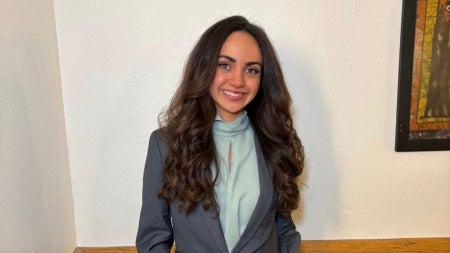
A lawyer-turned-entrepreneur, first-year MBA student Aasif Shah had already built a successful health technology company in India before he began his MBA studies at Weatherhead School of Management. His wealth of experience across multiple industries leads Shah to describe himself as a “multi-preneur,” but he came to Case Western Reserve University with the hopes of further building his business toolkit and honing his skills.
Rewiring his career trajectory
Shah was a third-year law student in New Delhi when he was first inspired to found Stetho Health Systems, on a routine visit to his university hospital.
“I watched a nurse shuffle through a dozen paper files to find my medical chart,” Shah said. “It took more than a couple of minutes—and that delay, I thought, could one day cost a life. There had to be a better way to manage and access health records.”
Identifying this pain point led Shah deep into the world of health technology, where he worked to raise capital from angel investors and recruit a team of engineering students. What started as a health technology service quickly grew into a full-fledged technology consulting business, altering the trajectory of Shah’s career.
The venture caught international attention, earning Shah invitations to share his story on platforms such as TEDx and Forbes. Shah was interviewed for AIM2Flourish, a program hosted by the Fowler Center for Business as an Agent of World Benefit, which recognizes entrepreneurs making a change for global good. It was his first connection to Weatherhead School of Management, one that he would describe as a “full-circle moment” when he began his current chapter as an MBA student.
His “American dream”
Stetho Health Systems grew quickly, and evolved from healthcare technology into a digital-solutions portfolio of projects. Shah consulted for a wide range of pain points and worked with companies to develop solutions. As time passed, he realized that he wanted to grow beyond consulting. His search for the perfect program led him to Weatherhead and the Fowler Center, the program that had celebrated his early venture years before.
“When I started seriously looking at MBA programs, what stood out about Case Western Reserve was the entrepreneurial ecosystem,” he said. “Sears [think]box, the Entrepreneurship through Acquisition program and the work of the Fowler Center all emphasized the strong focus on entrepreneurship, which is what I was looking for. It feels cosmic, like the story came home.”
As an international student, Shah believes his cross-cultural perspective is one of his greatest strengths. He says he’s discovering the beauty of contrast. “American businesses are incredible at scaling,” he said. “But coming from India, where entrepreneurs often have to build with fewer resources, you learn creativity at a different level. I think those two mindsets, American structure and Indian frugality, together, can build the future of global business.”
Looking ahead
Today, Shah is a Business as an Agent of World Benefit Fellow at the Fowler Center, working alongside Executive Director, Megan Buchter, to help tell the stories of other entrepreneurs who are creating positive impact. He is passionate about telling the stories of other entrepreneurs and hopes to launch a media channel where he can interview individuals in factories and manufacturing spaces, pulling back the curtain on these industries.
“I want to bring visibility back to industrial founders and immigrant entrepreneurs,” he said, “and inspire young builders to rediscover the excitement of making real, tangible things, of running a factory, not just an app.”
After graduation, Shah plans to step into the Entrepreneurship through Acquisition space, and acquire and grow a small or mid-sized industrial venture.
“The world runs on physical things,” Shah said. “As AI reshapes how we live and work, it might automate much of the digital world, but it can’t automate creation. The future will still belong to people who build things you can touch. I believe factories will be the new-age startups.”