Meet members of CWRU's Vertical Take-Off and Landing Team
Still in its nascent stages, VTOL CWRU—a student-led drone design team—has established itself amongst competitors across the country. In the spring, the team won first place at the 2024–2025 Design-Build-Vertical Flight Competition with a top score for fly-off performance in just its second year of competition.
Their success could be explained by strong leadership, collective determination, and meticulous design and construction.
Before the competition, many members of VTOL CWRU dedicated up to 12 hours at Sears think[box] on the weekends, designing and building the drone components. Indeed, the competition has created opportunities for the team members to practice and be challenged with real-world engineering problems.
The 2025 Design-Build-Vertical Flight Competition challenged the team to build an aircraft for wildfire response that can drop off fire retardant to extinguish the fire to “save a burning town,” a scenario rooted in real-world applications. In the coming 2026 competition, the team is additionally tasked with building a drone that can also pick up the retardant, which requires a new set of engineering techniques.
Indeed, the experience at VTOL CWRU has sown a seed of interest for many members to pursue higher education in the engineering fields, and greatly facilitates their move into internships and the workforce.
We spoke with some of the team’s leaders to learn more about their experiences working on the team, achieving their past successes, and preparing for their coming mission.
Answers have been edited for clarity and length.
Nathaniel Hahn
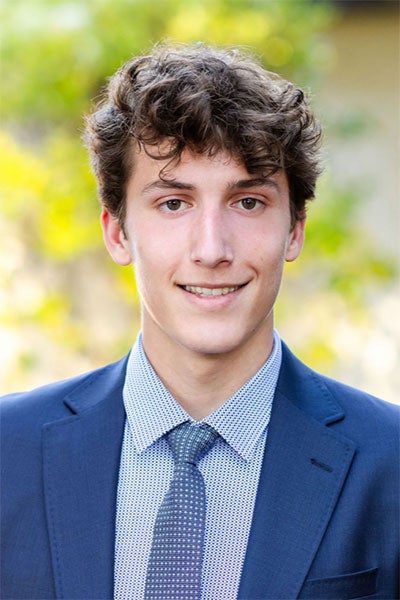
President, co-founder
Major: Electrical engineering, computer science
Los Altos, California
1. How has your experience at CWRU, whether in the coursework or mentorship, influenced your ability to contribute to the project?
The computer science courses at CWRU have really helped prepare me for writing the software for the drone to function. Through my classes with many group projects, I also learned to work as a team in a software or electrical engineering space, where people have to be able to trust each other that each part is going to work. Indeed, in VTOL, we work with our peers, who we know have received the same quality engineering education, or even the knowledge that we learned is uniform. This really allows us to trust our team members.
2. How would you describe the team’s spirit?
We're a really goal-oriented team. Our main focus is winning the competition, and with that comes teaching people how to get their tasks done properly and promptly. As engineers, we learn through doing, but every team member is expected to fulfill their task with the same goal in mind that the drone is going to be completed and working for the competition. Indeed, I believe that the dedication of our team members has contributed to our success in the 2025 Design-Build-Vertical Flight Competition.
3. What can potentially go wrong with a drone during the competition day?
There are so many things that can go wrong, especially during manufacturing—that’s where most issues tend to happen. For example, when we drive down to the competition in Maryland, we never know what might fail inside the drone. A single broken solder joint, where two wires connect, could take us out of the competition until it’s fixed.
That’s why our focus is on managing risk and knowing how to respond when things go wrong. We constantly evaluate what risks we’re willing to take—like deciding whether to fly in strong winds when other teams might not. Preparation is key, so we spend a lot of time practicing full system setups, calibrating everything, and running tests. We’ll spin the motors without propellers, test the droppers, and simulate as many scenarios as possible so that when it’s time to compete, we’re prepared for anything.
Caleb Brady
Co-founder, former chief engineer
Major: Mechanical engineering
Buffalo, New York
1. Can you share a skill that you have learned or improved throughout your time at VTOL?
The most valuable skill I gained through VTOL is probably conflict resolution within the team. We've had some members who have had a lot of confidence in their decisions, and trying to balance and compromise between strong opinions can be tricky at times. I think conflict resolution would be a valuable skill to develop in any industry you are going into. This is a skill I have used in multiple internships and work opportunities after VTOL, and I will carry it forward.
2. How has your experience at CWRU VTOL helped you in your career as an engineer or in your internships?
I have definitely made many valuable connections through the competition. I am interviewing for a startup of the founder of the 2025 Design-Build-Vertical Flight Competition, whom I know through the competition. The competition itself also gives us many examples of real-world problems that engineers would face in their careers. It provides us with experience and knowledge to discuss with our future employers or in graduate school interviews. In addition, being a team member of VTOL CWRU and becoming a winner of the last competition has also become a strength in our resume, where we can show our ability as engineers.
Adam Jenkins

Mechanical and aerospace engineering lead
Major: Mechanical engineering
Bath, Ohio
1. How would you describe VTOL’s progress as the team prepares for the 2026 competition?
VTOL CWRU has been busy designing a drone system that is able to autonomously retrieve and deliver payloads. This semester, we have focused on retrofitting last year’s drone with both hardware and software to test our different autonomous payload concepts. The recent test flights have been promising as our drone was able to successfully locate, pick up, and drop a payload without any pilot intervention. Next semester we will shift our focus toward designing a new drone around this payload system that will be ready by mid-April.
2. Why did you decide to join CWRU VTOL?
I wanted to experience at least one year of working on a design team at CWRU. Helping run a long-term engineering project through VTOL feels like a perfect way to round out my undergraduate education. CWRU does a great job supporting their design teams based out of think[box] and I knew going into it that it was a great opportunity to learn more about design and project management.
3. In what ways has your experience at CWRU—through coursework, mentorship, or other opportunities—helped you contribute to the project?
I got mentored very early on in my time at CWRU working at CLEANR and I consider it the most important thing I did to develop my understanding of engineering. By working on hands-on prototyping projects and getting to see the growth of a startup in real time, I got an experience that has made me much more confident to help run a project like this.
Right before joining VTOL, I had been working on projects involving autonomy. Last summer, I had an internship at Caterpillar where I worked on validating the autonomy software for their mining drills. While there is little overlap between mining drills and drones, I feel that the experience gave me a better intuition when designing with autonomy in mind.
Dany Sainz-Gootenberg
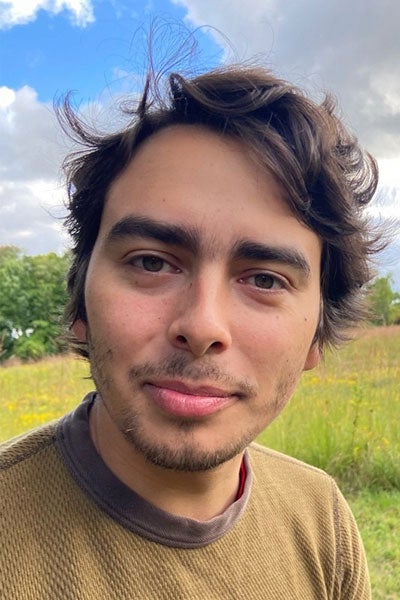
Cofounder, drone pilot
Major: Mechanical Engineering
Brooklyn, New York
1. Can you describe your role as a pilot of the drone and explain how you developed this skill?
My role as the club’s pilot involves almost everything related to flight. This includes setting up all pre-flight tasks such as radio and telemetry connections, video systems, the ground station, propellers, FAA authorization, safety checklists, data logging, and more. For actual flight operations, I plan the autonomous missions and either fly the drone manually in different flight modes or monitor autonomous flights and take over when necessary.
I started flying and building drones in high school just for fun, and that interest continued into college. Those were smaller, faster drones, but they taught me how to pilot in a fast-paced environment. When a few of us started the club and eventually began building much larger drones, it was a big adjustment, but that earlier experience made the transition much easier.
2. How would you describe VTOL’s progress as the team prepares for the 2026 competition?
I’d say that VTOL’s progress for the 2026 competition has been interesting because we’re in a bit of a transition year. The original founding members are leaving Case Western Reserve, and we’re working to give newer members the leadership and practical skills needed for the club to continue and succeed.
The competition itself is similar enough on the mechanical and aero side that our drone design doesn’t need to evolve drastically. This gives us more time and resources for electrical engineering projects, as well as projects that teach manufacturing and design processes to newer members.
For example, I’m leading a project to convert last year’s hexacopter drone to an X8 configuration. I’ve been trying to let new members take the lead in machining, assembly and design tasks while guiding them along the way.
3. Can you share a skill you’ve learned or improved during your time with CWRU VTOL?
I’d say my communication skills—and especially my ability to ask for help—have improved a lot over my two years in the club. If you question the drone’s design or a manufacturing method early on, you can avoid bigger mistakes down the road. The club is definitely a place where students can put themselves out there, be wrong, and let everyone learn from it. No one person can do the entire project alone.