Meet a social work student supporting runaway and homeless youth through her fieldwork
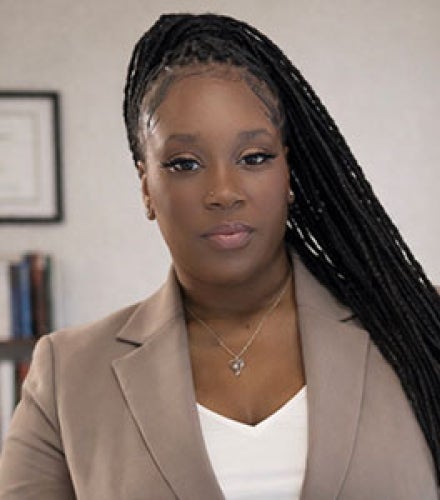
Anjhani Mcgee has always been a believer in the power of resilience. Now her studies at the Jack, Joseph and Morton Mandel School of Applied Social Sciences have reinforced that belief.
A first-year student in the Master of Social Work program, Mcgee has a concentration in Children and Families. To gain practical experience, she has a field placement at Broken Connections, a nonprofit organization that supports runaway and homeless youth between the ages of 13 and 17.
At this placement, Mcgee works with young people navigating difficult circumstances, often intensified by trauma or instability, connecting them with resources and advocating for their needs. While the work is challenging, Mcgee sees the direct impact it makes.
“One of the most meaningful moments in my fieldwork has been seeing youth begin to trust the support systems around them. Many of the young people we work with have experienced instability or trauma, so building trust takes time.,” she said. “When a youth opens up or begins engaging in services, it’s a reminder of how important consistent support and patience are in this work.”
Mcgee hopes to continue building her clinical and advocacy skills to apply them in a future career working with vulnerable youth and families to create positive change.
“What I enjoy most about social work is the opportunity to make a real impact on people’s lives,” she said. “Even small changes—like helping someone access a resource, develop coping skills, or feel heard—can make a big difference. I also appreciate that social work is about both individual support and advocating for systemic change.”
In recognition of World Social Work Day (March 17), we connected with Mcgee to learn more about her experiences in the field.
Answers have been lightly edited for clarity and length.
1. What initially drew you to CWRU?
What initially drew me to Case Western Reserve University was the strong reputation of the social work program and the focus on field education. I wanted a program that would not only teach theory but also give real-world experience working with clients and communities. I also liked that CWRU emphasizes social justice and preparing students to work with diverse populations, which aligns with why I chose this field.
2. What appealed to you about social work?
What appealed to me most about social work is the ability to help people during some of the most challenging times in their lives. Social work allows you to advocate for individuals, families, and communities while also addressing larger systems that affect people’s well-being. I’ve always been someone who cares deeply about others, and this field allows me to turn that into meaningful work.
3. When and why did you first become interested in this field?
I first became interested in social work when I realized how many people need support navigating difficult life situations, especially youth and families. Seeing how much of a difference supportive services and guidance can make really motivated me. I wanted to be someone who could help provide that support and connect people with resources that improve their lives.
4. What area of study did you pursue as an undergraduate and how does it relate to your current work?
As an undergraduate, I focused on studies that helped me better understand people, behavior, and social systems. That foundation has been very helpful in my current graduate work because it gave me insight into how personal experiences, environment, and community all influence individuals’ lives. Those ideas directly connect to the work I now do with youth and families.