From pioneering cancer diagnostics to expanding rural care: Celebrating the School of Medicine’s 2026 alumni award recipients
CWRU School of Medicine honors eight distinguished alumni and faculty members for extraordinary contributions to medicine, community health and scientific discovery
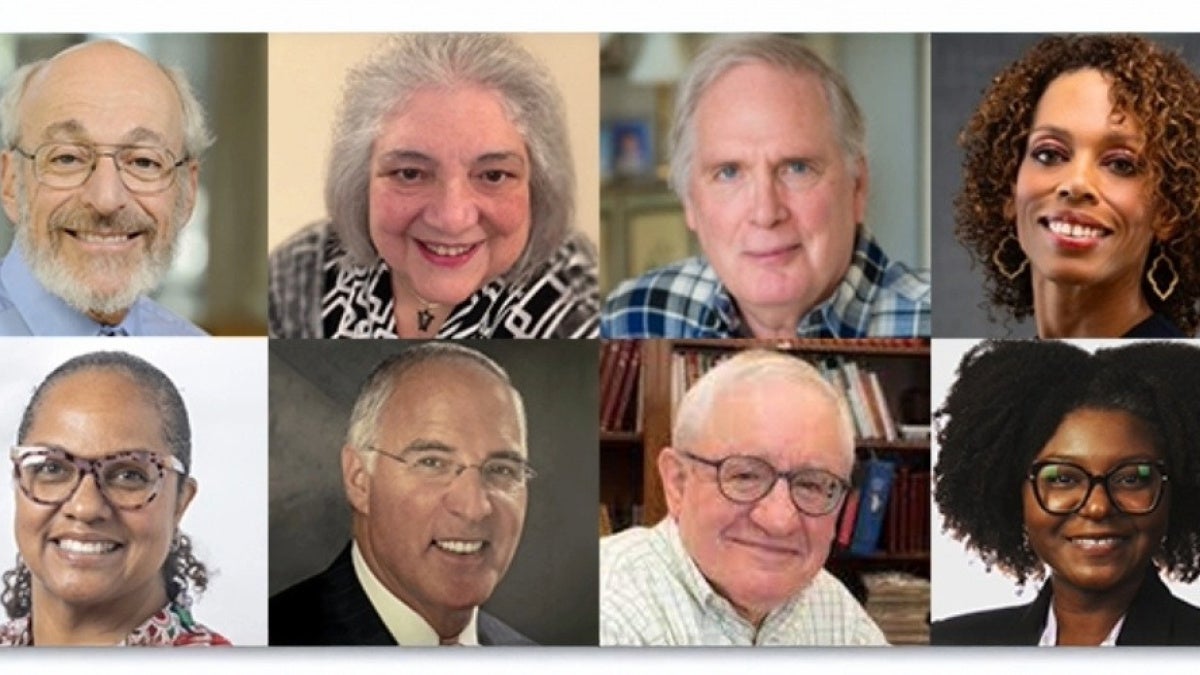
Every year, Case Western Reserve University School of Medicine celebrates remarkable graduates and faculty members whose work changes the landscape of medicine, patient care and health education. Recognized during Homecoming and Reunion Weekend, the 2026 Alumni Award winners reflect the very best of CWRU—bringing visionary leadership to clinical practice, scientific research and community service across the globe.
This year's awardees demonstrate an extraordinary breadth of achievement in science and medicine. From establishing rural neurology clinics for underserved families and pioneering early-detection algorithms for blood cancer, to leading national diagnostic innovation and shaping the future of medical school curricula, these alumni and faculty embody CWRU’s mission in action.
Read on to learn more about the career accomplishments of this year's award recipients.
Steven Seelig, MD, PhD (CWR ’70; MED ’76; GRS ’76, physiology)
Honored with the Distinguished Alumni Award (PhD category), Steven Seelig, MD, PhD (CWR ’70; MED ’76; GRS ’76, physiology), has forged an exceptional career spanning basic science, clinical practice and biotechnology leadership.
Seelig began his studies at Case Western Reserve University as an undergraduate in the mid-1960s. After Dean Clarence Cramer introduced him to physiology chair George Sayers, he began endocrine research. In 1969, Sayers and Associate Dean John L. Caughey Jr. admitted him directly to the MD/PhD program before he graduated. As a medical student, he co-authored key research on how adrenocorticotropic hormone works.
Seelig completed pediatric and endocrinology training at the University of Minnesota, where he served as associate professor and director of the Division of Endocrinology and Metabolism. His research identified thyroid- and growth hormone-responsive genes that remain benchmark models today. Later transitioning to a career in biotechnology, Seelig led cross-disciplinary teams to translate molecular discoveries into commercial diagnostic platforms. Throughout his career, he warmly credits his success to the support of his wife, Nancy.
Jeffrey L. Ponsky, MD, EMBA (MED ’71, MGT ’90)
Recipient of the Lifetime Achievement Award, Jeffrey L. Ponsky, MD, EMBA, FACS (MED ’71, MGT ’90), is celebrated for his transformative contributions as a pioneer in surgical endoscopy and minimally invasive surgery.
After earning his CWRU medical degree in 1971 and completing his residency at University Hospitals, Ponsky joined the faculty as director of surgical endoscopy. In 1979, he co-developed percutaneous endoscopic gastrostomy (PEG)—a landmark innovation that revolutionized minimally invasive patient care worldwide. He later served as director of surgery at Mt. Sinai Medical Center, executive director of the Minimally Invasive Surgery Center at Cleveland Clinic, and Oliver H. Payne Professor and chair of CWRU’s Department of Surgery.
A former president of both SAGES and the American Society for Gastrointestinal Endoscopy (ASGE), Ponsky spearheaded advancements in flexible gastrointestinal endoscopy that reshaped modern surgical practice. He earned his Executive MBA from CWRU’s Weatherhead School of Management in 1990 and previously served as associate dean of alumni affairs. In recognition of his enduring impact, the American College of Surgeons named him an Icon in Surgery.
Anastasia Rowland-Seymour, MD (faculty)
Anastasia Rowland-Seymour, MD, is the recipient of the Special Recognition Award for her dedicated leadership in medical education, curriculum innovation and humanistic, community-focused patient care.
A professor of medicine at MetroHealth Medical Center and professor in the Center for Medical Education at Case Western Reserve University School of Medicine, Rowland-Seymour trained in internal medicine at Columbia Presbyterian and integrative medicine at the University of Arizona. Since joining CWRU in 2016, she has brought a vital perspective to primary care at MetroHealth.
Rowland-Seymour currently serves as associate dean for program innovation and educational enhancements, overseeing key student affairs and curricular initiatives that foster professional identity. In 2025, she was named holder of the Jerome Kowal MD Professorship in Geriatric Health Education, expanding first-year medical student training in geriatric care. Throughout her CWRU tenure, she has directed the WR2 curriculum's Foundations of Clinical Medicine block and served as medical director for both the Physician Assistant Program and the PRIME program.
Robert J. Baumann, MD, FAAN, FAAP (MED '65)
Recognized for his transformative impact on pediatric neurology and his lifelong dedication to expanding healthcare access for underserved communities, Robert J. Baumann, MD (MED '65), is this year's recipient of the Frederick Robbins Outstanding Accomplishment Award.
Attracted by Western Reserve University School of Medicine’s reputation for innovative, student-centered education, Baumann earned his medical degree in 1965. After serving as the first child neurologist in the U.S. Air Force, he completed advanced training in pediatric neurology at the University of Chicago before joining the faculty at the University of Kentucky Medical Center in 1972.
There, Baumann established the section of child neurology and created a certified child neurology training program. Partnering with local communities, he established a network of regional child neurology clinics across Eastern Kentucky mountain counties, delivering essential care to underserved populations while providing vital clinical training for students and residents. A widely published scholar in neuro-epidemiology, Baumann served as a visiting scientist and advisor for the NIH. His leadership earned him the Child Neurology Society’s Lifetime Achievement Award.
Gina D. Jefferson, MD, MPH, FACS (MED '00)
Through her dedication to surgical excellence, health equity and advancing diversity in medical education, Gina D. Jefferson, MD, MPH (MED '00), is this year's recipient of the Robert L. Haynie, MD ’78, PhD ’72 Community Impact Award.
After earning her medical degree from Case Western Reserve University School of Medicine in 2000, Jefferson completed surgical training at Howard University and Loma Linda University, followed by a fellowship in head and neck surgical oncology and microvascular reconstruction at the University of Miami. She later earned a Master of Public Health from the University of Illinois at Chicago.
Jefferson serves as professor, vice chair and chief of the Division of Head and Neck Oncologic and Microvascular Reconstructive Surgery at the University of Mississippi Medical Center. A dedicated educator and multi-time Faculty Teacher of the Year, she leads complex reconstructive surgical care while focusing her research on health disparities and clinical outcomes in head and neck cancer. Nationally, she chairs the Diversity Service for the American Head and Neck Society, advocating for underrepresented individuals in medicine and equitable care for vulnerable patient populations.
Lachelle Weeks, MD, PhD (GRS ’14, pathology; MED ’15)
The School of Medicine presents the Early Career Leadership Award to Lachelle Weeks, MD, PhD (GRS ’14, pathology; MED ’15), for her pioneering contributions to cancer interception and the early detection of hematologic malignancies.
Weeks earned her PhD in pathology from Case Western Reserve University School of Medicine in 2014 under the mentorship of Stanton Gerson, MD, now dean of the School of Medicine and senior vice president for medical affairs. She completed her medical degree at CWRU in 2015 before pursuing an internal medicine residency at Brigham and Women’s Hospital and a hematology/oncology fellowship at Dana-Farber Cancer Institute.
Currently an assistant professor of medicine at Harvard Medical School, Weeks directs the CHIP Clinic within Dana-Farber’s Centers for Early Detection and Interception of Blood Cancers. Her laboratory investigates clinical and molecular predictors of blood cancer development, credibly deriving the Clonal Hematopoiesis Risk Score (CHRS) to estimate patient progression risk. A principal investigator on multi-site clinical trials testing preventative interventions, Weeks was named a Damon Runyon Clinical Investigator and an American Society for Clinical Investigation Awardee. Her research has earned major support from the Edward P. Evans Foundation, Breakthrough Cancer and the National Institutes of Health.
Suzanne Rose, MD, MSEd (MED '85)
With nearly three decades of national leadership in medical education, gastroenterology and compassionate student advocacy, Suzanne Rose, MD, MSEd (MED '85) is the recipient of the Distinguished Alumni Award (MD category).
Rose earned her medical degree from Case Western Reserve University School of Medicine in 1985, where she was elected to Alpha Omega Alpha. She completed her internal medicine internship and residency at Case Western Reserve before completing a fellowship at the Cleveland Clinic, becoming the first woman to serve as chief fellow in gastroenterology there.
Rose recently served as senior vice dean for medical education at the University of Pennsylvania’s Perelman School of Medicine from 2018 to 2025, where she championed a philosophy of compassionate, rigorous education. She previously served as associate dean at UConn School of Medicine, Icahn School of Medicine at Mount Sinai, Weill Cornell Medical College and the University of Pittsburgh. An author of over 100 scholarly works, Rose served as education councilor on the American Gastroenterological Association’s Governing Board and received its Distinguished Educator Award in 2016.