
Rewriting stories about dementia: How current narratives about dementia shape experiences
For millions, a dementia diagnosis comes with preconceived notions of fear, loss and burden—stigmas written by decades of media and cultural depictions that Case Western Reserve University researchers are determined to rewrite in a recently published special issue of The Hastings Center Report.
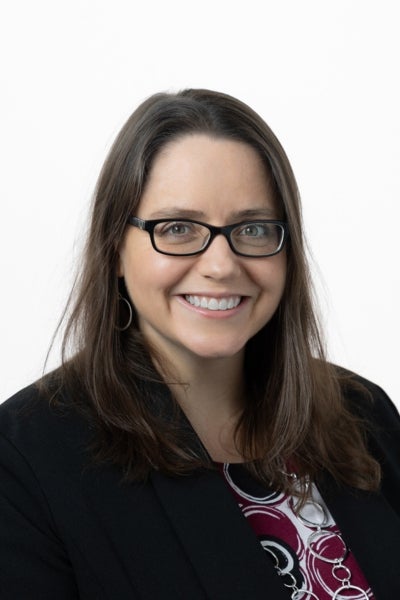
Erin Lamb, PhD, associate professor at the Department of Bioethics at Case Western Reserve School of Medicine, co-edited the report with experts including Nancy Berlinger, Kate de Medeiros, and Liz Bowen, titled Living with Dementia: Learning from Cultural Narratives of Aging Societies. Funded by a National Endowment for the Humanities (NEH) collaborative research grant, the initiative includes multidisciplinary researchers who explore the impact of societal conversations about dementia.
"Dementia is a very long experience for many people that goes through multiple stages," she said. "And one of the key challenges with dementia is the fear and stigma around it, which makes the experience worse for people. I think there's a lot of room for us to be able to address that, which is what we were really interested in with this special issue."
Examining dementia across different cultures reveals how much society shapes the understanding of the condition.
Peter Whitehouse, MD, PhD, professor of neurology at CWRU, also contributed to the essay collection, co-editing a piece titled "The Quest for Cure of 'Alzheimer's': Reimagining the Goal by Changing Culture," which, in part looks to Indigenous cultures for alternative ways of thinking about dementia and care for older adults. Tribal cultures often embrace a kinship worldview that supports care of the elderly and sees life as a sacred web of connections among humans and living creatures, according to the essay.
Persistent narratives
In 2024, nearly 7 million Americans were living with symptoms of dementia, a collective term for Alzheimer's diseases and other aging-associated, progressive and terminal conditions that affect a person's thought, memory, speech, and behavior, according to the report. This population could grow to more than 13.8 million by 2060.
"The ways that we represent dementia—whether it's through like zombie metaphors, or the idea of someone just sort of being gone—we don't do anything that acknowledges the lives and presence of people who are living with dementia," Lamb said.
She points to a 2024 video released by the Alzheimer's Society, a nonprofit in the United Kingdom providing research, services and advocacy to people with dementia and family caregivers. In the video, a man speaking at his mother's funeral talks about her multiple "social deaths" before she physiologically died, Lamb explained. While public awareness campaigns like this can help raise funding for research or spotlight the experience of caregivers, they fail to recognize the individual's value and personhood.
"It gives us absolutely no access to the person, or no empathy for the person with dementia themselves, and that's really troubling," she said.
Writing a new story
Most stories that depict dementia do so through caregivers. This is in part because the ability to coherently narrate may stop as dementia advances, but Lamb pointed out, "it doesn't mean that we can't have stories about meaningful lives lived with dementia."
Lamb was among several CWRU faculty members who contributed to Dementia and Personhood: Facts and Myths, a public communication effort that tackles the stigma surrounding dementia. Led by Cleveland Clinic, the project created video resources to help the public better understand the stigma surrounding dementia. It was funded by a grant from the Ohio Humanities Council and combined the efforts of investigators from the Clinic, MetroHealth, Drexel University and CWRU, including Cynthia Kubu, PhD, who served as principal investigator; Mark Aulisio, PhD, and Eileen Anderson, PhD.
Those living with symptoms of dementia often require increasing levels of hands-on care. In fact, about 11 million Americans are unpaid caregivers to people with dementia.
"Caregiving for people with dementia is a burden in part, because societally, we have structured it that way; We don't provide support," Lamb said, noting that 80% of long term care is provided by unpaid caregivers. "I don't want to diminish that. At the same time, I think when caregivers focus only on what's lost to them—like the ways that their mom dies—they miss out on opportunities to have changing, growing relationships with people with dementia."
Even as people change, there are opportunities for interaction and for relationships to grow in other ways—and versions of those stories to be told, Lamb said.
Other stories about memory loss—such as 50 First Dates or the character Dory in Finding Nemo—aren't tragedies. Of course, Lamb notes, dementia is progressive and eventually terminal, "but it's not as though memory loss is an automatic loss of self."
The cultural narratives that exist in the United States today make the experience of having dementia and of caring for someone with dementia that much harder, she said, "and that's a piece that we can all be working on."
"If there were more stories of a patient with dementia living a good life, what would that mean to somebody who's newly diagnosed?" Lamb said.