

release
December 19, 2017
Squamous cell carcinoma of the tongue, also known as oral tongue cancer, is an aggressive form of cancer that generally affects older people. Patients with the disease often find it difficult to eat, swallow food, or speak. Reasons for its generally poor prognosis include late detection, before…

December 19, 2017
Will probe link among cell-signaling defects, rapid cell growth and enlarged brains One hypothesis for how autism develops is excessive neuron production in the prenatal period, leading to a transient but significant increase in brain size in the first few years of life in about one-quarter of…
December 18, 2017
Case Comprehensive Cancer Center at Case Western Reserve University School of Medicine has been awarded a $100,000 Josh Metzger Memorial Fox Trot Grant sponsored by the Prayers From Maria Foundation, in support of pediatric neurosurgical oncology research. Violette Recinos, MD, director of…
December 18, 2017
The most lethal form of breast cancer could have a new treatment option, according to new research out of the Case Comprehensive Cancer Center at Case Western Reserve University School of Medicine. In the Proceedings of the National Academy of Sciences, researchers showed triple-negative breast…
December 14, 2017
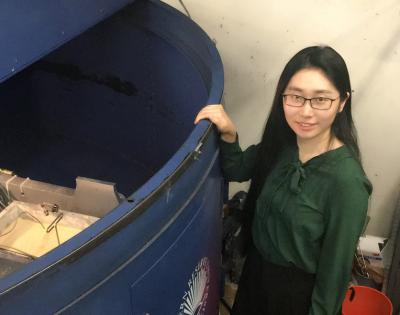
Case Western Reserve researcher tests new methods to anchor wind turbines, part of LEEDCo, Icebreaker Windpower project There are lots of moving parts to bringing the world’s first freshwater wind turbines to Lake Erie by 2018, but Case Western Reserve University researchers are focused on keeping…
December 13, 2017
One hypothesis for how autism develops is excessive neuron production in the prenatal period, leading to a transient but significant increase in brain size in the first few years of life in about one-quarter of children with the disease. But the precise timing and cause of this overgrowth is poorly…
December 12, 2017
Mark A. Griswold, PhD, a professor in the Department of Radiology at Case Western Reserve University School of Medicine, has been elected to the National Academy of Inventors 2017 Fellows Program, the highest professional distinction accorded to academic inventors. He was elected as a fellow for…
December 11, 2017
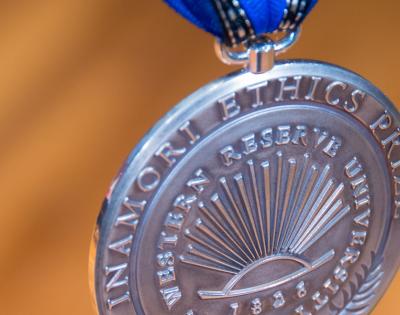
Recipient played central role in Apollo space missions and worldwide desert groundwater exploration Farouk El-Baz As Apollo 11 slowly descended to the moon’s surface, the team of NASA scientists responsible for choosing the first lunar landing site was as anxious and in awe as the rest of the…
December 07, 2017
Case Western Reserve “sea slug” robotics expert leads effort to organize emerging fields You might not think a research area as detailed, technically advanced and futuristic as building robots with living materials would need help getting organized, but that’s precisely what Vickie Webster-Wood…
December 06, 2017
Researchers from Case Western Reserve University School of Medicine have discovered how unusually long pieces of RNA work in skin cells. The RNA pieces, called “long non-coding RNAs” or “lncRNAs,” help skin cells modulate connective tissue proteins, like collagen, and could represent novel…