Time to give back: An alum’s global journey
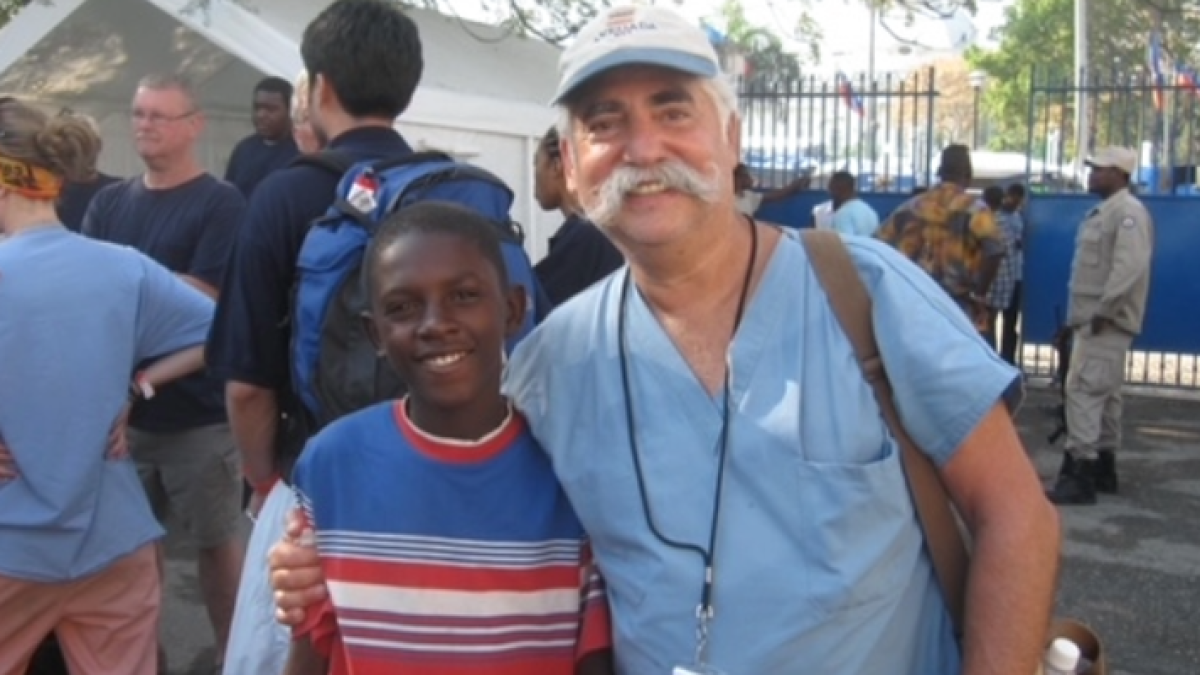
When Elliot Siegel, DMD (DEN ’74), turned 50, he realized that his successful career as an oral and maxillofacial surgeon wasn’t enough. “I decided it was time to give back and volunteer my time helping others,” he said. That choice led to more than 20 years of mission-focused work around the world—including on a hospital ship docked at various ports along the coast of Africa.
Building a career and a calling
After graduating from Case Western Reserve University School of Dental Medicine in 1974, Siegel completed a five-year oral and maxillofacial surgery residency in New York and then opened a private practice in his hometown of Massapequa, New York, just five blocks from where he was born and raised.
For the next 47 years, he built a busy, seven-day-a-week, successful practice, adding partners and many staff members. Still, the heart of his work stayed the same—he called every patient in the evening and took pride in his “hometown, old-time practice."
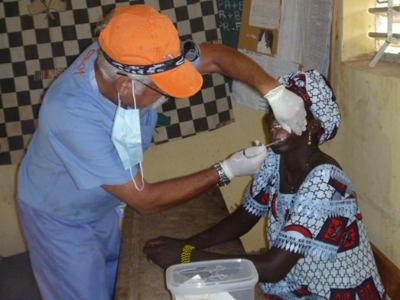
Despite his deep dedication to his practice, in his late 40s and early 50s, Siegel felt drawn toward something more. This feeling eventually took him far from Long Island, to volunteer his time with groups such as International Medical Relief, Himalayan HealthCare and Flying Doctors of America. His itineraries read like pages from a global atlas, spanning continents and cultures such as the Ecuadorian and Peruvian Amazon; Nepal; Myanmar (Burma); Senegal; Uganda; Cameroon; Haiti and Syrian refugee camps.
In the Amazon, he cared for members of the Cofán community—only about 300—where life expectancy was around 40 and the only health provider was a medicine man.
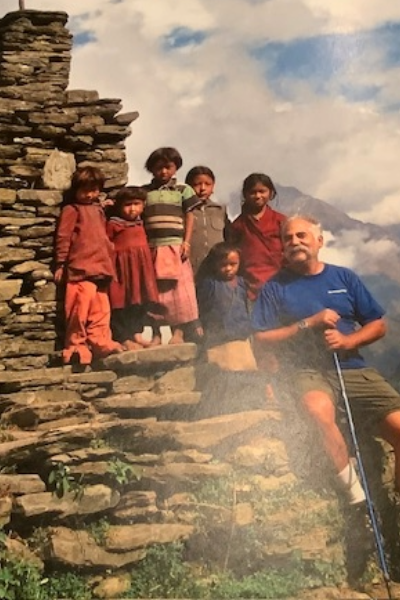
In 2002, following a disaster in Nepal, he spent a month in the Himalayas, hiking six hours a day to reach villages at 9,000 feet and higher—places where many people had never seen a dentist, let alone an oral surgeon.
“In many of these locations, there were no specialists or physicians at all, and often no physicians,” Siegel said. “I'd go in—there were hundreds of patients waiting, and you can only see so many in a day. There's no continuity of care."
After a particularly difficult deployment in Haiti assisting with amputations and trauma surgery following a devastating earthquake, Siegel returned home feeling his efforts were just a “drop in the bucket.” A group debrief with a mental health professional changed his perspective.
“He told me that a drop will fill the bucket, the bucket will spill over and become a stream, and the stream will eventually reach the ocean,” he said. “I've kept that perspective wherever I’ve gone.”
Finding continuity on a hospital ship
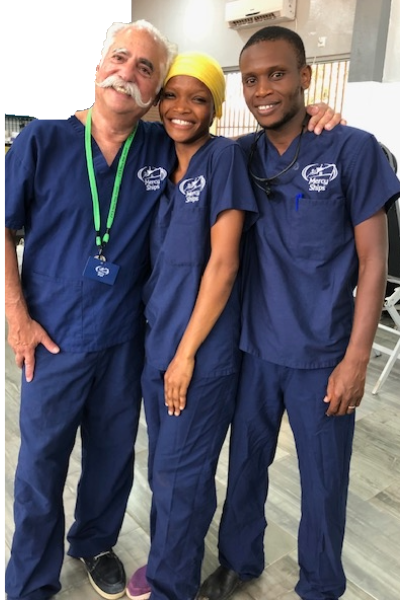
An exception to what he calls "Band-Aid" medicine came when Siegel began volunteering with Mercy Ships, an international nonprofit that operates a fully equipped hospital ship in some of the world’s poorest nations. Today, he volunteers on the Africa Mercy, which docks in one country for a year or more, providing sustained surgical care and follow-up—complex, staged surgeries and rehabilitation that are often unavailable locally.
"The ship is in port for a year to a year and a half and has five operating rooms, recovery rooms and hospital rooms,” said Siegel. “What makes this work different is that it's truly a model of continuity of care.”
Patients often walk dozens—or even hundreds—of miles to reach the ship. Many live with large facial tumors, severe deformities or burn injuries that have led to isolation in their communities. On board, they undergo surgery and regain function, appearance and a sense of belonging.
Most recently, Siegel volunteered in Senegal, Benin, Uganda and Madagascar, where long lines of people patiently waited for essential healthcare. Through Mercy Ships, he provided continuity of care, treating not just immediate needs but also offering lasting impact to communities that often lacked access to specialized medical care.
One place, however, has become a long-term focus in his life—the British Virgin Islands. Siegel and his wife have visited for more than 40 years, and today, he lives part-time on Virgin Gorda—taking an early morning ferry to volunteer at Peebles Hospital on Tortola and at Nurse Iris O’Neal Clinic on Virgin Gorda.
“I am the only oral and maxillofacial surgeon in the entire British Virgin Islands,” he said. “At this time in my life, I am giving back to some of the most amazing people and to a place that I love so dearly.”
Shaped in Cleveland, serving the world
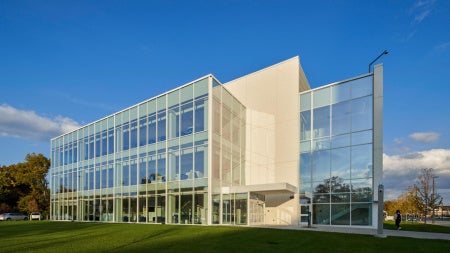
For all the miles he has traveled, Siegel traces his perspective back to Cleveland and his days as a dental student.
"I have the best memories of Case Western Reserve," he said. "We had a small, boutique class. We all knew each other. There was a camaraderie, and we all had a good time and received a great education.”
He still remembers his admissions interview with David Gray, who asked whether he would come to Cleveland if he were accepted.
“I looked at Dr. Gray and said, 'I’m here, aren’t I?' Siegel laughed. “Case Western was where I wanted to be, even during the cold winters.”
Siegel hopes today’s graduates see the same possibilities he once did. He is eager to stay connected with current students, encouraging them to envision the same opportunities and impact that inspired his own journey from a small class in Cleveland to a hospital ship off the coast of Africa, and finally to a very special island he calls home.