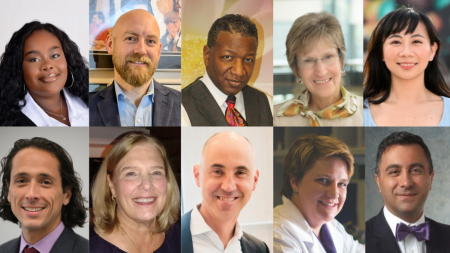
Every late night, every game-winning play, every hour of service—it all leads to this moment. Next week, Case Western Reserve University will celebrate the graduating Class of 2026 at commencement ceremonies May 15-17.
We could never tell every story. But ahead of commencement, we sat down with eight graduate students to hear about the experiences that defined them, the challenges that shaped them, and the ambitions they're carrying into what comes next.
Learn more about our commencement ceremonies and join the university in celebrating students during the clap out on Case Quad on May 13 as graduates proceed to convocation.
Meet four outstanding undergraduates earning their degrees this year.
Zoey Angel Lockwood
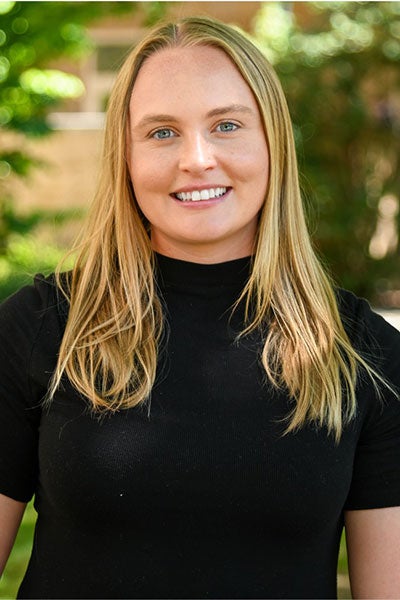
College of Arts and Sciences
While pursuing her undergraduate degree at Ashland University, Zoey Lockwood was struck by something a classmate said: he wanted to be part of a cure for cancer, not only the diagnosis. She felt the same way—and that moment of recognition is what set her on the path to a PhD.
Later, in the midst of her PhD program in chemistry at Case Western Reserve, Lockwood had that belief reinforced when something she’d synthesized was used in a preclinical model.
“It was really rewarding to see something I developed at the bench translate into a biological setting. It was something I had set out to do from the beginning, so actually seeing it come full circle was really meaningful,” said Lockwood, who will complete her PhD in chemistry this month. “It reinforced for me that I want to keep doing research that has a real impact on people.”
In that moment, Lockwood saw clearly how her research could have an impact on real people—people like her dad.
As a high school student, Lockwood had intended to attend CWRU for her undergraduate degree. That plan was changed when her father was diagnosed with cancer. Lockwood wanted to be closer to her parents and siblings, both to offer support and to help with day-to-day responsibilities during her father’s treatment.
Heading into undergrad, Lockwood also planned to study nursing, with the intention of providing compassionate bedside care to patients. However, a course project on how a specific drug works shifted her perspective toward the science behind treatments.
When it came time to apply for a PhD program, Lockwood found she was still drawn to CWRU, compelled by the university’s emphasis on interdisciplinary education and research—though she admits the university’s close proximity to Progressive Field didn’t hurt.
While here, she’s leaned into both, attending Cleveland Guardians games and taking advantage of the interdisciplinary opportunities available at CWRU.
Lockwood has worked with the Department of Chemistry’s Clemens Burda PhD, on light-based approaches to cancer treatment, and the School of Medicine’s James Basilion, PhD, to conduct research into a quenched activity-based probe for photothermal therapy in preclinical cancer models.
Now, as she completes her degree, Lockwood plans to work in industry to apply her background in chemistry to translational research with one clear goal: “to have a meaningful impact on people’s lives.”
Gabriel Ponon
Case School of Engineering
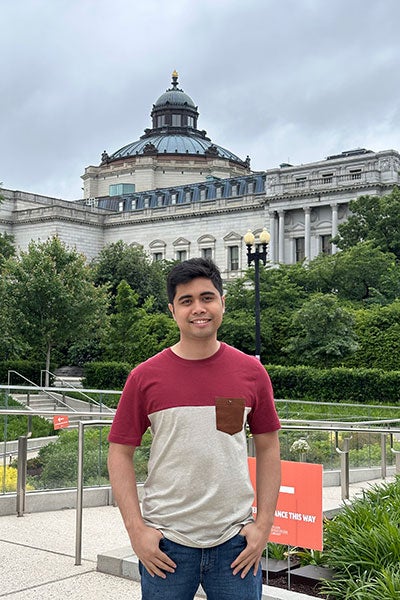
Gabriel Obsequio Ponon (CWR ’24) was introduced to Case Western Reserve University as a place for makers and doers. A student in the international baccalaureate program at the United World College (UWC) ISAK Japan, that description captured Ponon perfectly.
But what really sealed the deal for him was Sears think[box].
“I was of the opinion that the school that hosted the biggest makerspace in the United States had a culture of creativity, collaboration and pushing the envelope on what’s possible,” he said. “Five years later, I can definitely say I made the right call.”
Ponon earned his bachelor’s degree from CWRU in 2024, and remained at the university for a master’s degree in materials science and engineering.
However, his journey was greatly impacted by the COVID-19 pandemic. Finishing his secondary education abroad in Japan, the pandemic forced Ponon to return to his home country of the Philippines earlier than expected. Once in the country, he was stuck in the capital city away from home for months. Ultimately, his matriculation to CWRU was delayed by a semester, finally arriving in Cleveland in January 2021.
His early days on campus were marked by social distancing and feelings of isolation, but he adapted quickly by joining Design for America and Humanitarian Design Corps to connect with classmates and contribute to meaningful real-world projects.
As a researcher, Ponon has worked at the Center for Materials Data Science for Stockpile Stewardship. There, he contributes to studies by building scalable data pipelines and machine-learning models for X-ray diffraction experiments that enable researchers to study structure-property relationships in solids on a microscopic scale.
Ponon also has completed internships with Lawrence Livermore National Laboratory and the Advanced Photon Source, a synchrotron facility within Argonne National Laboratory.
Even with his master’s degree, Ponon is not done learning. His next step will take him across the country to the University of California, Santa Barbara, where he will attend one of the top-ranked materials science PhD programs in the U.S.
Ultimately, he hopes to lead his own laboratory or a company’s research and development team to “tackle the grand challenge of autonomous materials discovery.”
Lucy Campbell
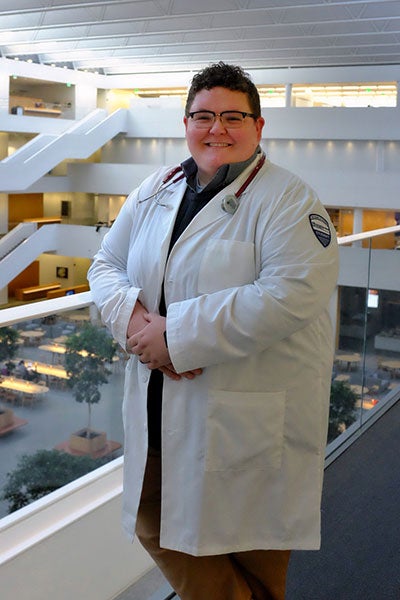
Frances Payne Bolton School of Nursing
At the core of Lucy Campbell’s approach to patient care is the innate humanity in us all. Coming from a background in social work, Campbell worked closely with LGBTQ patients and individuals living with HIV/AIDS, many of whom were experiencing psychosocial challenges related to mental health and medical care.
As she built a foundational knowledge of systems, trauma and social determinants of health, Campbell witnessed critical gaps in healthcare that created—or exacerbated—challenges patients faced.
“That realization played a significant role in my decision to transition into nursing, where I could expand my scope and provide more comprehensive, integrated care,” she said.
The MN to MSN pathway at Frances Payne Bolton School of Nursing was created for students like Campbell, who completed an undergraduate program in another field and are transitioning to new career paths. After attending The Ohio State University for her bachelor’s degree in psychology and master’s in social work and remaining in Columbus in the years after graduation, Campbell also was able to return to her Northeast Ohio roots at Case Western Reserve.
She completed her MN requirements in 2024, participating in the pinning ceremony, and then moved to coursework tailored toward more advanced practice.
Campbell’s human-centric approach to care played a key role in her clinical work at Stella Maris Cleveland, which provides services to those recovering from addiction. There, Campbell said she was welcomed and easily able to build rapport and meaningful relationships with patients, allowing them to be more open in their discussions.
“These relationships reinforced for me how powerful therapeutic presence and trust can be in mental health care, and it solidified my commitment to this field,” Campbell said.
Driven by a desire to make a meaningful difference in the lives of others and a firm supporter of the connection between physical and mental health, Campbell is drawn to pursue a career as a psychiatric mental health nurse practitioner. In particular, she hopes to improve access to mental health care to the underserved or high-need population as a community-based provider.
“I value a patient-centered perspective that considers not only clinical symptoms but also the broader context of a person’s life. This perspective continues to guide my practice and motivates me to advocate for more accessible, compassionate, and integrated mental health care,” Campbell said.
Tessia Fry
Jack, Joseph and Morton Mandel School of Applied Social Sciences
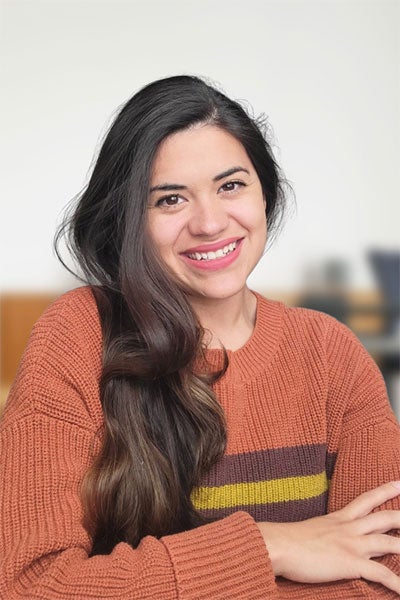
Tessia Fry enrolled in Case Western Reserve’s online Master of Social Work program with a practical plan: focus on adult mental health, where she believed the job security was. It didn't take long for that plan to fall apart—and for something far more purposeful to take its place.
After meeting faculty in the Community Practice for Social Change track, Fry found herself drawn not to individuals in crisis, but to the systems that put them there. Making the switch, she said, was the best decision she could have made.
Associate Professor Mark Chupp, PhD, became a defining force in that shift. His teaching inspired Fry to step into leadership as a Mandel Ambassador, the online representative on the Mandel Council, and a member of the council's curriculum committee. More importantly, he gave her a framework she carries into every room she enters.
"He empowered me to challenge 'top-down' leadership and prioritize the voices of those with lived experience," she said.
That philosophy showed up in her field placements, where she advocated for language justice, introduced state legislation, and worked to restructure nonprofit initiatives so community members had seats at the leadership table—not just spots in a focus group.
The Dayton, Ohio, native completed her degree while living in the Four Corners region of Colorado, far from campus. But distance, she learned, doesn't have to mean disconnection. Her cohort built what she calls a "digital village"—a space of psychological safety where they showed up for one another across state lines.
As she prepares to welcome a baby, Fry will focus on her growing family and high-impact volunteer work after her AmeriCorps service ends, including joining the board of a local domestic violence shelter. Long-term, she plans to pursue a Doctorate in Nursing Practice—weaving together her background in microbiology, her MSW, and her commitment to health equity—before returning to Dayton to help build a more equitable medical landscape.
"The work of social change is a marathon, not a sprint," she said, "and I can only show up for my community effectively if I am also caring for myself."
Anthony Lora
School of Dental Medicine
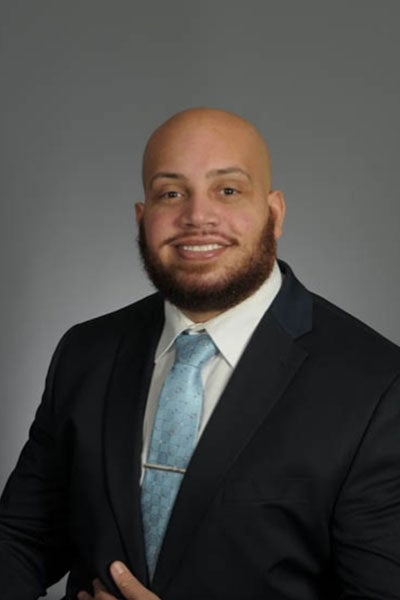
For Doctor of Dental Medicine candidate and Brooklyn native Anthony Lora, crossing the commencement stage will culminate not only hours of rigorous study, but also four years of personal sacrifice.
Separated from his wife and children who remained in New York, Lora pursued his graduate studies at the School of Dental Medicine, where he gained a better understanding of foundational dentistry practices and how oral health impacts the entire body—beyond restoring teeth.
“It’s been a difficult four years, only seeing them occasionally and during breaks, but it was a decision we made together for our future,” shared Lora. “This experience strengthened my patience and determination, qualities I will carry into my career as a healthcare provider.”
As a student clinician, Lora performed numerous comprehensive oral exams, radiographs, treatment planning, patient charting and preventive procedures under faculty supervision.
He also delivered screenings and sealant placements for more than 80 students in underserved schools and educated school-age children on brushing, flossing and other dental hygiene benefits.
In addition to learning how various factors influence access to dental care, Lora saw firsthand how financial, cultural and language challenges can delay treatment and impact overall health—reinforcing his motivation to provide accessible, compassionate care.
“As a [National Health Service Corps] scholar, I’m committed to serving underserved communities while continuing to grow as a general dentist,” said Lora. “I want to help bridge communication gaps and ensure patients feel heard and understood.”
Beyond his studies, Lora joined the CWRU chapter of Delta Sigma Delta, the world's oldest and largest international professional dental fraternity, which helped create a sense of belonging through his dental school experience.
Following graduation, Lora plans to continue dental practice in Ohio, where his family will relocate to join him.
Nikita Joshi
School of Law
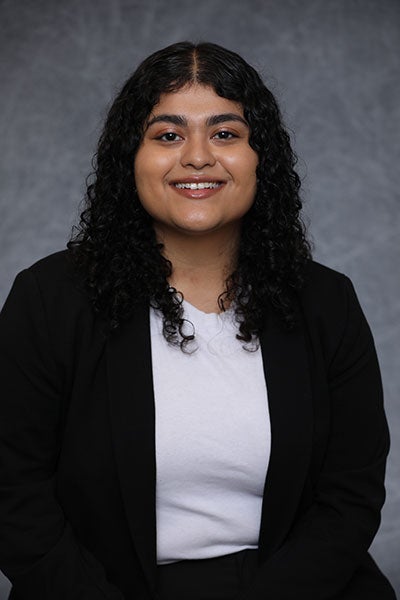
A North Carolina native, Nikita Joshi began her undergraduate journey at the University of North Carolina at Chapel Hill, where she earned two Bachelor of Arts degrees in political science and peace, war and defense.
Her interest in law deepened through an internship at the States United Democracy Center—a nonprofit organization focused on advancing free, fair and secure elections—where she saw firsthand how legal systems can both protect democratic processes and hold actors accountable.
She brought that growing interest to Case Western Reserve University School of Law, where her perspective on the law shifted from academic to deeply human.
“Before law school, the law felt like a system that existed to keep things in order,” she said. “But I came to see how it directly shapes people’s lives.” That realization reframed her understanding of the legal field as something meaningful because of the people it serves.
While at CWRU, Joshi gained hands-on experience across multiple settings. She worked at the Cuyahoga County Prosecutor’s Office drafting motions and appeals in active cases, contributed to the Yemen Accountability Project as deputy director of registrar and communications director, and served as senior editor for War Crimes Prosecution Watch while completing a concurrent LL.M. in International and European Law at the Université Catholique de Lille in France.
She also interned with the International Criminal Police Organization (INTERPOL), where she conducted comparative research on extradition law across countries and translating complex findings into concise legal memos—an experience that strengthened her ability to communicate complex legal issues clearly.
After graduating with a Juris Doctor, Joshi will join the Ohio Legislative Services Commission in Columbus, where she will work at the intersection of law and policy.
“At the end of the day, I want to do work that means something to the people at the center of it, whether it be advocating in a courtroom, drafting law in a government office or finding accountability in an international forum,” she shared.
Brian Bangs
School of Medicine
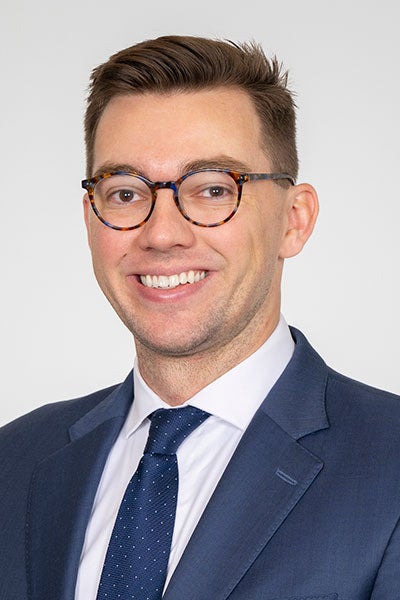
Brian Bangs was raised in a household where helping others wasn't just a value—it was a way of life, shaped by parents who dedicated their careers to surgery and nursing. Despite their early influence, Bangs sought out a different path from medicine.
After graduating with an undergraduate degree in management and marketing from Purdue University, Bangs pursued business consulting in Chicago. Although the work was constantly evolving, he soon began to feel a growing disconnect.
“I’m helping a company make more money, and I don’t agree with their values,” he said, a realization that ultimately prompted him to reconsider his future.
During this time, Bangs began seeking more meaningful ways to serve others. He became involved in workplace mental health and wellness initiatives and volunteered at Ann & Robert H. Lurie Children's Hospital in hematology and oncology. He also participated in community service initiatives focused on ALS awareness and shadowed physicians across surgery, emergency medicine and primary care.
These experiences solidified his decision to shift his focus to healthcare—later leading him to Case Western Reserve University School of Medicine.
“I felt like CWRU was very intentional about creating a community of medical students that lifted each other up, as opposed to undermining and competing against each other,” noted Bangs, who was drawn to the collaborative, student-driven curriculum of the Doctor of Medicine (MD) program.
Bangs’ medical school journey became even more personal after he was diagnosed with Inflammatory Bowel Disease, which inspired him to co-found Student-Doctor-Patient, a support community for students navigating chronic illness or disability.
As an MD student, one of Bangs’ most meaningful moments came during a pediatrics rotation, when a patient’s mother asked him to take a photo with her daughter for her baby book and later sent a handwritten thank-you card.
Today, Bangs’s medical journey comes full circle as he returns to Lurie Children’s Hospital to train as a pediatrician following graduation. Long term, he hopes to pursue pediatric hospital medicine, critical care or emergency medicine.
Outside of his direct clinical work, Bangs remains passionate about advocacy and hopes to make addressing social determinants of health and health inequity a cornerstone of his future career.
Delisa Williams
Weatherhead School of Management
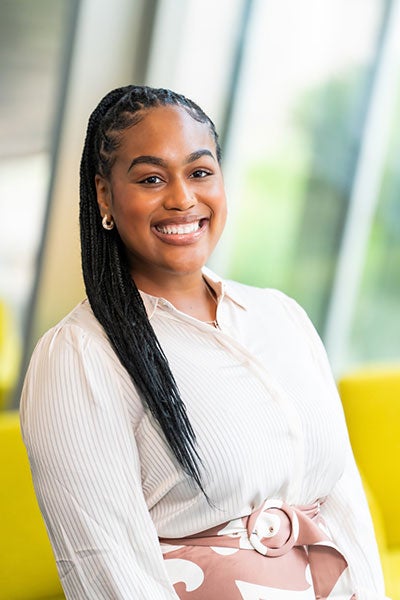
Delisa Williams didn't have to go far to find her next chapter. A proud Cleveland native, she chose to pursue her Master of Business Administration at Weatherhead School of Management—staying rooted in her city while expanding what she could do for it.
She arrived with a background in operations and a plan to stay the course. Then corporate finance and accounting introduced her to concepts like compounding and the time value of money, and something shifted.
"I realized I really enjoy understanding the flow of finances," she said, "as well as the relationship-building side of business and the ability to make a direct impact on people's financial well-being."
That realization came to life through real-world consulting projects, summer internships, and one-on-one conversations with professors, alumni and faculty. Serving as president of the Graduate Business Student Association pushed her further—demanding strategic thinking, people management, and a confidence in her own leadership she hadn't fully claimed before.
At the center of her experience was Deborah Bibb, whose consistency and commitment modeled what excellence in action looks like.
"She actively guided me, advocated for me, and brought me into rooms and opportunities that helped me grow," Williams said.
Now, Williams has her sights set on wealth management—specifically, making financial guidance accessible to communities that have historically been left out of those conversations.
After graduation, she plans to pursue a career in consulting or wealth management, with a long-term goal of building her own family business and giving back to Cleveland—particularly to high school students who need someone to open doors for them, just as others did for her.