Beyond the bedside: Flight Camp immerses learners in transport medicine
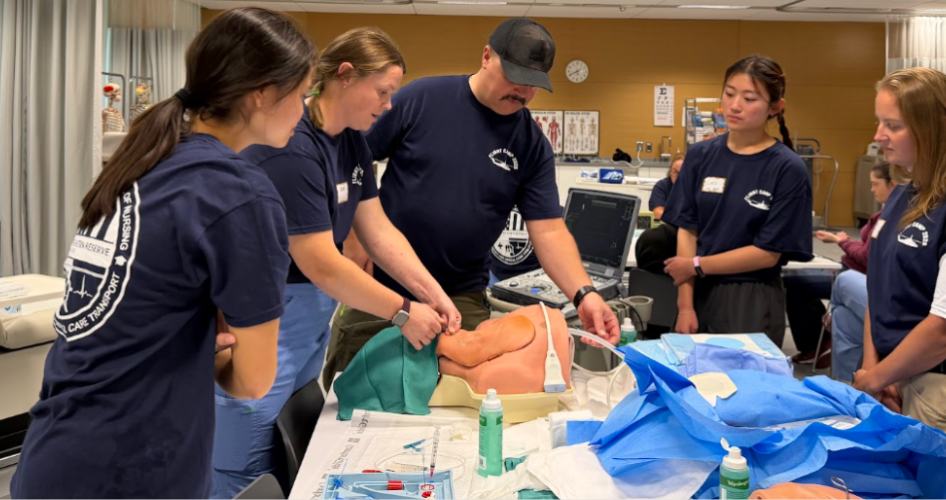
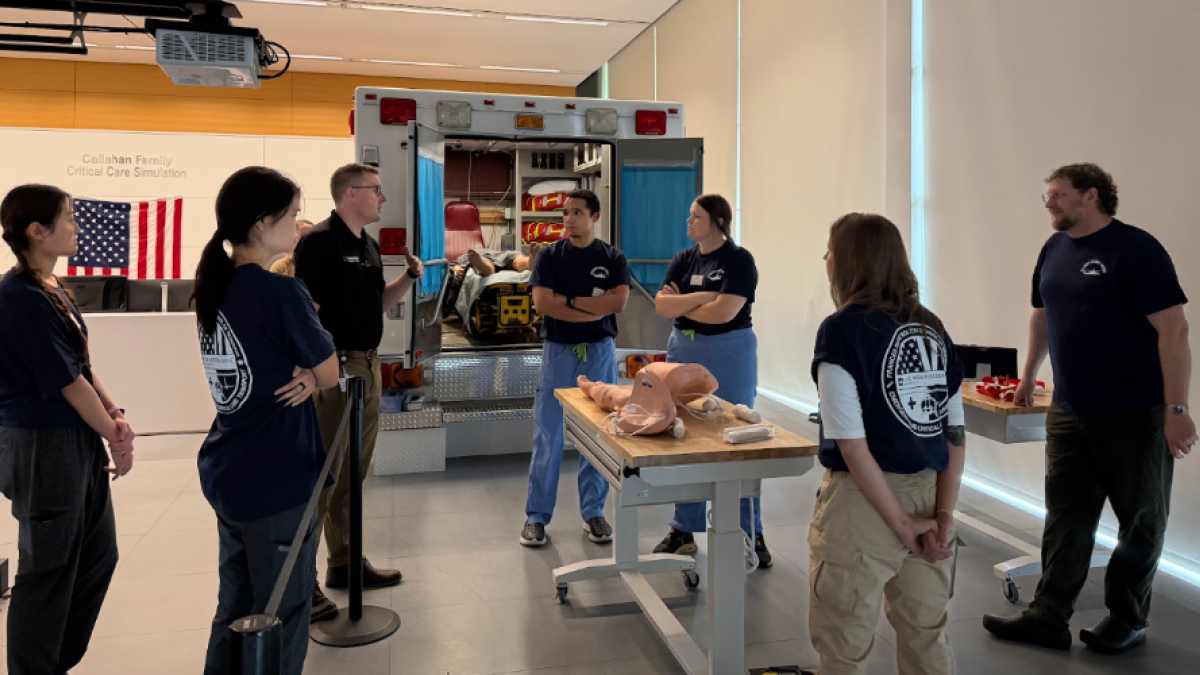
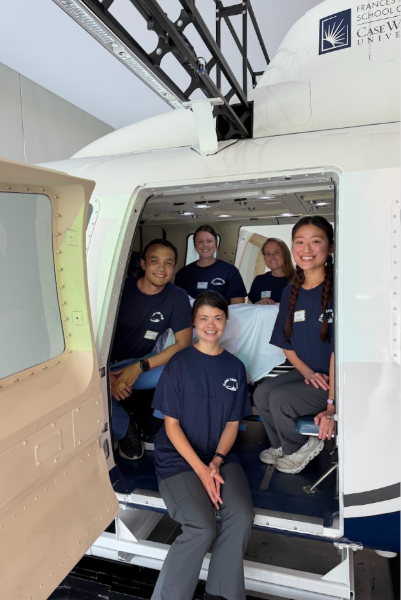
When flight transport is the fastest route to a hospital for a critically injured patient, every second counts. With a helicopter standing by, medical professionals communicate rapidly as they assess a patient’s airways, manage life-saving equipment and prepare the patient for transport to the nearest emergency care facility—or, in the case of this training exercise at the Frances Payne Bolton School of Nursing, as far as the confines of the flight simulation lab will allow.
Welcome to the immersive, high-intensity environment of Flight Camp. Even though the emergencies in this setting are fake (and the patients are high-fidelity manikins), the camp’s focused energy is undeniably real.
Held June 23-26 at Case Western Reserve University’s Health Education Campus with Cleveland Clinic, the four-day 2026 Flight Camp program introduced 35 aspiring flight and critical care transport clinicians to realistic emergency and critical care scenarios. The program, designed to prepare participants for the unique demands of caring for critical patients during transport, was open to members of the university community and external healthcare professionals, and drew participants from a broad range of backgrounds. Undergraduate and graduate students from the School of Nursing, BSN-prepared critical-care nurses and pre-hospital professionals from community partner organizations learned together under the tutelage of experienced flight nurses, emergency medicine specialists and transport clinicians from across the country.
This mix of experience and backgrounds is one of the program's greatest strengths, according to Jennifer Adamski, DNP, assistant dean of professional programs and director of MSN/APRN and flight education.
"One of the most valuable aspects of Flight Camp is the interprofessional learning environment," Adamski said. "Participants with different levels of experience and from different disciplines learn side by side, which mirrors the teamwork required in real flight and critical care transport settings."
Flight Camp is part of the school's broader commitment to advancing emergency and critical care transport education through the Dorothy Ebersbach Academic Center for Flight Nursing, home to the nation's first advanced practice flight nursing program. The center combines innovative curriculum with high-fidelity simulation experiences that allow students to practice caring for patients in realistic helicopter and ambulance environments.
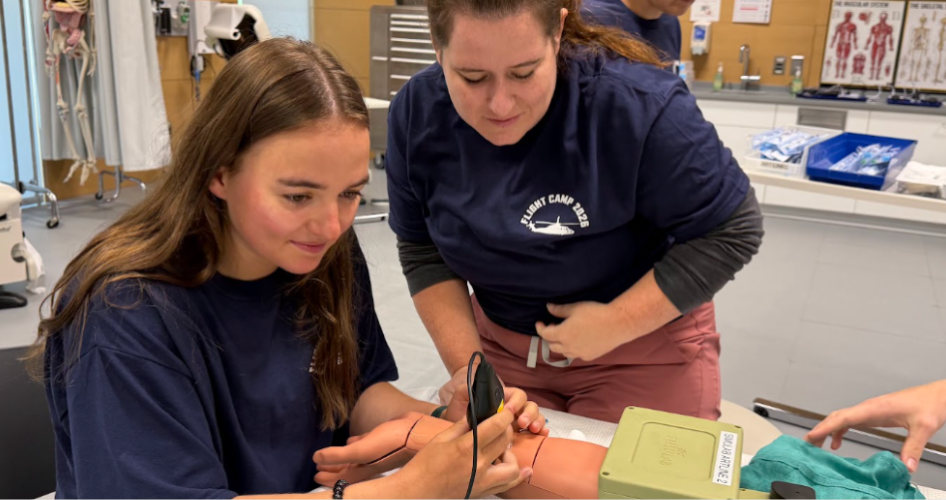
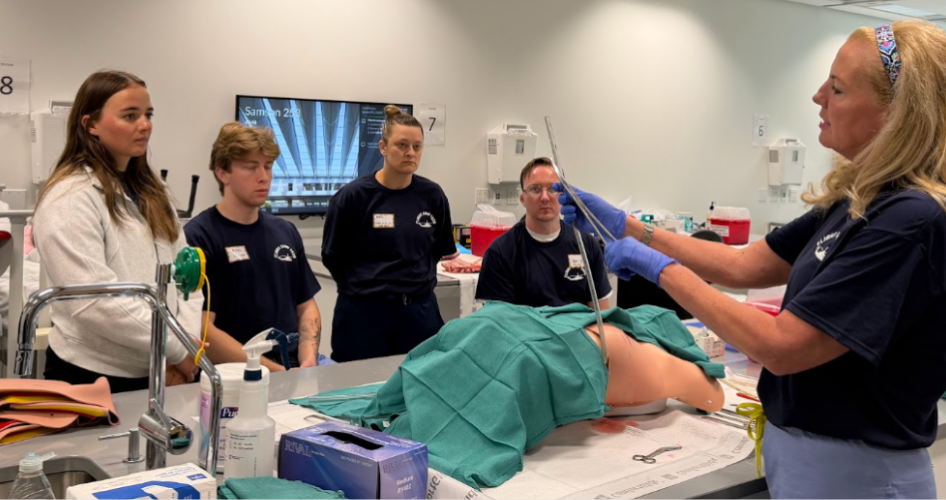
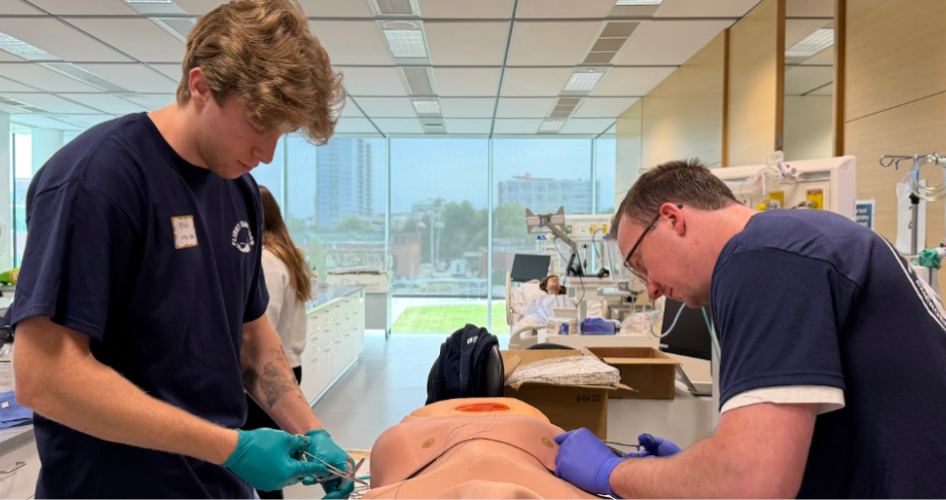
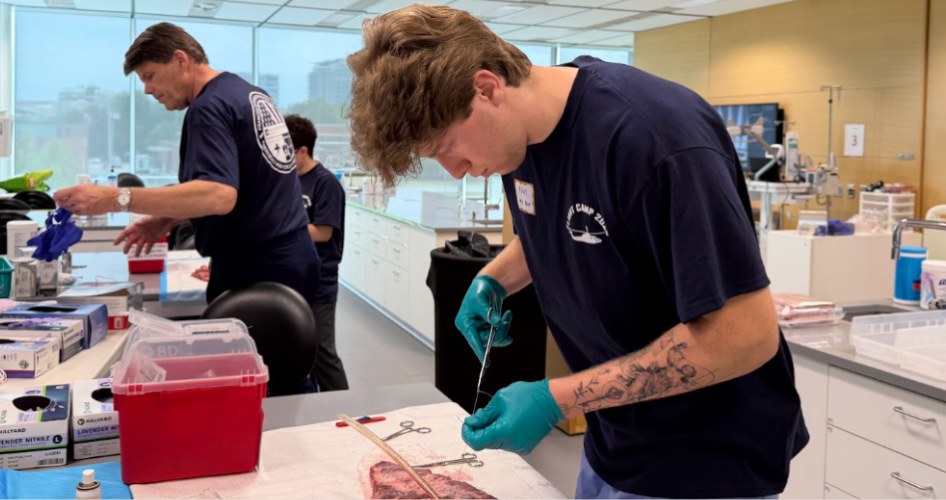
Over the course of the intensive camp, participants rotate through hands-on skill stations and realistic transport scenarios that challenge both their technical abilities and their decision-making under pressure. They practice ultrasound-guided procedures, surgical airway techniques and ventilator management, and learn about bleeding control, pediatric trauma and cardiac assist devices. Students also participate in ambulance and helicopter transport simulations that emphasize communication, teamwork and clinical judgment.
As interest in transport medicine continues to grow, so does Flight Camp. This year's program featured expanded simulation experiences, advanced transport technologies and a broader curriculum that spanned adult, pediatric and neonatal critical care. By exposing learners to advanced technology, experienced mentors and realistic transport scenarios in a supportive environment, the program helps bridge the gap between classroom education and the realities of patient care when every decision—and every minute—matters.
For Adamski, however, the most memorable moments aren’t measured by successful procedures or completed simulations.
"My favorite part is watching participants grow in confidence over the four days," she said. "It is inspiring to see future nurses, advanced practice providers and pre-hospital professionals challenge themselves, support one another and begin thinking and communicating as transport teams."
Looking ahead, Adamski hopes Flight Camp will continue expanding its reach while maintaining its focus on collaboration.
"Most importantly, I hope future Flight Camps continue to inspire the next generation of flight and critical care clinicians and help build a strong, collaborative workforce prepared to care for patients in the most challenging environments."
Learn more about the flight nursing specialty available at Frances Payne Bolton School of Nursing.