CWRU alumna Maria Bennett built a pain treatment company that sold for $650 million
A conversation with Bennett (GRS ’98, biomedical engineering), founder and CEO of SPR Therapeutics
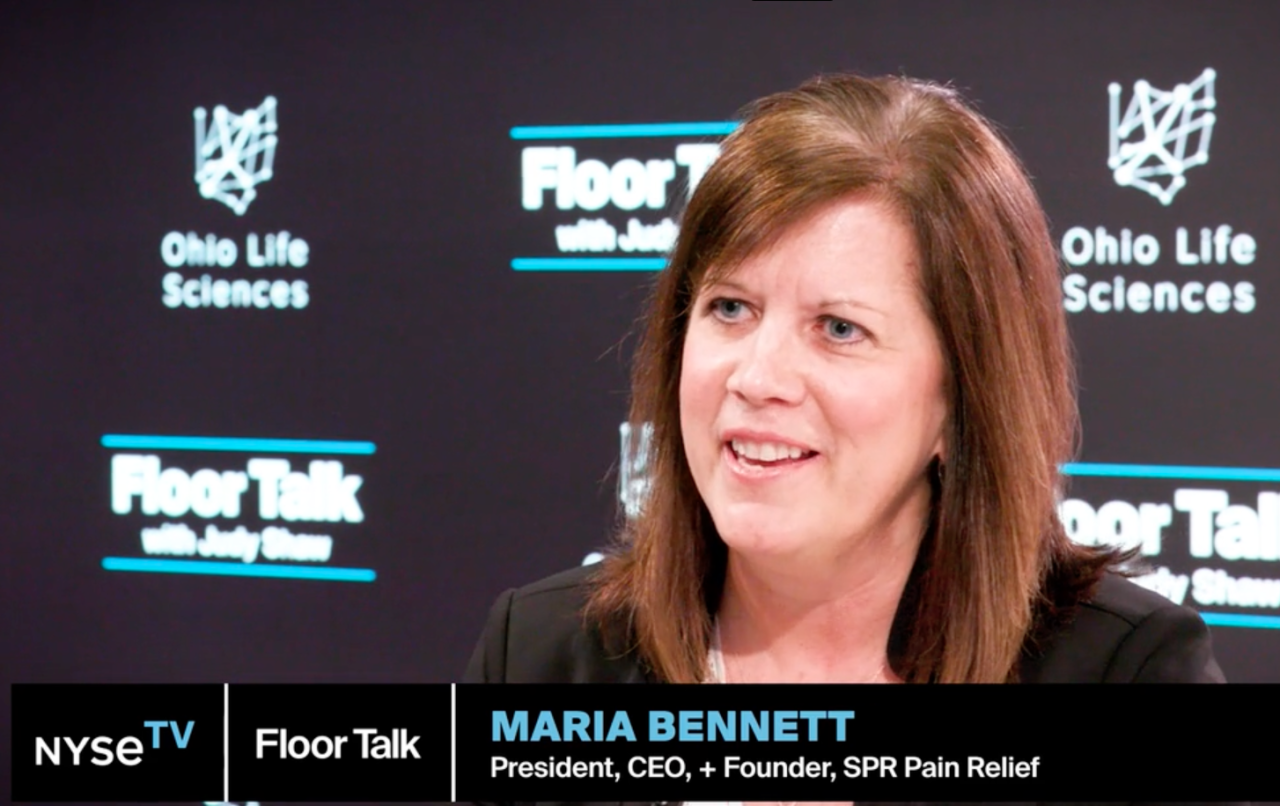
Maria Bennett (GRS ’98, biomedical engineering) founded a Cleveland medical device company to treat pain without opioids or a permanent implant. The company, SPR Therapeutics, was testing a fine wire placed near a nerve to deliver mild electrical pulses.
One patient in an early study had lived with pain since an amputation 20 years earlier. When researchers began the stimulation, he felt relief almost immediately.
“I feel it where my foot used to be,” he told them.
His response suggested the approach might help people with other kinds of pain. It became the SPRINT Peripheral Nerve Stimulation System, a 60-day treatment after which the wire is removed.
Bennett first saw the potential for treating pain with electrical stimulation during her graduate research at Case Western Reserve University.
Her adviser was P. Hunter Peckham (GRS ’68, GRS ’72, biomedical engineering)—now a distinguished professor emeritus of biomedical engineering. Peckham pioneered the use of electrical stimulation to restore movement for people with paralysis.
Bennett studied whether electrical stimulation could help stroke survivors regain movement in a paralyzed shoulder. That was the study’s main goal, but patients and their families were especially struck by another result: less pain.
Building a company
Bennett carried that finding through jobs at a Cleveland startup, Boston Scientific and another young medical device company before founding SPR in 2010.
She drew on her CWRU connections as she built it—and there are many. Geoffrey Thrope (CWR ’79), SPR’s chairman, recruited her back to Cleveland and later asked her to lead the company. Chief scientific officer Josh Boggs, PhD (GRS ’03, GRS ’05, biomedical engineering), proposed the amputation pain study. Years later, a former CWRU graduate school classmate at the FDA helped steer SPR toward clearance.
SPR spent its first seven years on research and development—supported by more than $40 million in grants and contracts from the National Institutes of Health and the Department of Defense. It received FDA clearance in 2016.
Bennett, once the company’s only employee, now leads more than 300 people, most of them at SPR’s Cleveland headquarters. SPRINT has been used to treat more than 60,000 patients nationwide.
In July 2026, Medtronic completed its acquisition of SPR in a deal valued at $650 million.
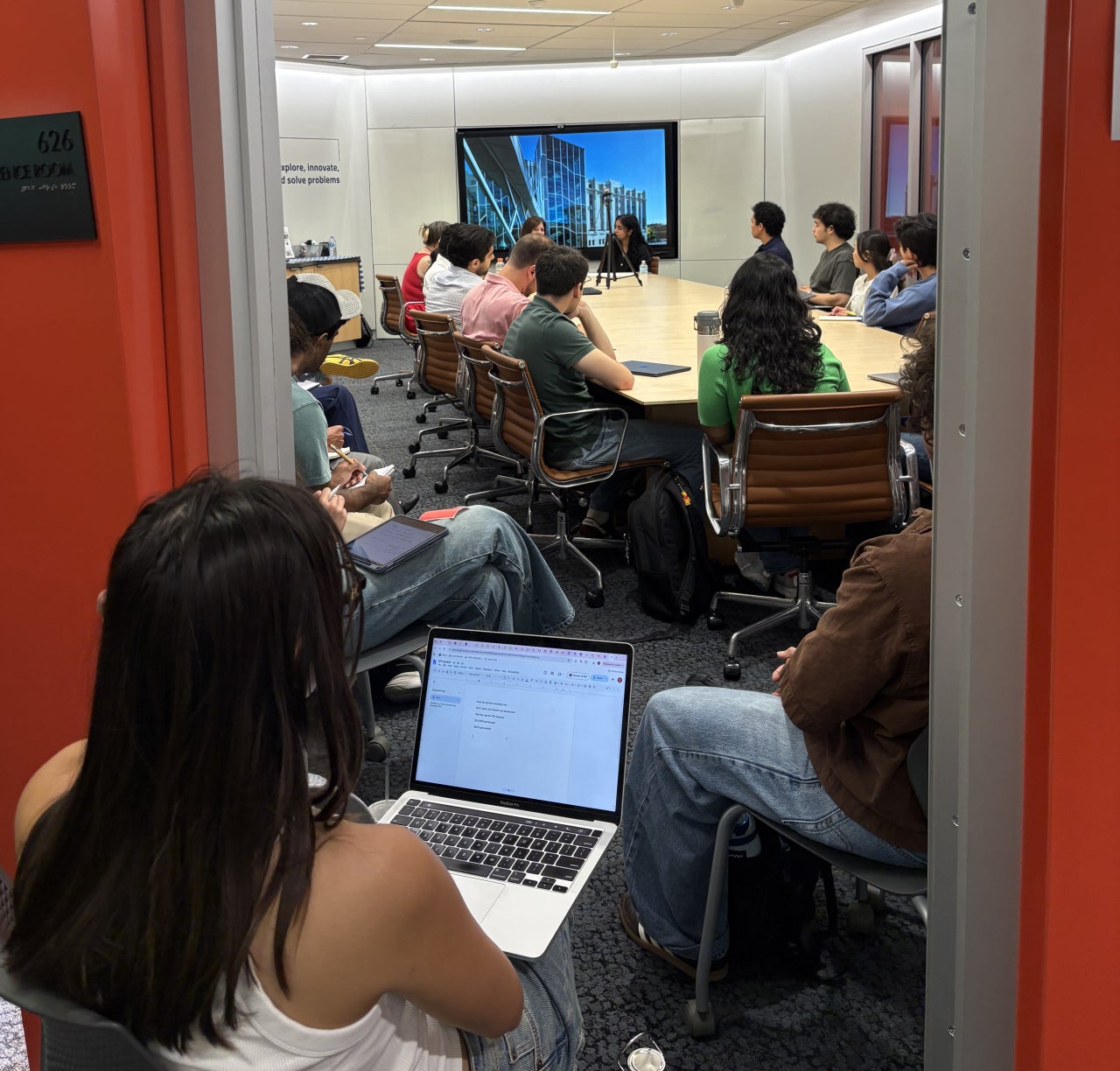
Bennett recently returned to campus for the Veale Institute for Entrepreneurship’s CWRU Entrepreneurship Speaker Series. In the conversation below, she discusses the research finding that started it all, the warning she got the weekend she agreed to run the company, the money she turned down—and why culture made Medtronic the right home for SPR.
This conversation has been edited and condensed for length and clarity.
How did your research at CWRU lead to SPR?
I was part of the functional electrical stimulation group, working with a team at MetroHealth and seeing patients throughout my thesis. We were using electrical stimulation to restore function for stroke patients with shoulder paralysis.
Restoring function was our primary endpoint. Pain reduction was secondary. But regardless of how much function came back, the most compelling outcome for patients and their families was the reduction in pain.
That taught me to cast a wide enough net when you collect data. The result you consider secondary may be the one that matters most.
At the same time, I was working for a small Cleveland company that was looking at that research. I made $10 an hour, and one week I worked 80 hours to get a grant out the door. That company hired me after graduate school, and the grant-writing experience paid off again at SPR.
How did you come to lead SPR?
After Boston Scientific, I came back to Cleveland in 2002 to work for my chairman at another startup using electrical stimulation, this one to treat urinary incontinence. Medtronic eventually acquired that technology. In 2009, he asked whether we should get back into pain.
I went back to Dr. Chae and our physician partners to validate the need. By 2010, we had a real need in the market, a technology that could improve patients’ lives, core patents and a strong team.
He asked me to run the company and gave me the weekend to think about it. I had two boys, ages 2 and 4, so I asked him, “What happens if this doesn’t work?”
He said, “I don’t know, Maria. Make it work.”
That Monday, I said, “Let’s go for it.”
He also warned you that your age and gender would make it harder to attract a leadership team and a board. How did you respond?
At first, I was a little put off. But I think he wanted me to go in with eyes wide open.
I told him I couldn’t do anything about my age or my gender. But I could build a company that would attract passionate people to advance this technology and improve patients’ lives.
There weren’t many women in BME when I was a student, and I was one of five women in my undergraduate engineering management program at Miami University. So when I was the only woman in the boardroom, it didn’t faze me.
Some investors wanted a CEO with a track record—someone who maybe looked more like them. If they didn’t want to invest, that was their loss. And now it really is, because we just had an acquisition.
What kept SPR going in the years before FDA clearance?
Data, and the people who believed in it.
Josh Boggs came to me and said if we could treat post-amputation pain—one of the most difficult types of neuropathic pain—we could treat many others. After the first case, the team called me: “Maria, it worked.”
We also had more than $40 million in NIH and Department of Defense grants and contracts over our history. That was non-dilutive funding in a very challenging environment, and it validated the science, the team and the need.
We turned down term sheets that would have diluted our earlier investors or changed our governance. I remember thinking, “Gosh, shouldn’t we take this?” But it would have changed who we were, and we were growing because of who we were.
How did SPR finally reach FDA clearance?
Our application focused only on shoulder pain. On the 90th day of the review, I got a call from the division director—a CWRU grad I’d gone to graduate school with.
He said, “Maria, we’re not going to get there on shoulder pain. But we know you have data in post-amputation pain, post-surgical pain and back pain.” He suggested we combine it and resubmit through a different regulatory pathway for a more general indication.
Our vice president of regulatory affairs resubmitted the application. Later, she texted me on a Saturday afternoon: “I can’t believe it. We’ve got FDA clearance.”
We gave ourselves multiple shots on goal. That’s what got us there.
How did you know Medtronic was the right next step?
We never put a “for sale” sign in the yard. A board member told us early on to build the company to compete. If we built the right value drivers, we’d be ready for whatever came next.
At our first conferences, we had a folding table in the corner of the exhibit hall, and physicians asked, “Who is SPR?” Our color is green, and most medical device companies are blue. Over time, we became the green in the middle of a sea of blue, and physicians came up saying, “I’ve seen the data. Where’s my rep?” Acquirers were in the same hall, watching.
With Medtronic, we asked whether it could reach more patients, but also whether the cultures fit. Earl Bakken founded Medtronic with patients at the center, just as we did. And our team members would join Medtronic, too—we weren’t just selling a technology.
It wasn’t an easy process, but it was an easy decision.
What advice would you give CWRU students interested in entrepreneurship?
Use your network. Talk to your professors and classmates. Go to conferences, walk up to the booths and tell people what you’re working on. Stay in touch with each other—you never know who will be on the other end of the phone at the FDA.
Public speaking scared me to death in graduate school. Hunter Peckham pushed me to present anyway, and I’d rehearse in my head until I could recite it from memory. It gets easier with practice.
Learn to work with people. You can have the most impressive résumé, but if you can’t communicate and collaborate, it will be hard to succeed.
And find something you’re passionate about. Entrepreneurship is hard work every day. If the work is meaningful, it makes it that much easier.
Ana Izma, a senior data science and computer science major at Case Western Reserve, moderated this Speaker Series conversation, in addition to writing this story.