A different route to healthcare entrepreneurship
Sachin Agrawal (CWR '05) has built much of his career helping healthcare companies grow beyond their earliest stages.
“I don’t really consider myself a classic entrepreneur,” said Agrawal. “I love working with companies that are already a couple of chapters away from the beginning.”
He first discovered that preference not long after graduating from Case Western Reserve University with a bachelor’s degree in nutrition. Interested in global health—and less interested in starting his career at a large corporation—Agrawal joined a small company supporting HIV treatment programs.
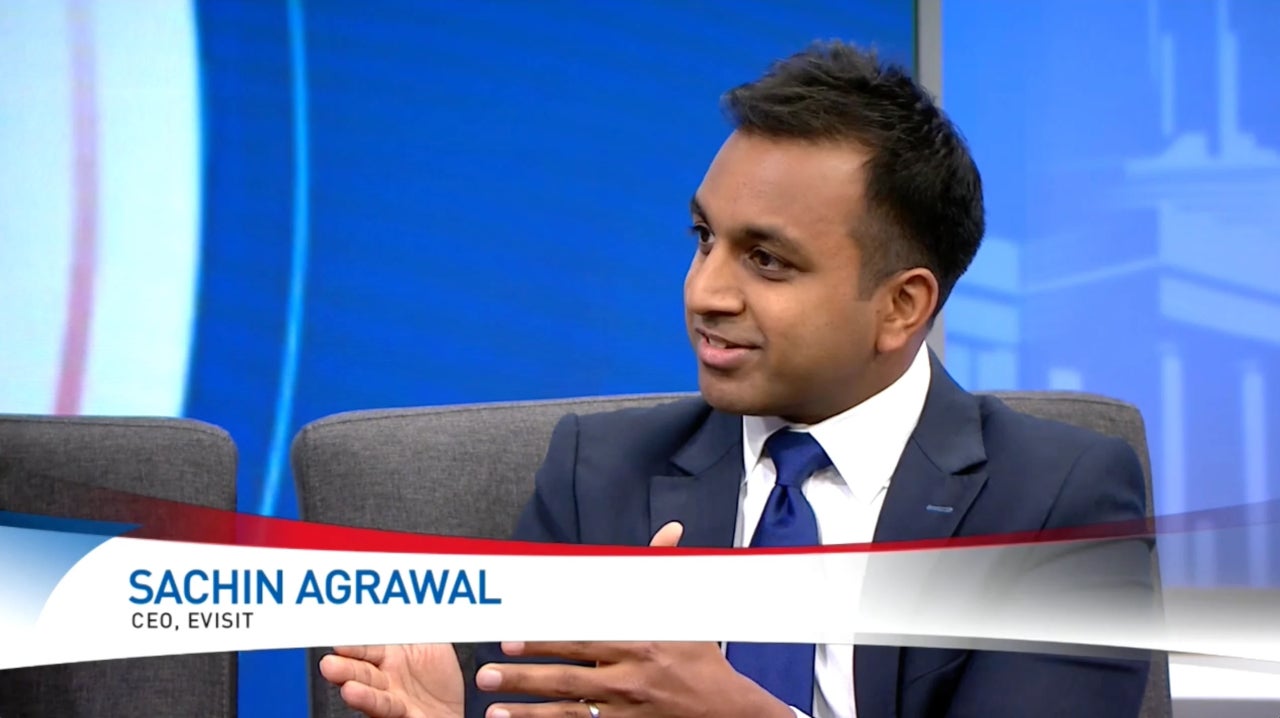
The work eventually took him to South Africa, where he helped the company expand their operations and found he liked being part of a small team where his decisions had an immediate effect.
Agrawal later earned a master’s degree in health economics, policy and management from the London School of Economics and Political Science and moved through a series of leadership roles in healthcare technology.
Before joining eVisit, he spent nearly four years as President of RLDatix—a patient-safety technology company that expanded rapidly during his time there in terms of geography and breadth of capabilities.
In 2022, he became president of eVisit and, seven months later, succeeded the company’s founding CEO.
Today, eVisit helps large health systems and federal agencies provide digital care infrastructure to improve access to care and the overall experience for patients, their families and care teams—including for military members, veterans and people in rural communities who may otherwise travel long distances to see a provider.

Agrawal spoke with CWRU's Veale Institute for Entrepreneurship about finding his place in growing companies and the lessons from CWRU that still shape how he leads.
This conversation has been edited and condensed for length and clarity.
What did that first experience at a small healthcare company teach you about the kind of work you wanted to do?
I knew I didn’t want the traditional corporate route. I liked being part of a small team where I could make a noticeable contribution.
Living in South Africa and helping that company grow confirmed it. Every day brought a different challenge, and that constant problem-solving appealed to me.
I don’t really consider myself a classic entrepreneur. I love working with companies that are already a couple of chapters away from the beginning. That’s where I seem to find my niche.
You joined eVisit as president and became CEO several months later. What did that transition require?
There are a lot of growing pains that come with scaling a company.
Our founder recognized that eVisit had reached a point where someone else could lead that stage of its development. It takes a lot of emotional intelligence to let go of day-to-day control of something you worked so hard to build.
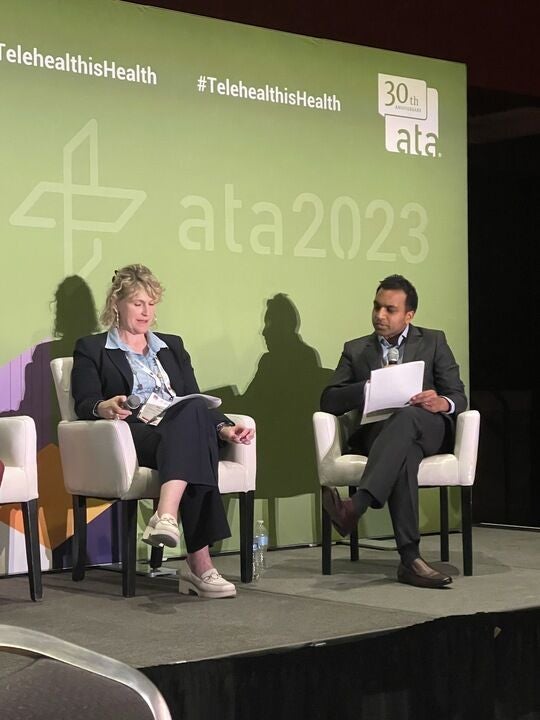
My job was to help eVisit make that transition from a founder-led company and figure out what it needed to keep growing.
What were some of the hardest decisions you faced as a new CEO?
One of the hardest was realizing we had planned ahead for growth that hadn’t transpiredand needed to make cuts in a difficult job market. This was also not long after COVID, when digital health had been on a roller coaster.
I was fortunate to have good people around me, including our investors and an operating partner that I have grown very close to. There were times when it felt like we were steering through darkness until a strategy emerged.
For a couple of years, it really was do or die. I kept coming back to: What’s my why? I believed in what we were doing and that we could get through it.
What has that experience taught you about leadership?
I am very proud to say I am far from the smartest person at my company. My job is to assemble people who are more intelligent and experienced in specific domains than I am, and then put together an operating system that lets them thrive. I never want to be the smartest person in the room, because then there’s nothing to learn.
I’ve also tried to shape my role around my strengths while building a team that balances my weaknesses. I like being close to the business, so finding the right balance between being in the work and having information reported to me is something I’m always figuring out.
How did your experience at CWRU shape the way you think about people and leadership?
Coming to CWRU was incredibly humbling. I had done very well academically, and suddenly I was surrounded by people who had also been at the top of their classes. I went from standing out to feeling woefully average, particularly when many of my colleagues were going into areas of engineering that I couldn’t wrap my head around.
That was eye-opening in a good way. CWRU taught me that intelligence and ability come in many different forms, and organizations need people with different skills and ways of thinking.
That variety was one of my favorite things about CWRU. I grew up in a very math- and science-oriented environment, and suddenly I was meeting people interested in all kinds of things. I’m still in touch with many of them today.
Where do you see the biggest opportunities for eVisit now?
One is rural healthcare. There are communities where seeing the right provider can mean traveling hours, and digital care infrastructure can make access much easier. In situations such as a stroke, where every minute counts, that can have a significant effect on an outcome.
We’re also looking at how AI can improve triage and decision pathways so that care teams can get patients to the appropriate care faster.
And the public sector is becoming a larger part of our work, particularly military and veterans’ healthcare, which I find especially meaningful.
What continues to motivate you?
I knew going into CWRU that I wanted to do meaningful work in healthcare, and that has stayed consistent. I’m particularly drawn to healthcare access, rural communities, military healthcare and veterans’ health.
I also have a deep need to be hands-on. Working at a smaller company makes me happier because you can feel the consequences of the decisions you make. There’s more pressure, but I like being close to the work.
Maybe I’ll become a traditional founder someday. As I’ve gotten older, I’ve become much more comfortable knowing that I don’t know everything—and more interested in learning what I don’t know.
I could also see myself helping a family-owned business grow when its founder is ready to step away. Whatever I do, I would want to stay in healthcare operations, healthcare policy or related fields that I’m passionate about.
And when people look back at my time leading eVisit, I hope they think I treated them fairly through some very difficult decisions. I didn’t get everything right, but I hope they know I was fighting for the company and trying to do right by our people
Katie Critchett is a fellow with the CWRU Alumni Venture Fund at the Veale Institute for Entrepreneurship.