How CWRU alum Halle Tecco is building new models for women’s health
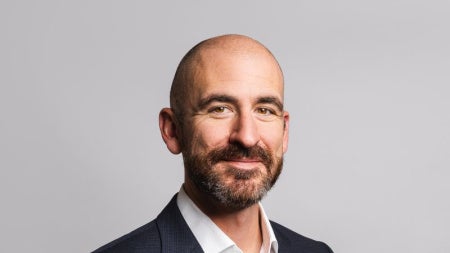
Halle Tecco (CWR ’06) is the co-founder of Cofertility, a startup working to make egg freezing and fertility care more accessible. Earlier in her career, Tecco launched Natalist, a women’s health products company that was acquired in 2021, broadening the availability of at-home fertility and pregnancy care.
Today, she brings those ideas to broader audiences as co-host of the health tech podcast “The Heart of Healthcare” and as the author of Massively Better Healthcare, published in February 2026 by Columbia University Press.
In the book, Tecco draws on her experience as an entrepreneur, investor, and educator to examine what’s broken in U.S. healthcare—and how new business models, incentives, and technologies can help build more durable, equitable solutions. Those ideas will be the focus of two upcoming conversations this spring, including a return to campus for the Veale Institute for Entrepreneurship Speaker Series on March 18 at 3:30 p.m., followed by a March 19 appearance at the City Club of Cleveland.
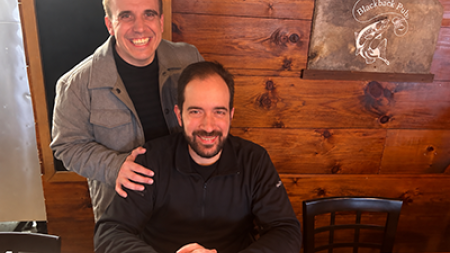
A graduate of Case Western Reserve University’s Weatherhead School of Management, Tecco remains closely connected to CWRU’s entrepreneurship ecosystem. She is a 2024 recipient of the Flora Stone Mather Alumna Award, nominated by Veale Institute Executive Director Michael Goldberg, and has previously shared her founder journey with students through Veale Institute programming.
Alongside building companies, Tecco is deeply engaged in teaching the next generation of healthcare leaders. She is an adjunct associate professor at Columbia Business School, where she created and teaches one of the first MBA-level courses on digital health investing. Tecco also serves as a course director at Harvard Medical School focused on healthcare innovation.
In this Q&A, Tecco reflects on the experiences that shaped her path—from her time at CWRU to building companies in one of the most complex sectors of the economy—and shares candid insights on leadership, communication, and what it takes to turn hard problems into lasting healthcare solutions.
What originally inspired you to start Cofertility?
One of my biggest regrets is not freezing my eggs in my 20s. It felt unimportant at the time—and financially out of reach—even as a working professional. My co-founders, who were also executive women, had struggled with infertility and felt the same way.
Cofertility grew out of that shared realization and a desire to build a model that makes egg freezing more accessible.
If you could travel back in time to when you founded Cofertility with the knowledge you have today, what’s the biggest thing you would do differently?
I would have enjoyed the early moments more. When you’re building, you’re always racing toward the next milestone. Looking back, some of the most meaningful learning and growth happened in those early days, and I wish I had paused more often to appreciate that phase of the journey.
What was the most valuable or formative aspect of your time at CWRU, and how has it influenced your career?
The banking and finance concentration was hugely formative—especially classes with Weatherhead School professors like Scott Fine, which introduced me to venture capital and startup formation. I also loved competing in national business case competitions. If I remember correctly, my team placed second nationally at UT Austin, which really sharpened my analytical, storytelling, and execution skills under pressure.
What is something you do well that others in your industry often struggle with?
Clear communication. Our healthcare system is incredibly complex, and that complexity is made worse by opacity and jargon. I spend a lot of time translating complexity into clarity—whether
I’m working with founders, operators, or students at Columbia Business School, where I’ve taught for the past decade. I love helping people reach those “aha” moments when everything clicks.
How has earning a bachelor’s degree in finance influenced the way you approach building and scaling a company?
It’s incredibly helpful to be fluent in finance. I always encourage aspiring leaders not to be intimidated by it. For instance, being able to read and understand a P&L—profit and loss statement—is foundational.
That said, finance isn’t really my superpower. Aside from my first two years out of college in corporate finance, I haven’t held formal finance roles, but that literacy has been invaluable.
What’s the one thing you want people to remember about you as a person?
That I helped break down barriers for innovators who wanted to disrupt healthcare.
How has being a woman in entrepreneurship shaped your journey in creating Cofertility, if at all?
The odds are stacked against women when it comes to startup fundraising, and in many ways, it’s gotten worse since I graduated [from CWRU in 2006].
That reality has shaped how I lead, how I advocate, and how intentional I am about building systems that don’t replicate the same inequities.
If you were to start a new company in the future, what would it be?
I don’t think I’ll start anything else—at least not in the near future. But one space I’m interested in learning more about is environmental health, and how our homes—air quality, materials, water, and daily exposures—shape long-term health outcomes.
This story was written by Katie Critchett, a student fellow with the CWRU Alumni Venture Fund, which invests philanthropic capital in CWRU-affiliated startups, with student-led due diligence and a focus on long-term returns.