Lifelong learners, lifelong friends
For four DNP students, group support and camaraderie (and a little bit of fun) built an unforgettable program experience—and lasting friendships.
They didn’t just make it to graduation—they made it there together.
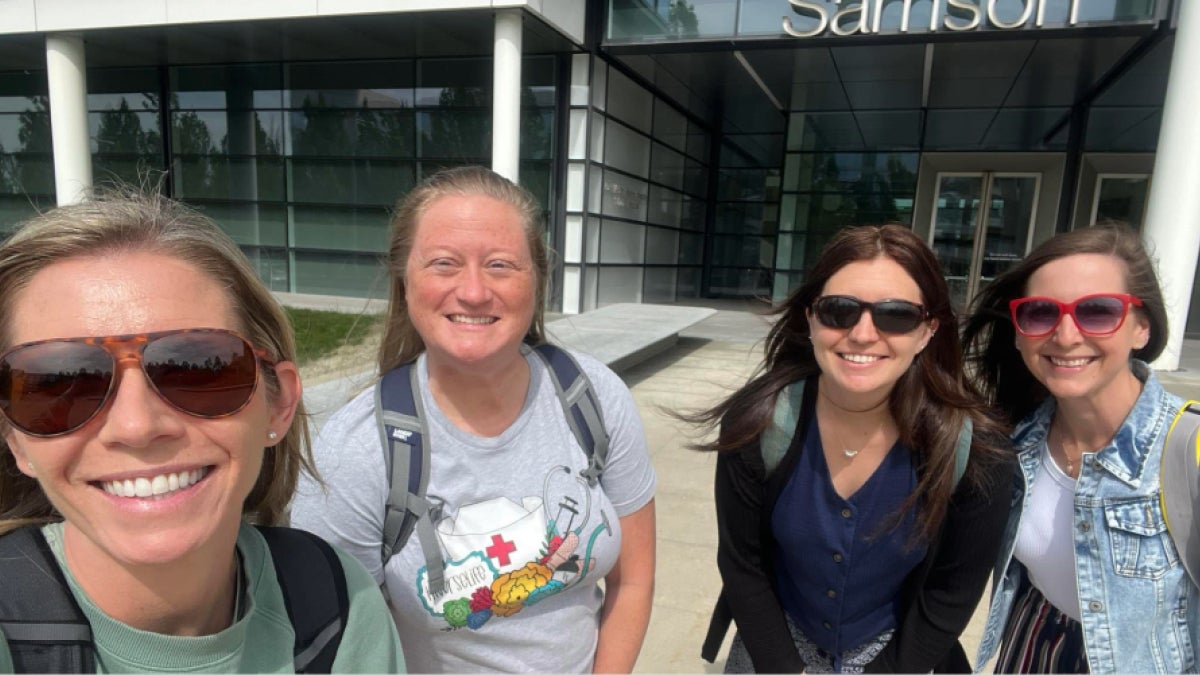
As they get ready to graduate with their Doctor of Nursing Practice degrees from Case Western Reserve University’s Frances Payne Bolton School of Nursing, Jennie Cipriano, Beth Zirkle, Becca Johnson and Emily Perry aren’t just reflecting on papers written, projects defended or miles traveled, but also on the friendships they built along the way.
What could have been an overwhelming experience in the program became something far more meaningful because they didn’t go through it alone. At one of the first intensive sessions for the DNP education track, Zirkle, Johnson and Cipriano—arriving from different states, different roles and different stages in their careers—found themselves navigating an unfamiliar environment together.
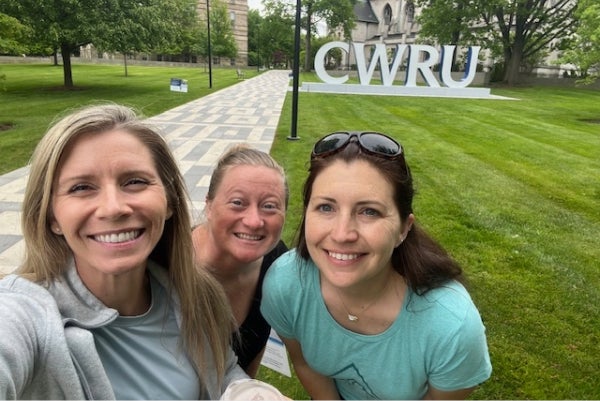
Cipriano, a faculty member at Florida Southern College, remembers just how daunting that first trip felt. But within those first few days, she met fellow students Zirkle and Johnson, both faculty members at Longwood University in Virginia, and quickly became part of their circle.
“I joke that they adopted me,” Cipriano said. “We really just clicked from the very start.”
The group connected with Perry, a program clinical coordinator at Case Western Reserve, later in the program, in a way that felt equally organic. During a class, she simply sat down next to Cipriano and decided—half-joking, half-serious—that they would be friends. What started as a spontaneous moment turned into early-morning sessions, late-night texts and shared laughs during long intensives—a rhythm that carried them to the finish line.
The path to the DNP program
While each woman came to Case Western Reserve with a deep commitment to nursing education, their paths looked slightly different. For Johnson, who always wanted to be a nurse but felt compelled to expand beyond the bedside, the calling emerged through hands-on teaching experiences. For Zirkle and Cipriano, it grew from a desire to have a broader impact to shape not just patient outcomes, but the next generation of nurses. Perry, who is involved in both clinical and classroom teaching, saw the program as a natural extension of her role and commitment to lifelong learning.
“The best way to learn is to teach,” Perry said. “Teaching in the classroom is one of the more challenging things I’ve ever done, but it’s something I’m still working at and want to be meaningful for students. The DNP program is really a continuation of that.”
What ultimately brought them all to Case Western Reserve was not just its national reputation, but its flexibility. Designed for working professionals, the DNP education track blends online coursework with in-person intensives, allowing students to continue working while advancing their education. Students travel to Cleveland three times a year for the multi-day intensive sessions and spend time in between on coursework focused on theory, instructional strategies, curriculum design and more. For this group—each balancing demanding schedules, and in some cases multiple jobs—the flexibility of the hybrid model made the program possible.
Still, flexibility did not always equal ease.
“That first intensive was so stressful,” Zirkle admitted. “You really need support when you’re in a program with such high standards. When you’re trying to figure out your project and manage everything else, having people with different perspectives to bounce ideas off was invaluable.”
Finding their people
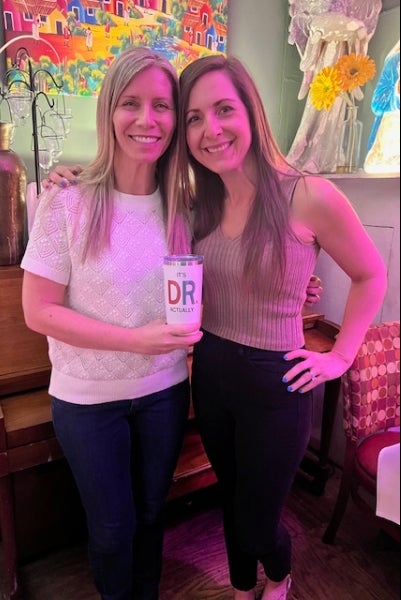
Having a trusted group to consult with when they got stuck led to the creation of what Cipriano described as a psychologically safe space—something they also strive to replicate in their own classrooms.
“There is never a judgment zone, there’s never a stupid question,” she said. “We always tell our students we want that kind of environment, and I think our friendship was really grounded in that. There was never any competitiveness—we were all learning and growing together.”
Outside of coursework, they made a point to find moments of normalcy within the intensity. They swapped hotel stays for shared Airbnbs, where they could cook meals and decompress together, and built small traditions like trips to Hofbräuhaus. Even small adventures, like shared coffee between sessions (or a walk through the snow to a nearby grocery store that ended in what Zirkle described as “about 40 pounds of chocolate”), brought fun to the experience.
“My mindset when I was first in Cleveland was very much like, I’m here to get this work done and I want to get as much done as I can, because that’s what I felt like I was there for,” Johnson said. “But having friends made everything easier—and it was the little day-to-day things that really mattered.”
While milestones like project defenses have been significant (Perry, based at Case Western Reserve, has served as tech support before the defenses, scoping out the rooms beforehand for the out-of-towners), their friendship stands as one of its most meaningful outcomes—a testament to what can happen when connection is prioritized. Their advice to future students reflects that lesson.
“Don’t isolate,” Cipriano said. “Even if you’re introverted, try to connect with people. Go to lunch, go to dinner—it brings so much joy and normalcy to those intensive weeks. The program is demanding, but it doesn’t have to be done alone.”
For Zirkle, the takeaway is even simpler:
“Find your person,” she said.
In their case, they each found three—transforming an intense doctoral journey into one defined by lasting relationships across states, schedules and miles. As they prepare to graduate in May, they’re now arranging their next adventure: a group vacation that Zirkle is already organizing.