Meet a PhD candidate who developed a course that will take students to Puerto Rico to learn about climate change
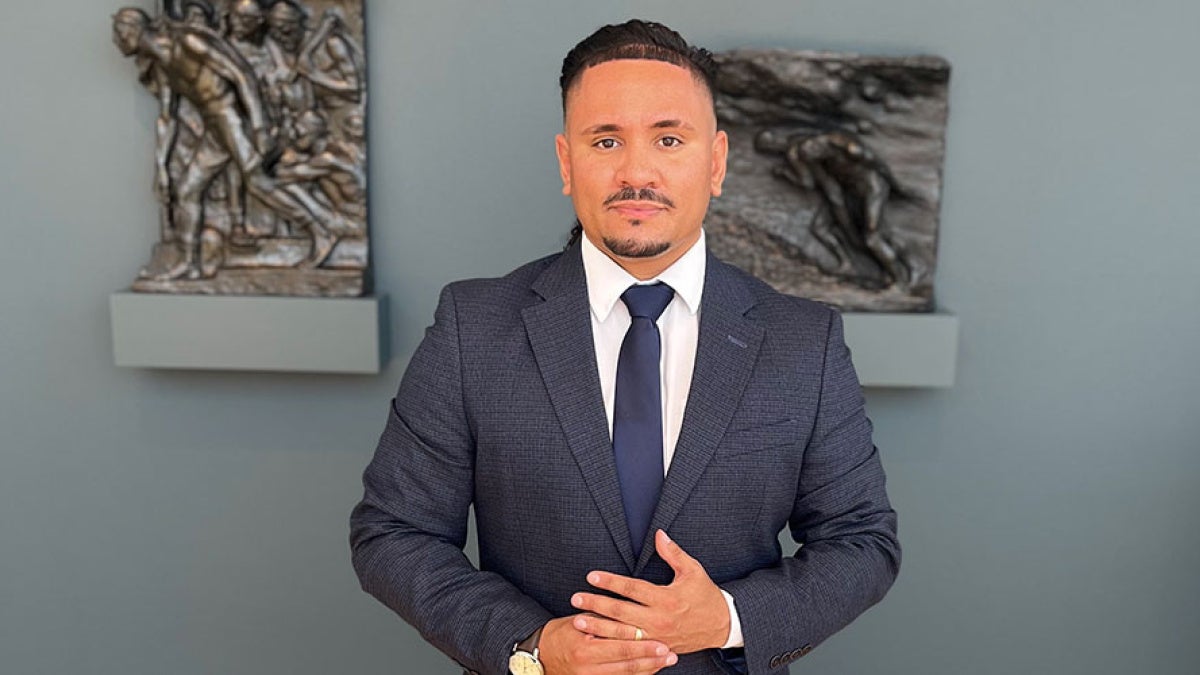
Jacob Rivera, a PhD candidate in the Department of Sociology, spent a year living in Cayey, Puerto Rico, to complete the fieldwork for his dissertation on class and race on the island. During that time, he was struck by the themes he observed that cut across race and class, especially in regard to climate issues.
Regardless of race and class, those in Cayey experience infrastructural instability, frequent power outages and vulnerability to natural disasters. Rivera noticed, though, that class and race play a role in who has access to recovery resources and green energy options.
Now, he’s eager to share those insights with undergraduate students at Case Western Reserve University. Working alongside his PhD advisor, Associate Professor of Sociology Cassi Pittman Claytor, PhD, Rivera developed an experiential learning program in Puerto Rico called “After María: Climate Change, Vulnerability, and Resilience in the Caribbean.”
“Combining our shared passion for research and social justice has been incredibly rewarding, and we’re proud this will be the first time CWRU has offered a course like this in Puerto Rico,” said Rivera, who also is a senior research assistant with NP3: Nurturing People. Power. Place. at the Jack, Joseph and Morton Mandel School of Applied Social Sciences.
The trip will be held over winter break during the 2026–27 academic year—giving participants a break from Cleveland’s winter weather.
“It’s going to be a lot of fun,” said Rivera, who is from Cleveland. “The island is our classroom, students will go on excursions and guided tours, eat incredible Puerto Rican cuisine, have time for leisure, and of course, spend time at the beach in the middle of winter. I can’t wait for students to experience Puerto Rico.”
During his time in Cayey—a largely middle-class, mountainous town—for his dissertation research, Rivera immersed himself in learning about the culture, collecting ethnographic data and observing those around him. What he witnessed was a racial dynamic different from what is typically seen in the United States.
In Cayey, Rivera said, race and racism goes beyond binary classifications and instead incorporates a number of different descriptors.
“Racism remains a taboo subject in much of the Latinx community, but we have to address it,” Rivera said. “Colorism and the valorization of European beauty standards are unhealthy, and using empirical data to confront these issues is critical if we want to eventually end them.”
He also noted that class plays a critical role in what privileges a person experiences—and given the island’s complex history and relationship to the United States, an individual’s class is often not stable. Class ultimately is what dictates whether a person can leverage solar panels and green technologies to prepare themself for natural disasters.
Rivera, who expects to complete his PhD program in fall 2027, hopes his findings can be turned into a published book, and potentially be used to inform policy changes that inspire anti-racist practices and encourage equitable access to environmental and climate change initiatives.
Learn more about Rivera’s experiences.
1. What initially drew you to CWRU?
CWRU’s PhD in sociology program has a strong specialization in research methods and social inequality—two areas I’m deeply passionate about. I love conducting research, and having those specific offerings available in my hometown made the program especially compelling.
2. What inspired you to study sociology?
Honestly, I feel like I was born a sociologist. I’ve always been fascinated by how society functions and by human behavior, so when I discovered that you could study society scientifically in undergrad, I was hooked. The elaborate theories and methodological approaches used to answer sociological questions captivated me, and reading scholars like W.E.B Du Bois and Mary Pattillo early in my PhD reaffirmed that this was the field for me. Sociological research also has concrete applications that can benefit neighborhoods, institutions, governments, climate policy and more. How cool is that!
3. What do you hope students will take away from the course in Puerto Rico?
First, a transformative on-the-ground learning experience. Climate change is already an enormous challenge, and when you layer in race, class, and Puerto Rico’s colonial history, you see that the island faces serious environmental justice issues—including disaster capitalism and colonial scientific practices that need to end. There’s a lot to learn. I also hope that Puerto Rican and Latinx students in the diaspora, including those on our campus who have never had the chance to visit, get to connect with their roots and experience what it feels like to walk the motherland.
4. What do you enjoy about working with undergrads?
Helping students reach their biggest dreams is part of my life’s mission, and If I can play a role in that, it means everything to me. I love watching students grow over the course of their undergraduate careers. Educators and students truly do life together. We share real-world experiences—there’s something special about seeing a student make progress inside and outside the classroom.
5. Can you talk about your work with NP3?
NP3 is a very special place for me on campus. I’m a senior research assistant there under the leadership of Dr. Mark L. Joseph, and I work on a range of projects, from scholarly research to community organizing alongside my wonderful colleague Laylah Allen. Right now, I’m focused on community organizing work with the New Image Block Association, where we get to collaborate with some truly inspiring residents.