Q&A: Two CWRU alumni entrepreneurs open door to students, share AI insights
Veale Snyder Fellows will get hands-on experience inside skilly, their AI startup
Every company encounters the same problem eventually. As they scale, customers want and need answers—right now.
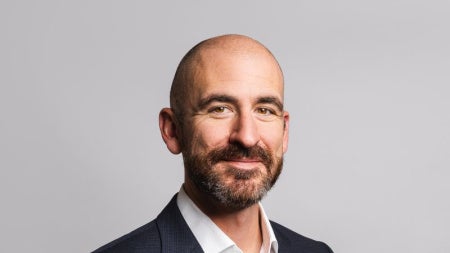
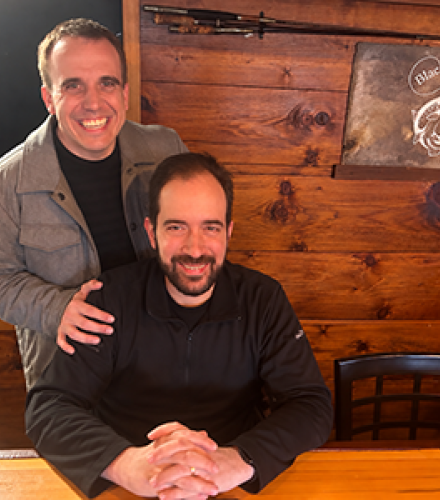
It was that issue that set Adam Paulisick (CWR ’04) and Jon Pastor (CWR ’00) on the path that led to their company, skilly.
“Prospective buyers or even current customers have questions, but what they really need is help figuring out what to do next, who to talk to, what they may be missing and when a human instead of an AI agent should get involved,” Paulisick said. “That became the foundation for skilly.”
skilly becomes a resource and guide for those looking to engage with an organization. skilly is focused on higher education—specifically admissions and HR—but they also support medical device companies, travel and tourism organizations, staffing firms, nonprofits and local government agencies.
Despite a common fear that adapting AI to reduce those sorts of interactions take away human engagement, Paulisick and Pastor’s work with skilly is leading to a different result.
“AI won't replace critical human interactions. It takes the repetitive and mundane work off your plate so you have more time for people,” Pastor explained.
And in a larger scope, more time means more opportunities to test ideas, learn and operate at levels that would have been years off.
“AI can change the economics of what you are capable of building,” Paulisick said.
Alumni, parents and friends are invited to a reception with Adam Paulisick (CWR ’04) and Jon Pastor (CWR ’00)—hosted at skilly’s offices.
Sunday, October 18
5:30 p.m.
Later this month, the skilly co-founders are opening their doors in Pittsburgh and inviting in the 2026-27 cohort of the Veale Snyder fellows. The Veale Snyder Fellowship—offered by CWRU’s Veale Institute for Entrepreneurship—is open to rising sophomores and juniors, and is built around immersive learning experiences in and out of the classroom.
Students get an inside look at running a company. And for these alumni entrepreneurs—they get to continue the Spartan support network.
“Someone opened doors for us early on, and this is how we pay it forward,” Pastor said.
Paulisick and Pastor shared some of their insights ahead of hosting the fellows.
How does your time at CWRU influence your work as an entrepreneur?
Jon: Case Western Reserve taught me to break hard problems into pieces and build real solutions, not just theoretical ones. That mindset shapes how I lead our technology today. It also gave me a lasting network.
Adam: One of the things I appreciate about my CWRU education is how comfortable it made me in operating between business and technology. I do not think of a business problem as belonging exclusively to the business people, or a technology problem as belonging exclusively to engineers. That foundation is what a lot of high-value ventures will be built on—most roles on founding teams are blurring. Plus, I made friends from all corners of the earth at CWRU. It's hard to imagine that I would have been able to see problems the way I do today as an entrepreneur without the global mindset and the Midwestern grit I took away from my time at Case Western Reserve.
Why open your doors to the Veale Snyder Fellows?
Jon: Students learn more in an hour inside a working startup than in a week of reading about one. Pittsburgh's tech scene is a great place to see that up close. Events like this also connect students with alumni who can become mentors, investors, customers or future co-founders.
Adam: Students need access to the messy world of company building, not just the over-hyped headlines. I have generally found that less than 5% of the planet should probably be an early-stage technology entrepreneur, and while I hope every one of the fellows will be entrepreneurial in some form, I also want them to know it doesn't need to be the first thing they do after graduation.
What advice do you have for those starting new ventures?
Jon: Start before you feel ready. Get your idea in front of real people quickly and listen closely to what they tell you. Choose your partners carefully. And use the CWRU network, because Spartans are always willing to help each other.
Adam: Deeply connect with the problem you want to solve. While greed is occasionally enough of a motivator, it's almost never enough to persist through years of building. The more privilege you have, the easier it is to quit. Decide up front of how much you love thinking about the problem, and how intrinsically motivated you are to solve it. An authentic connection is always present with the most successful people I have seen. If people are stuck on what they love, we built a simple exercise to inventory what you deeply connect to: maadlabs.io/20-10-10
What are the first steps for someone new to AI?
Jon: Pick one tedious task you do every week, like drafting emails or summarizing documents, and try it with an AI assistant. Give it context and push back when it gets something wrong. Within a few weeks, you'll see where it saves you real time.
Adam: I think this varies deeply depending on how technical you are, so we can skip past the "just start building." I strongly recommend people set a goal to save 10 hours per week with AI. That likely means clearing some trust hurdles regarding giving AI access to utilities like calendars, but the sooner you can see and feel the literal benefit of AI, the faster you'll be motivated to explore it.