

Case Comprehensive Cancer Center
April 03, 2017
Case Western Reserve University (CWRU) School of Medicine and the Case Comprehensive Cancer Center (Case CCC) have been named to a prestigious "colorectal cancer dream team" that was announced today at the annual meeting of the American Association for Cancer Research in Washington, D.C. The dream…

March 22, 2017
A multi-institutional team of researchers led by Case Western Reserve University has identified a pattern of clustered genetic changes that appear to encourage growth of colorectal cancer tumors—a finding that points to a promising potential target for drug development. In a study published in…
March 07, 2017
Genetic mutations can increase a person's cancer risk, but other gene "enhancer" elements may also be responsible for disease progression, according to new research out of the Case Comprehensive Cancer Center. In a breakthrough study published in Nature Communications, scientists discovered changes…
March 07, 2017
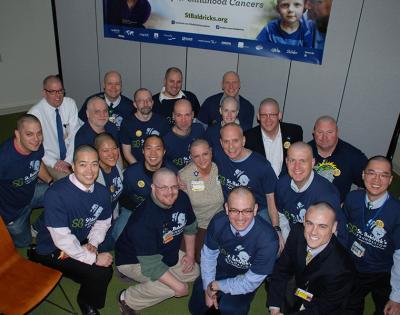
The running joke in Alex Huang’s pediatric oncology immunotherapy lab is that, to become a member of the research team, you have to shave your head. While that’s not really the case, many do so anyway—for a good cause. The researchers in Huang’s lab will “brave the shave” once again at the 2017…

February 07, 2017
The Case Comprehensive Cancer Center will host the Cancer Disparities Symposium: "Building Bridges to Address Cancer Disparities" Friday, March 17, at 8 a.m. in the Iris S. and Bert L. Wolstein Research Building. Understanding and addressing cancer disparities is complex and multi-faceted, and…
February 06, 2017
Potential biomarker of disease appears to be free of troubling image variability Preliminary computerized imaging reveals the shape of the prostate and a compartment within the gland—called the transitional zone—consistently differ in men with prostate cancer than those without the disease,…
January 25, 2017
Three Case Comprehensive Cancer Center researchers received Outstanding Investigator Awards from the National Institutes of Health (NIH). These highly competitive multi-year federal grants recognize investigators who have achieved significant research accomplishments. The amount and duration of the…
January 13, 2017
As you can tell from my message last week, 2017 will be a very busy year for our Center. I would be remiss, however, if I didn't offer some reflection on highlights from the past year. Let me tell you - 2016 was pretty excitement-packed and record-setting itself. When I say that I am not just…
January 04, 2017
Did you ever wonder how our colleagues nationally get to know us? As we enter 2017, I have one answer for you - the core grant renewal for the Case Comprehensive Cancer Center. The number of leaders in the field of cancer research who will learn about us through the grant renewal is daunting!…
November 10, 2016
I would like to alert our membership of the two-year initiative I set out for the Association of American Cancer Institutes (AACI) at the national meeting last week. As President of AACI for the next two years, I asked all the cancer centers to participate in a review of practices and approaches…