Charged with purpose: Inside Case Western Reserve's Galm electrochemical cluster
Researchers in the James M. Galm Electrochemical Engineering & Energy Science research cluster are tackling the chemistry behind batteries, semiconductors, critical metals and clean energy
This story is the second in a series introducing the research, people and building that will define Case Western Reserve’s next chapter of discovery. Over the coming weeks, we’ll go inside each of the seven research clusters and the resources that make the work possible.

While pursuing her graduate studies in chemistry at Case Western Reserve University, Desiree Prado, PhD (GRS '26), helped reactivate the university's student chapter of The Electrochemical Society, where she could learn from the research of her peers or ask a question about her experimental setup.
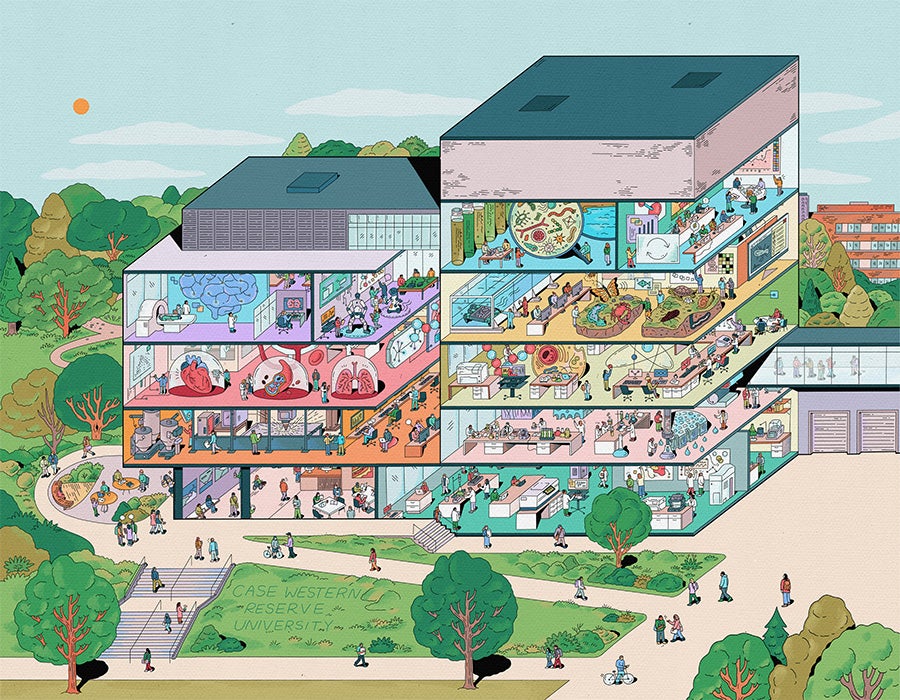
Prado, now a research associate at Case School of Engineering, is poised to move into the Interdisciplinary Science and Engineering Building (ISEB) as part of the James M. Galm, PhD, PE Electrochemical Engineering & Energy Science research cluster. She hopes that the ISEB—the university's new 189,000-square-foot home for discovery and innovation—will naturally create the type of collaborative community she worked to build as a student.
"Sometimes you're limited by the four walls of your lab," said Prado. "I hope the ISEB will break some of those barriers by creating a space that serves as an incubator for ideas, where students can explore what they’re really interested in and have the opportunity to collaborate with others."
With the support of a $10 million gift from a three-time CWRU alumnus, the Galm research cluster uses electrochemistry—a means of doing chemistry using electrons—to tackle some of the most pressing challenges of our time: developing next-generation energy storage, advancing semiconductor manufacturing, enabling domestic production of critical metals and exploring electrochemical techniques to clean up pollutants. The Galm Electrochemical Engineering & Energy Science research cluster will concentrate and accelerate Case Western Reserve’s electrochemistry expertise, woven throughout campus and solidified over decades.
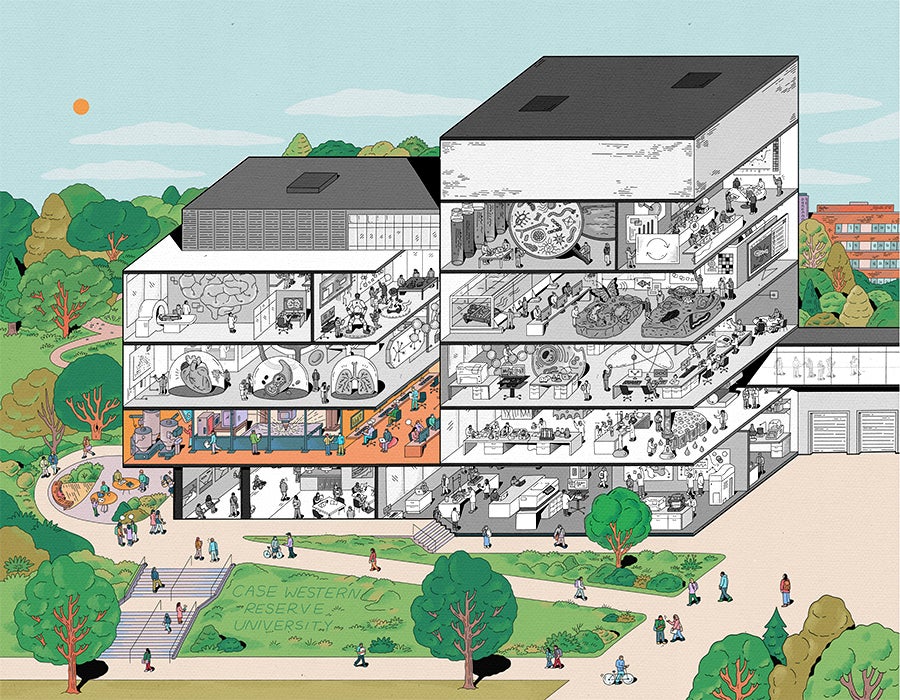
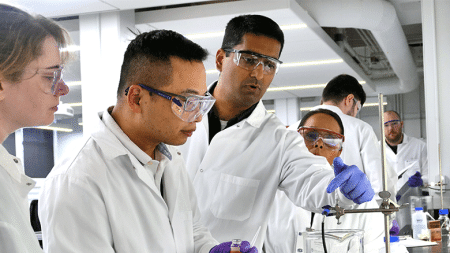
In the Galm cluster—located on the first floor of the ISEB—chemical engineers, chemists and physicists will work side by side to develop longer-lasting, more efficient, safer and scalable energy storage. They'll work to improve the microchips that power our everyday devices—like the one you're reading this on—by advancing the techniques used to build their internal components.
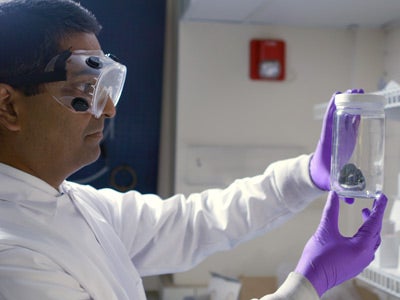
"It is the confluence of different expertise that allows us more effectively to solve problems," said Rohan Akolkar, PhD, faculty lead for the electrochemistry cluster and the Milton and Tamar Maltz Professor of Energy Innovation in the Department of Chemical and Biomolecular Engineering at Case School of Engineering.
The chemistry inside the batteries powering your phone, computer and cars was invented 50 years ago. Advancing that energy storage requires a host of experts working in concert: researchers who study battery chemistry, synthesize the chemicals within it, observe its behavior at various scales and address problems like degradation—the process by which battery materials age and weaken from the stress of charging and recharging over time.
Clemens Burda, PhD, professor of chemistry, materials science and engineering, and macromolecular science and engineering, investigates materials on the nanometer scale. He brings to the Galm cluster a unique technique: optical laser spectroscopy, capable of measuring reactions at ultra-fast timescales, including watching individual electron transfers within batteries.
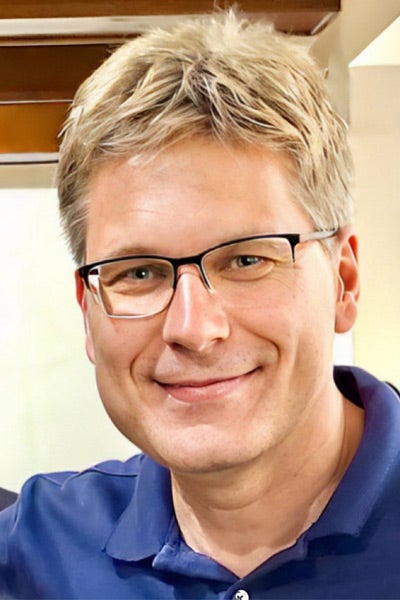
His interest in applying the technique to electrochemistry—not a typical combination—really took hold during a prior interdisciplinary project. Robert Savinell, Distinguished University Professor and the George S. Dively Professor of Engineering, invited Burda to support the Breakthrough Electrolytes for Energy Storage (BEES) Energy Frontier Research Center. Established in 2018 with funding from the U.S. Department of Energy, BEES strives to understand new battery electrolytes with the potential to provide large-scale, long-lasting energy storage solutions.
For someone who thrives on interdisciplinary teams and involving students in his work, the ISEB is "what I'm all about," Burda said. “I'm going to walk in this building and find all these people who are willing to collaborate on the next exciting development."
That proximity is important, said Burcu Gurkan, PhD, a member of the cluster and the Kent H. Smith Professor II in the Department of Chemical and Biomolecular Engineering at Case School of Engineering.
As the current director of BEES, Gurkan has worked with Burda for several years, but from different buildings. In the ISEB, colleagues can volley an idea back and forth over the course of days, between meetings, shaping it into something concrete.
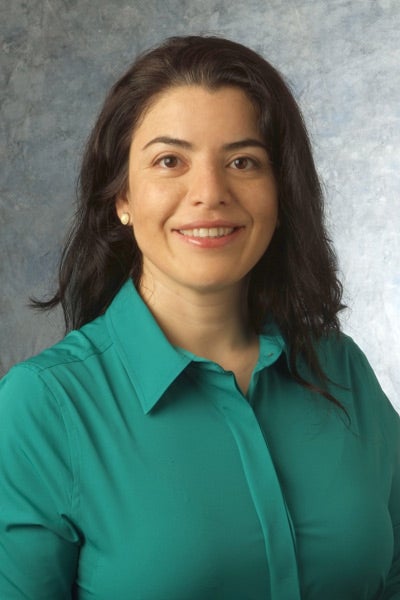
“Perhaps the biggest advantage of a shared roof is in the way students interact,” Gurkan said, “They learn from each other working side by side and ideas pollinate through casual everyday conversations.”
Gurkan works on electrolytes in energy storage to improve safety and scalability and electrocatalysis to convert waste carbon dioxide as feedstock for making fuels and chemicals. Already, she is thinking about the ways her electrolytes work can advance those of some of her cluster members.
Some of Akolkar's research involves incredibly high temperatures. Gurkan is looking to bring her expertise in separations and electrolyte design into her collaborations with Akolkar for enabling electrochemical processes to be feasible at milder temperatures and under benign conditions.
A few years ago, Akolkar and a team of his students invented molten salt electrolysis technology that the university has patented. Just last month, the U.S. Department of Energy (DOE) awarded a Case Western Reserve team funds for a project to apply this process for the first time to extract "heavy" rare-earth metals—a signal of the importance of the cluster’s work.
"I am hoping that, through faculty discussions and student interactions, there will be seeding of new project ideas, and ultimately impactful initiatives," Akolkar said.
The Galm cluster will also house an extension of the Electrochemical Design Center (formerly known as the Electronics Design Center), a CWRU core facility and shared research resource that offers access to instruments, technology and services.
Through a grant from the National Institute of Standards and Technology, the design center purchased about $1 million of new equipment to outfit the new space with microscopy, spectroscopy and gravimetric tools available to researchers across campus.
For Prado, and for many other students and early-career research associates like her, the ISEB will provide valuable experience with advanced instrumentation, a key stepping stone to future careers in industry, national laboratories, or academia.
Industry and national laboratories engagement is a priority for the cluster. Much of their research in energy storage and semiconductors is already industry- and federally-funded, Akolkar said. He plans to leverage the ISEB's concentrated expertise and cutting-edge tools to help attract more industry engagement.
Akolkar plans to expand an annual three-day summer workshop he runs to teach electrochemistry to people in a range of industries. Burda, who’s worked with industry partners such as Lincoln Electric, Lubrizol and Sherwin-Williams over the years, sees the ISEB as a visible focal point for CWRU research that can draw additional engagement.
"I'm very optimistic that this will improve and increase the collaborative opportunities for us," he said. "Being here in Northeast Ohio, it's just extremely important to be embedded in the success of our region."