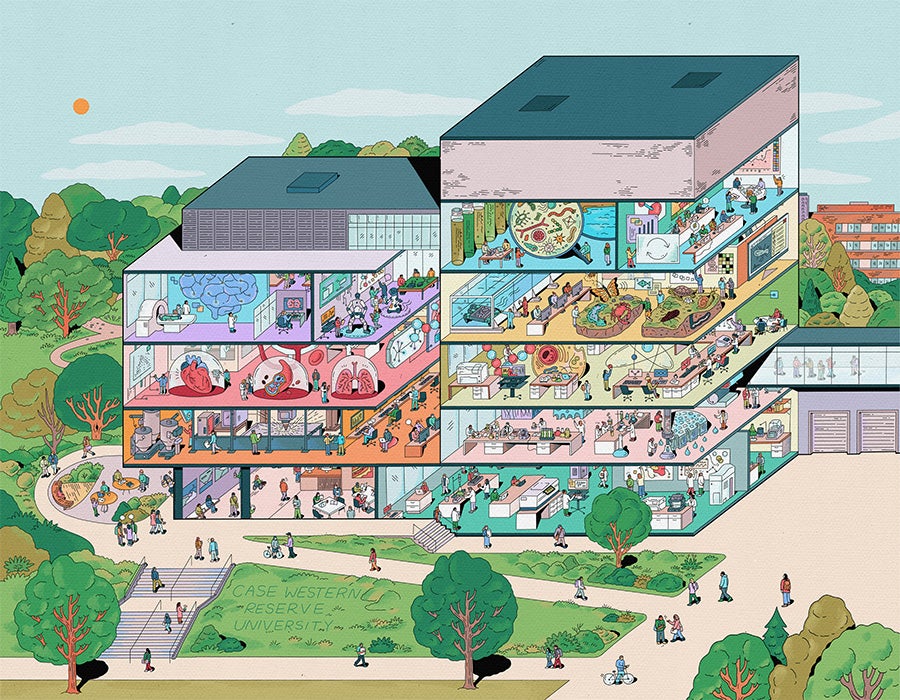
189,000 square feet of dedicated research space.
7 research clusters working to solve problems that matter.
300 researchers breaking down silos to share expertise, ideas and tools.
1 question: What happens when you stop organizing science around disciplines and start organizing it around problems?
Case Western Reserve University is about to find out as it opens the new Interdisciplinary Science and Engineering Building.
In a new series, The Daily introduces the research, people and building that will define Case Western Reserve’s next chapter of discovery. We’ll go inside each of the seven research clusters and the resources that make the work possible.
Collaborative cures: Molecular Therapeutics
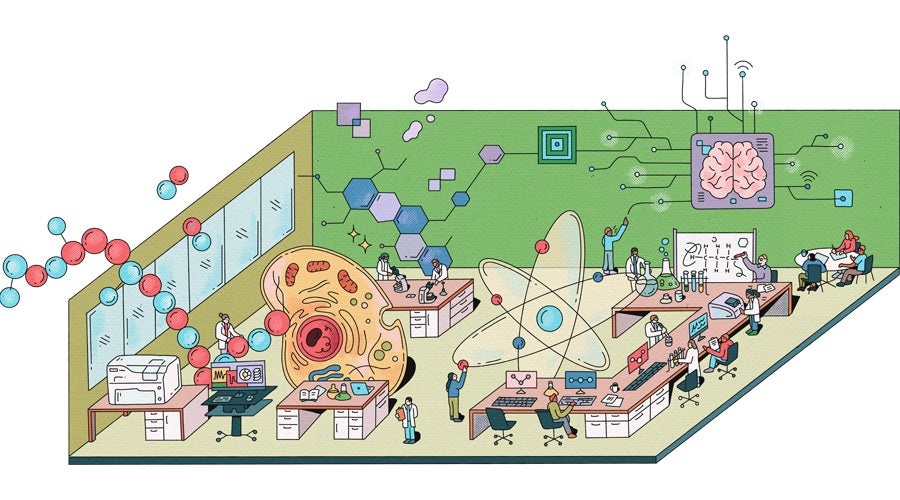
On the second floor of the ISEB, the Molecular Therapeutics cluster unites researchers from the College of Arts and Sciences and School of Medicine—chemists, pharmacologists, geneticists, and chemical biologists—to move promising ideas from the lab to patients in areas such as cancer, immunology and vision. The cluster will be "the beating heart of the academic drug discovery efforts on campus," said Drew Adams, PhD, faculty lead for the cluster.
Targeting solutions: Precision Diagnostics & Therapeutics
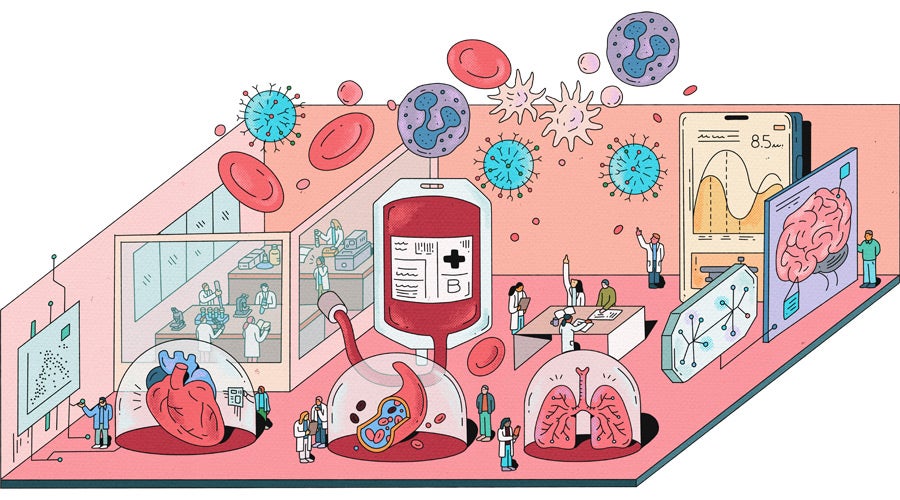
The Precision Diagnostics & Therapeutics cluster on the ISEB's second floor will develop tools, techniques and technologies to close the loop between identifying what a patient needs and delivering it—at the right moment, in the exact amount, for that specific individual. The researchers have collaborated for years. Under one roof, they'll take their research further, working toward impactful biomedical diagnostic and therapeutic applications
Forged for impact: Advanced Materials & Manufacturing
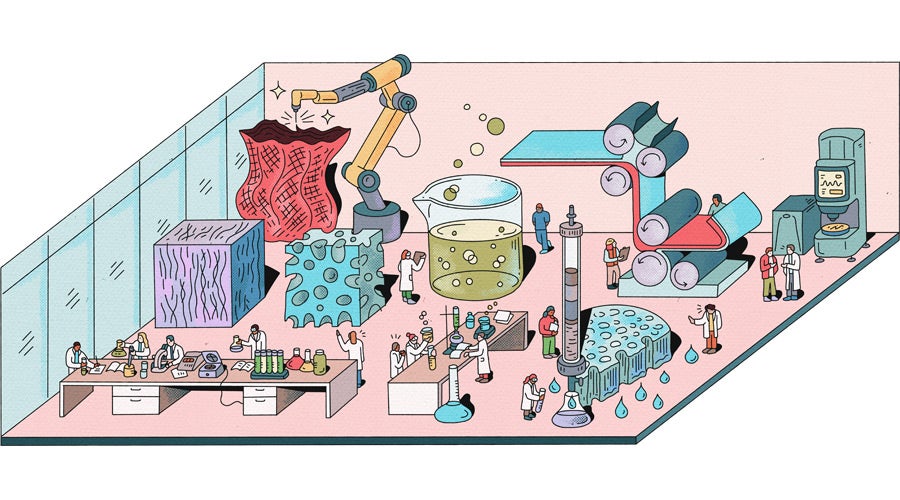
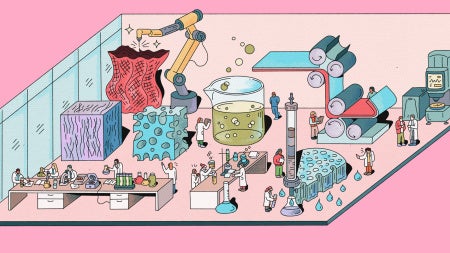
A team of scientists within the Advanced Materials & Manufacturing cluster at Case Western Reserve University will work to discover, develop and improve materials and the processes used to make them. On the first floor of the ISEB, the cluster will train students for the advanced manufacturing workforce and deepen partnerships with the industries whose hardest problems they are working to solve.
Charged with purpose: James M. Galm, PhD, PE Electrochemical Engineering & Energy Science
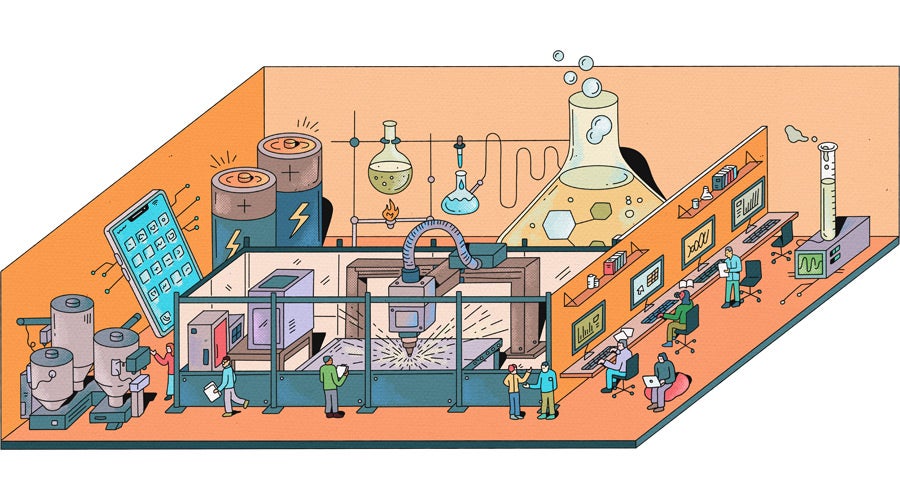
The James M. Galm, PhD, PE Electrochemical Engineering & Energy Science cluster will concentrate and accelerate the university’s electrochemistry expertise on the ISEB's first floor, where researchers will tackle pressing challenges: developing next-generation energy storage, advancing semiconductor manufacturing, enabling domestic production of critical metals and exploring electrochemical techniques to clean up pollutants.
Where problems are solved: Interdisciplinary Science and Engineering Building
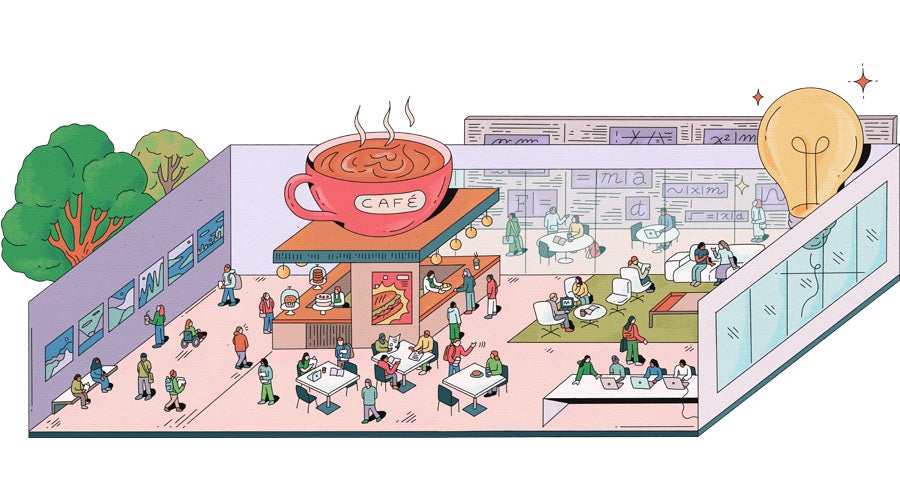
When the Interdisciplinary Science and Engineering Building welcomes its new tenants, a scientist creating entirely new materials will share the stairwell with someone building bio-inspired robots. A research associate studying battery chemistry will work one floor below a team developing a new drug delivery system. Professors studying algal blooms will ride the elevator with students working to restore movement in patients with paralysis.
They don't yet know all the ways their expertise, techniques and equipment can benefit one another, but the building is designed to reveal that.