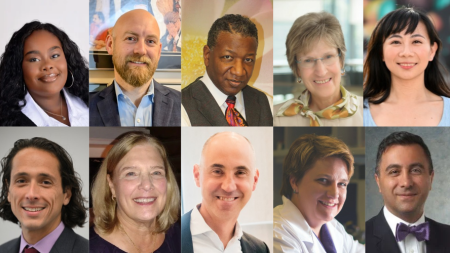
We may never be able to eliminate biases in social science data, but CWRU's Francisca García-Cobián Richter is getting us closer by centering community knowledge
Francisca García-Cobián Richter, PhD
Research Associate Professor at Jack, Joseph and Morton Mandel School of Applied Social Sciences
Co-Director, Center on Poverty and Community Development
Area of Focus: public interest technology, participatory data science, algorithmic bias
Any data generated in social settings and collected by public institutions have the potential to contain biases. Yet, they are also an essential—and perhaps necessary—piece of information for policymaking, informing decisions ranging from prioritization of homeless services to case investigations in child welfare.
“Data use and predictive algorithms in social welfare systems were initially seen as a way to reduce human bias in decision-making by case workers, medical staff or judges. But when data is collected in a biased society, data technologies may only serve to perpetuate these biases,” said Francisca García-Cobián Richter, PhD, co-director of the Center on Poverty and Community Development.
For instance, when predicting healthcare needs, algorithms have used past medical spending as a proxy for illness. But because low-income patients face multiple barriers to access care, they spend less on healthcare, leading the system to wrongly infer they are healthier, when in reality they simply lacked access.
At other times, biases can be embedded in the wording of questions or the response options provided in the administrative data. For example, homeless service application forms that ask applicants to identify their gender but offer only two options may prevent some applicants from providing an answer that is true to themselves.
Even though we can seldom completely get rid of biases, Richter and her colleagues believe they can reduce biases’ influence by incorporating community members’ perspectives into the data-processing and interpretation process.
This was the beginning of the FAIR2 framework and FAIR2 Data Chat.
The power of proximity
The FAIR2 framework integrates four principles for doing data science for social impact.
In a newly published article, Richter and her colleagues described FAIR2’s four principles (frame, articulate, identify, report) as follows:
- Frame data and metadata with input from those represented in the data;
- Articulate relevant community insights into modeling assumptions;
- Identify potential biases; and
- Report findings back to affected communities.
FAIR2 Data Chats operationalize the framework. Far from a traditional focus group, FAIR2 Data Chats are structured, participatory sessions where community members with lived experience collaborate alongside researchers to review visual data summaries of administrative data.
Through interactive prompts, collaborators discuss the data intake process and how well the data represents their experiences navigating public systems, such as housing or other social services.
“From the outside, a FAIR2 Data Chat looks like a research meeting with all of us sitting around a table with food and data,” Richter said. “Food is a common denominator for bringing people together, fostering the proximity needed to have open, honest conversations about data.”
Through these discussions, community members help identify hidden biases, missing variables and system misclassifications that traditional analysts might overlook. Following the sessions, researchers synthesize these qualitative insights to directly inform causal diagrams and statistical models, checking back with collaborators for feedback to validate the findings.
“The intention of FAIR2 is to establish a formal, reproducible process to integrate the lived expertise of people represented in the data directly into data analytics,” Richter said.
The framework draws inspiration from the concept of proximity—a principle championed by civil rights attorney Bryan Stevenson—which Richter interprets as “connecting with others to recognize our shared humanity and ensure technology serves human needs.”
The project, funded by the Public Interest Technology University Network’s 2024 Network Challenge Grant, also reflects the value of interdisciplinary collaboration, bringing together experts from across Case Western Reserve University, including Nicole Coury of the Jack, Joseph and Morton Mandel School of Applied Social Sciences; Laura Bruckman, PhD, of Case School of Engineering; and Shanina Knighton, PhD, of Frances Payne Bolton School of Nursing
Richter also noted the contributions of Alice Jackson, founder of the Thinking Cup organization, and Emily Nelson, PhD, senior manager of research and program evaluation of the Greater Cleveland Food Bank.
An example of this is Richter’s separate, ongoing project, which seeks to link administrative data from Pediatric Intensive Care Unit (PICU) patients at University Hospitals and Cleveland Clinic with their subsequent educational outcomes.
These outcomes are drawn from the CHILD Data System, maintained by the Center on Poverty and Community Development, which has collected kindergarten-readiness assessment scores for children across 14 local school districts in Cuyahoga County.
By connecting these two sets of data over time, the team aims to examine the long-term outcomes of patients who received certain sedatives during their PICU stays.
Richter’s collaborator, Steven Shein, MD (MED '05), division chief of critical care medicine at Children’s National Hospital, initiated the project—which is supported by an R21 grant from the National Institutes of Health—while he was at CWRU.
Richter’s experience with public-generated data and its analysis also helps explain why she developed FAIR2.
“In general, for anything that impacts people and data that is related to people’s social experiences in society, I think there is definitely room, whether through FAIR2 or other ways, to consult with people,” she said, “and we can learn to take that knowledge to the assumption of the way in which we use and analyze data.”