Teaching is the backbone of any institution of higher education, and Case Western Reserve University is home to countless faculty members who make a difference in the lives of students across all disciplines. In recognition of their dedication and service, CWRU presents the Carl F. Wittke Award for Excellence in Undergraduate Teaching annually to two CWRU faculty members who have demonstrated outstanding teaching at the undergraduate level.
The award was established in 1971 in honor of Carl Wittke, a former professor of history, department chair, graduate school dean, and university vice president who was known for his genuine devotion to students. Recipients are honored at the Undergraduate Studies diploma ceremonies, which will be held Sunday, May 17, in the Veale Convocation, Recreation and Athletic Center.
This year, CWRU will honor:
- Yawei Li, PhD, lecturer, Department of Modern Languages and Literatures at the College of Arts and Sciences; and
- Noël Voltz, PhD, the Climo Assistant Professor, Department of History at the College of Arts and Sciences.
Recipients of the award are nominated by undergraduates and interviewed by a committee of students. Read about this year’s winners.
Yawei Li, PhD
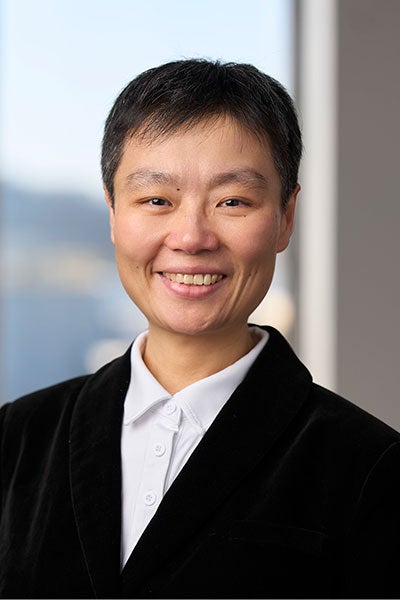
Lecturer, Department of Modern Languages and Literatures
College of Arts and Sciences
For Yawei Li, PhD, the world is a stage—and so is the classroom.
“I don’t teach in class; I encourage my students to perform,” said Li, who is a lecturer of Chinese language and cultures at the College of Arts and Sciences. “I guide students to prepare before they come to class, and then we use class time to perform in the language. I want them to experience what is most appropriate to say and how to behave in different social roles and contexts.”
This teaching style is appreciated—so much so it has earned Li the Carl F. Wittke Award for Excellence in Undergraduate Teaching. Her prioritization of contextualized performance allows her students to engage with Chinese language and culture in a dynamic environment.
“I want my students to experience functional use of the language, to evolve from memorizing to improvisation, and to enjoy the whole learning journey,” Li said, highlighting what she calls her “Triple E” philosophy of experience, evolution and enjoyment.
Li also works steadfastly to create an encouraging classroom environment that supports students through the inherent discomfort of language learning.
She also holds consultation sessions to better understand students’ progress, learning needs and to clarify learning objectives. The trust built in these moments leads students to include her in their lives beyond the classroom. She actively attends orchestra concerts and athletic events in support of students’ extracurricular activities, and more broadly enriches their overall personal development beyond their roles as language learners.
Reflecting on her approach, Li noted that seeing the personal, human side of her students has added more humanity to her teaching.
“I remember one class in particular where even top students were struggling,” she said. “I gave the room a few minutes to pause, and I learned from students that many were premed and preparing for a major core course exam, leaving them with very little sleep over the past couple of days. I appreciated that, even though they had other priorities, they still came to my class and showed strong commitment.”
The atmosphere of Li’s classes is lighthearted and supportive, in no small part due to her own demeanor. Her students note that Li often corrects mistakes with a gentle joke and emphasizes “fighting for a better failure,” and remaining resilient despite their mistakes.
The overarching goal of Li’s teaching is to cultivate confident, autonomous learners with strong cultural awareness, fostering global citizens and intellectuals who are adaptive to different situations. She likens this vision to providing a roadmap.
“I prefer to guide them to work independently,” she explained. “I show them the directions and then encourage and offer support as they find their way. The biggest reward is seeing them communicate thoughtfully, overcome challenges on their own and continue their journey with bright smiles.”
Noël Voltz, PhD
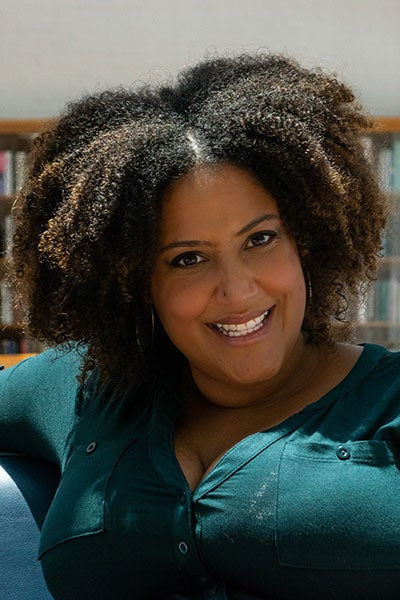
Climo Assistant Professor, Department of History
College of Arts and Sciences
When she enrolled at The Ohio State University, Noël Voltz, PhD, dreamed of majoring in opera and performing on grand stages. A year later, when she signed up for her first African American history class, her perspective shifted.
“I was surrounded by amazing, dynamic faculty who I could see myself in, and who were researching and talking about deeply interesting subjects,” she said. “Plus, I realized that I prefer to sing in the shower instead of on stage.”
Voltz approached her professor, asking him how to become a professor of African American history. His advice was simple: research. She dove in on her first research subject: free women of color in antebellum Louisiana, which became the topic of her honors thesis in undergrad and the subject of her forthcoming book. While she is deeply connected to her research, Voltz equally cultivates her love for teaching.
“I research because I love to teach,” she said. “I like to be in the classroom, to talk to and mentor students. My brain is always thinking about my classroom.”
Her teaching philosophy is centered on mentorship and care, and her students note that her high energy and enthusiasm encourages active participation. Voltz’s students describe her as a stellar speaker, saying her lectures are more of “a really good speech or story.”
Beyond the classroom, Voltz recognizes the importance of her role in her students’ lives. While she endeavors to teach them the same history that fascinates her, she also cares about them as human beings and hopes to guide them.
Motivated in the early days of her academic career by mentors who took the time to get to know her for more than just her research, Voltz has brought that positive experience of mentorship through to her own teaching.
“Before my undergraduate experience, I hadn’t really ever seen Black folks as faculty and I didn’t know that was a possibility for me, but I want to show my students that anybody can stand at the front of a classroom,” she explained. “I sometimes feel like I’m standing on the shoulders of giants and trying to pay it forward.”
Reflecting on her time at Case Western Reserve, Voltz considers her students a driving force behind her passion and commitment.
“We have amazing and talented students who have made this job a pleasure in so many ways,” she said. “Seeing the change-makers these students become is inspiring.”