

Understanding the Effects of Extreme Environments on Sleep and Fatigue
The Decker Aerospace Lab investigates sleep and fatigue as measurable physiological processes that directly influence cognitive performance and operational readiness. While insufficient sleep and circadian disruption are well-established contributors to fatigue, our research focuses on biological mechanisms that promote fatigue in high-demand environments, particularly aviation.
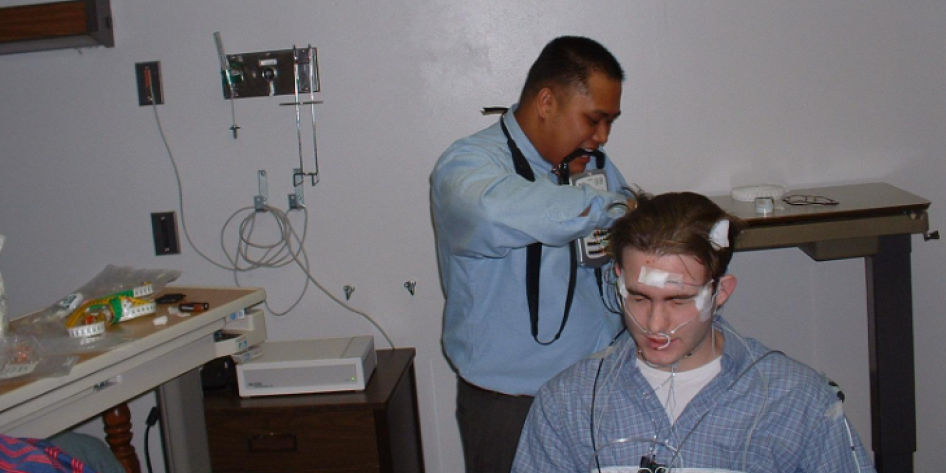
A major component of this work examines how intermittent hypoxia during sleep and repeated operational stressors alter brain function, behavior, and systemic physiology. Using experimental models of sleep-related oxygen instability, our past work has assessed how disrupted breathing patterns influence cognitive performance, vigilance, and behavioral control independent of total sleep duration.
In operational aviation settings, our laboratory studies fatigue in active pilots exposed to repetitive sorties, hypergravity, increased work of breathing, and sustained cognitive workload. These studies combine performance assessments with blood-based biomarker analysis to identify physiological signatures of fatigue that are not captured by traditional sleep metrics. Our findings demonstrate that elevated levels of proinflammatory cytokines are associated with post-sortie fatigue, supporting an inflammatory pathway to fatigue distinct from sleep loss or circadian misalignment.
By integrating behavioral testing, physiological monitoring, and biochemical assays, our sleep and fatigue research provides objective tools for identifying fatigue risk and understanding its underlying mechanisms in aerospace environments.