

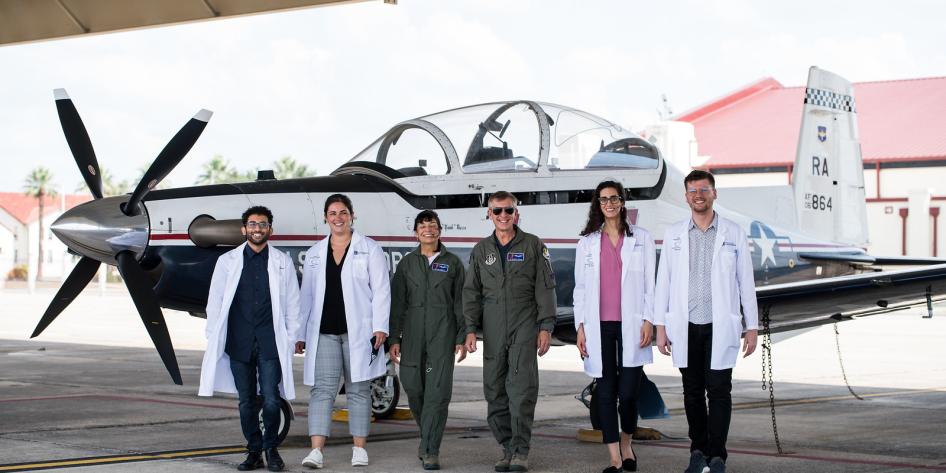
The Decker Aerospace Lab at Case Western Reserve University was established in response to emerging challenges in aviation physiology and a growing need for research-driven solutions to protect human performance in extreme operational environments.
In 2014, ongoing research efforts within our group drew the attention of the United States Air Force (USAF), particularly in relation to the investigation of “unexplained physiologic events” experienced by aviators. These events—highlighted in national media coverage involving high-performance aircraft such as the F-22—raised significant concerns regarding pilot safety and mission readiness. Building on prior expertise in high-altitude physiology and human performance, our team secured funding to investigate the underlying mechanisms contributing to these events. Early findings from this work led to the development of targeted interventions, several of which were rapidly implemented and contributed to a reduction in certain classes of physiologic incidents.
As the scope and impact of this research expanded, our collaboration with military and government partners deepened. Through Case Western Reserve University, laboratory leadership was appointed to scientific positions within the Department of Defense at the Naval Medical Research Unit–Dayton. This collaboration enabled direct engagement with active-duty research environments and provided unique opportunities to study the physiological demands of tactical aviation. These efforts included participation in flight operations and close coordination with partners across the USAF, US Navy, NATO, and NASA, further strengthening our lab’s role within the broader aerospace medicine and human performance community.
Today, the Decker Aerospace Lab continues to evolve, expanding our research portfolio while maintaining strong partnerships across academic, military, and international organizations. Our development reflects a sustained commitment to advancing scientific understanding and translating that knowledge into meaningful improvements in human performance and safety in aerospace environments.