CWRU alumni entrepreneur targets chronic problem in healthcare
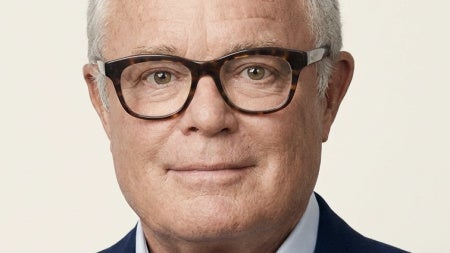
Glimmer Health co-founder Delia Mannen, PhD (MGT ’11) recently received backing from the CWRU Alumni Venture Fund
About one in four people lives with chronic pain. Delia Mannen, PhD (MGT ’11) says there is roughly one specialist trained to treat it for every 20,000 people who have it.
With so few specialists, much of that care falls to primary care physicians, many of whom report feeling overwhelmed by the need to manage chronic pain patients. Patients may then cycle through medications, procedures and expensive hospital visits.

Mannen has spent years working on that problem from different sides of the healthcare system.
Now she is co-founder and head of operations and product at Glimmer Health, a virtual-care company that provides specialized chronic pain care remotely and uses technology to help physicians manage patients over time.
The company recently closed a financing round that included an investment from the CWRU Alumni Venture Fund, part of the CWRU Veale Institute for Entrepreneurship, alongside UPMC (University of Pittsburgh Medical Center) Enterprises and Redesign Health.
The investment adds another chapter to Mannen’s long connection with Case Western Reserve.
Before entering healthcare, she studied English literature and fashion design, ran a clothing-design business and spent nearly six years working in student and alumni relations at the Case Alumni Association.
In 2011, she earned her master’s degree in positive organizational development from the Weatherhead School of Management.
While at the Weatherhead School, a faculty member suggested Mannen consider pursuing a PhD—something she had never planned to do.
Two months later, she was on a plane to Barcelona.
Mannen earned graduate degrees in management science from Esade—part of Ramon Llull University—and one of Europe’s leading business schools.
She later worked on research aimed at helping people age at home as nursing homes were closing. Eventually, she joined UPMC Enterprises—the venture arm of the Pittsburgh-based health system—where she worked with startups focused on telemedicine in nursing homes and at-home monitoring for people with congestive heart failure.
She went on to hold increasingly senior roles before co-founding Glimmer (with Alissa Meade) in 2024.
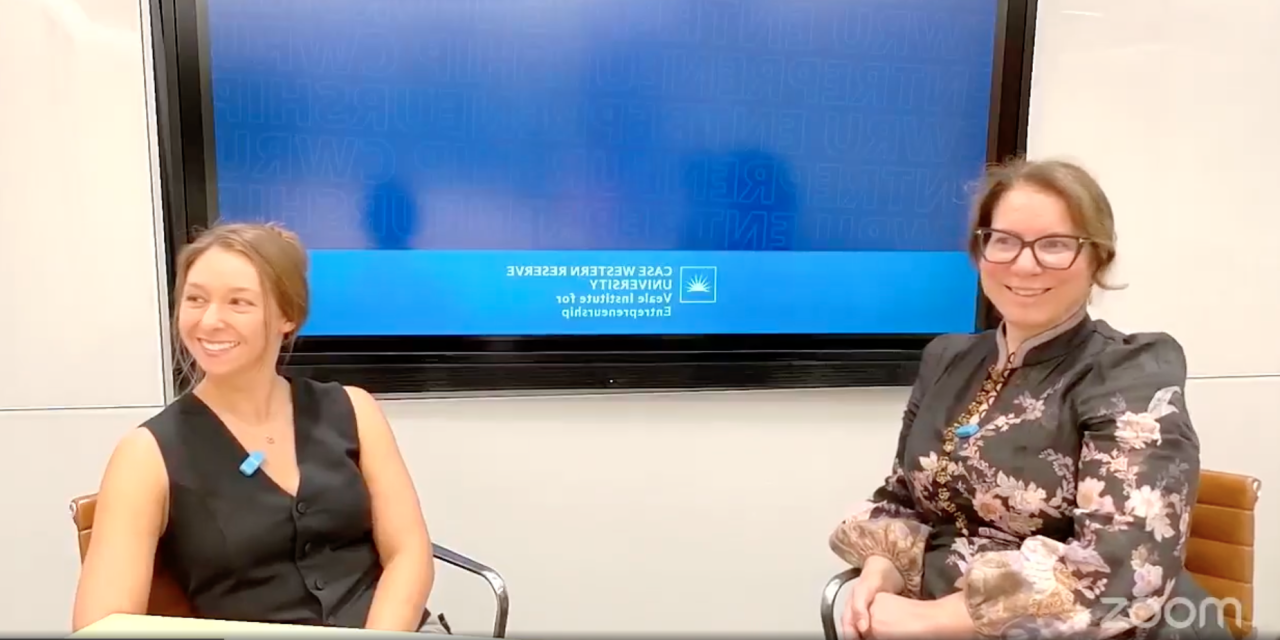
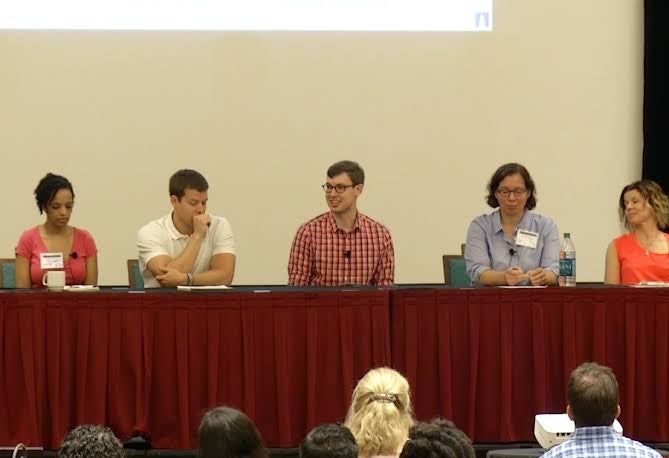
This August, Mannen returned to Case Western Reserve as the first featured speaker in the Veale Institute for Entrepreneurship’s Entrepreneurship Speaker Series at Sears think[box].
In the conversation below, she discusses what several years inside startups taught her before she launched one herself, her company's use of artificial intelligence—and the lessons from CWRU she still draws on today.
This conversation has been edited and condensed for length and clarity.
You didn’t begin your career expecting to work in healthcare. How did you get here?
While I was at [CWRU’s Weatherhead School of Management], a faculty member said to me, “The way you think is very much like a doctoral student. Have you ever thought about getting your PhD?”
I had not. But I thought deeply about it and very quickly. Two months later, I was on a plane to Barcelona to pursue my PhD.
After earning my doctorate, I was recruited to New Haven to support a Connecticut state grant because of the Appreciative Inquiry training I received through the Weatherhead School’s Master of Science in Positive Organization Development and Change (MPOD) program.
Nursing homes were closing, and we were trying to develop a model of care that would help people age at home.
That’s how healthcare found me.
We worked with Leeway—a nursing home with an incredible history. It had supported individuals with AIDS during the AIDS epidemic. Today their mission has expanded to a continuum of skilled and nursing care for the aging. At that time, we were helping people figure out how to age at home as nursing homes were closing.
I found it very meaningful. Aging is hard in this country. I felt like what I was doing was having an impact.
How did that lead you into healthcare startups?
I had a mentor who taught me something I’ll never forget: If there is an organization where you really want to work and the position you want isn’t available or doesn’t exist, find the most senior person you can and write to them.
Tell them why they need to hire you, what skills you can bring and why that position needs to exist.
That’s what I did with UPMC Enterprises. I was invited for an interview, and that’s how my career with UPMC Enterprises began.
At the time, UPMC Enterprises embedded people into startups in its portfolio to provide expertise that early-stage companies, given their capital constraints, might not otherwise be able to afford.
That allowed me to work across many different parts of healthcare.
For one telemedicine company, I went into nursing homes and talked directly with nurses about when an acute change in a patient’s condition should warrant a telemedicine consult.
For a remote patient monitoring company working with people who had congestive heart failure, I helped design the unboxing experience, making sure that when someone received the equipment, they understood how to put it together and actually use it.
I also supported the design of a family health center in a lower-income area of Pittsburgh, thinking about how to make the space welcoming to people with behavioral health or substance-use issues.
When I began to have ownership of the products we were designing and delivering, that’s when the shift toward becoming more of an innovator myself started to happen.
Why did chronic pain become a problem you wanted to work on?
One in four people live with chronic pain, and access to specialists is extremely limited.
The condition often ends up being managed by primary care or other specialties, and they often do not have sufficient time and resources to provide the support these patients need.
The way it traditionally gets managed can involve medications, treatments and surgeries, which can become very expensive.
Glimmer uses evidence-based clinical pathways developed within the Department of Pain Medicine at UPMC that address the psychological, behavioral and physical components of chronic pain, the whole person.
We’ve looked at data from more than 30,000 cases in which these pathways were applied. In propensity-matched analyses, chronic pain patients treated using the clinical care pathways adopted by Glimmer had lower healthcare utilization than those treated in primary care, including 31% fewer urgent-care visits, 50% fewer emergency-department visits and 67% fewer inpatient admissions.
When did you know Glimmer had something physicians wanted?
Pretty early on.
When we would talk to physicians about our service, they would articulate the problem back to us better than we had just pitched it to them. That’s a good feeling, knowing you have a solution that supports a real need.
We’ve now been in operation for about a year, and our patient growth, referral growth and referring-provider growth have all been strong.
How are you using artificial intelligence without losing the human side of healthcare?
It’s people. In AI circles, you often hear “human in the loop.” For me, it’s not just a human in the loop. It’s a human gate.
You have to move fast with AI, but you also have to move slowly enough to ensure that you’re protecting patients’ health information and ensuring quality, accuracy, and security at large.
One place we are applying AI is with inbound referrals.
We may receive a 20-page referral compiled from different sources of healthcare data. They’re thick. They’re messy. They can be hard to read, and sometimes the information doesn’t agree.
We use AI to help understand and condense that information so we can communicate back to the referring provider and by streamlining operations thereby improving the patient experience and reducing operational costs. At the end of the day, there are always use cases that require a human response. Automating 60% of the end-to-end process makes room to ensure an optimal experience for this 5%.
We had somebody call and ask for our LPN by name. They just know her. She has built that positive and trusting relationship with some of our patients.
You worked with your co-founder, Alissa Meade, for years before starting Glimmer. What made that partnership work?
I’ve had the privilege of working with my co-founder for close to a decade. We know each other very well. Our level of trust is deep, and we complement each other well. My skills are not hers, and hers are not mine. Together, we’re more than two.
We also hire well. I love the adage: Hire well and then get out of their way. Let your team do what they do best.
What qualities do you think someone needs to work in an early-stage company?
Nimbleness. A willingness to wear many hats. Comfort with ambiguity, that’s a tough one. A lot of people struggle with it.
Having been part of startups before Glimmer, I knew every day would bring different challenges. You can’t be surprised by the surprises, because there are always surprises.
What from your time at Case Western Reserve do you still use today?
There are a couple lessons from the MPOD program [at the Weatherhead School of Management] that I’ve consistently applied throughout my career.
One is a strengths-based approach to leadership. I try to work with team members to identify what people on my team are passionate about, and then try to craft their role so they can do more of that.
Another is having different stakeholders together when you’re trying to make a change. It’s so valuable to have people from different parts, and levels, of an organization hearing each other and alternative perspectives.
But the most important one to me is the art of the question. Really take time to think about the question you want to ask to get the information you need. Depending on one’s objective, the question, to me, can be far more valuable than advocating an agenda. Know what you need to know and want to understand and use the question to get there.
What would you tell CWRU students who are interested in entrepreneurship but aren’t sure they see themselves as founders?
Do you. It’s the one thing you will ever be able to do better than anybody else.
And take the shot. It’s the only way you can potentially make it.
Also, embrace the relationships. Have that conversation with the faculty member, with the alum or whomever. Walk up and have the conversation, because you don’t know what door might open from it.
And maybe go have the beer on Friday night when you’re thinking, “I’ve got that paper to write.” It’s OK. Enjoy that time. Enjoy life. That’s important, too.
Kayla Klatt is an MD-PhD student at Case Western Reserve University School of Medicine and a fellow with the CWRU Alumni Venture Fund at the Veale Institute for Entrepreneurship.